Louis Braille: The six-dot braille cell
The six-dot braille cell — a tactile alphabet read with one fingertip.
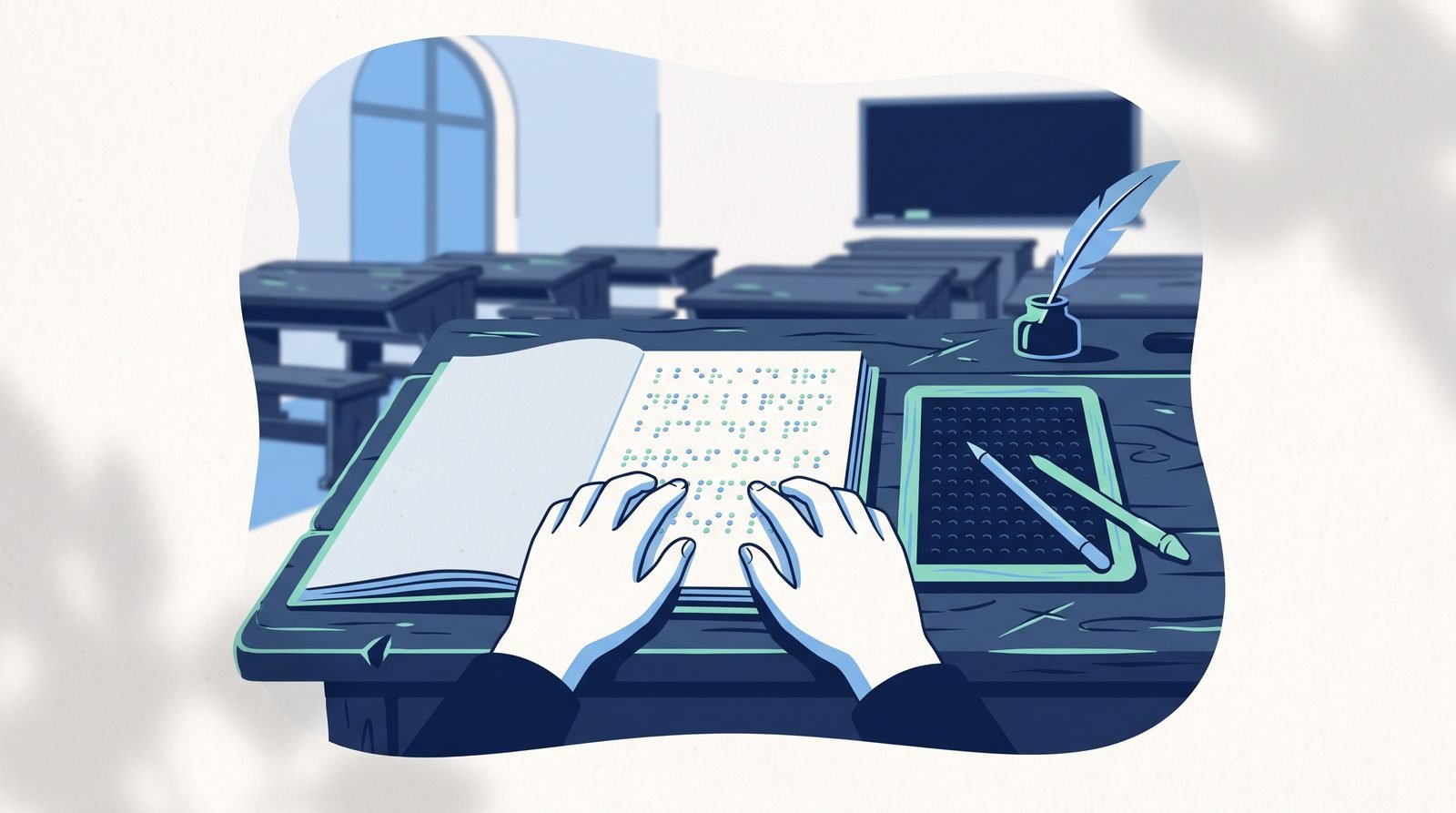
Blinded at three in his father's saddlery, Braille arrived at the Royal Institute for Blind Youth in Paris to find books embossed with ordinary letters, which took a whole hand to trace. A visiting army captain's "night writing" used twelve dots and encoded sounds rather than spelling. Braille's insight was to shrink the cell to six dots, two columns of three, so a single fingertip reads a whole character at once. Sixty-three combinations cover letters, numbers, punctuation and, later, music.
He published his method in 1829, and it was officially adopted by his own institute only in 1854, two years after his death. Every braille script in use today, including Bharati Braille for Indian languages, descends from that cell.
IP note
No patent or privilege sought; became a public standard after his 1829 publication.
Recognition
Adopted by the Paris institute 1854; basis of every braille script including Bharati Braille.
What this means for a student inventor in India
[Editor: 120–200 words connecting this story to the Indian route — Section 6 (any true inventor may apply), provisional vs complete specification, disclosure at fairs (Section 31), renewals, and who owns what when a school is involved. Link to the relevant MYCrave guide.]
Related young innovators
Sources
[Editor: list the 2–4 primary sources from the research notes for this entry, with the date checked.]
Working on something like this?
Start with a patentability search, not a filing. Request an expert assessment