Philo Farnsworth: Electronic television
Electronic television — the image-dissector principle conceived from ploughed furrows.
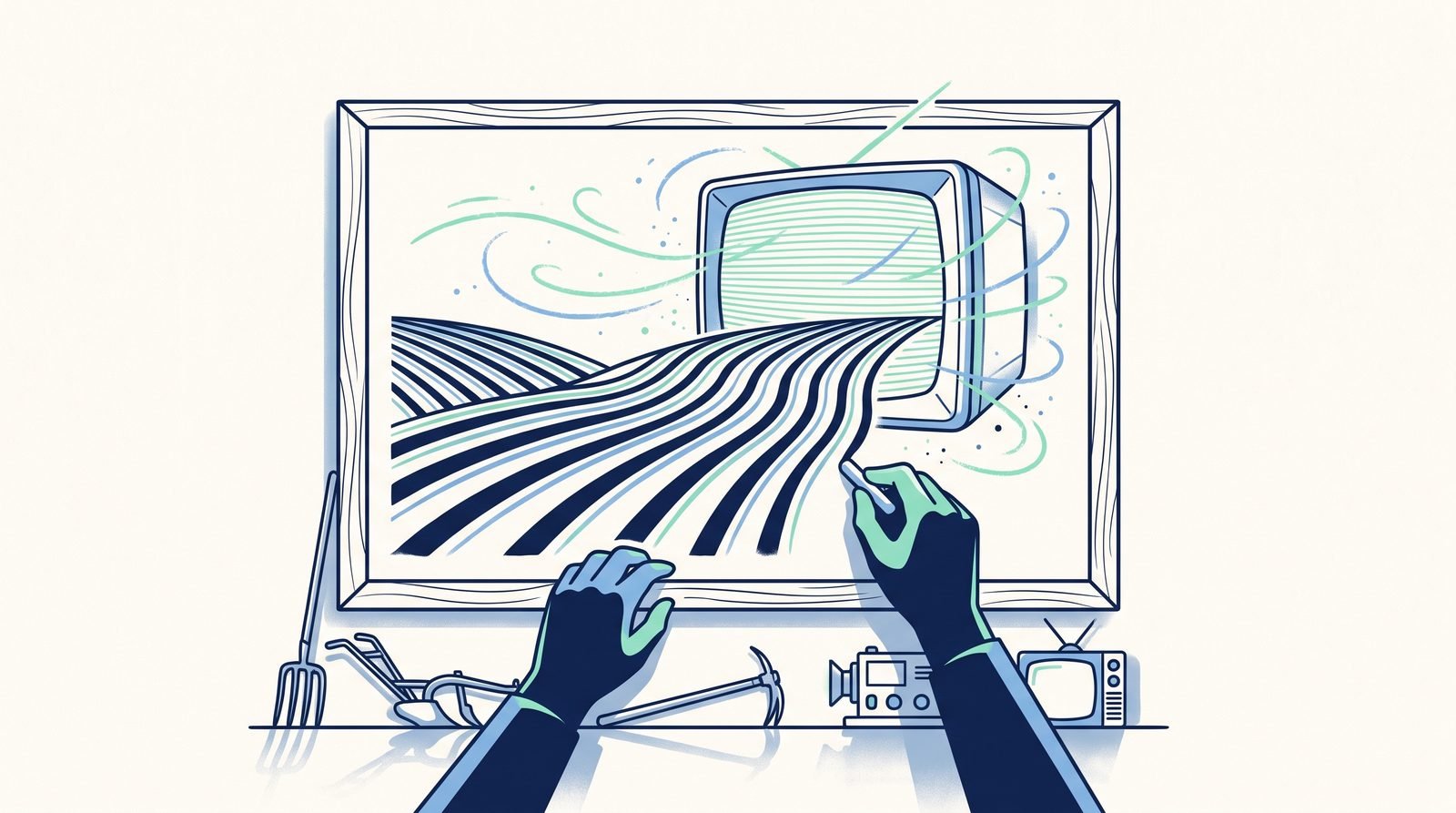
Ploughing a field in Rigby, Idaho, the summer before he turned fifteen, Farnsworth saw an image in the parallel furrows: a picture could be captured and rebuilt line by line by a beam of electrons, with no spinning discs. In spring 1922 he drew the "image dissector" on the blackboard for his chemistry teacher, Justin Tolman. The patent came later, filed in January 1927 at 20, and the first electronic transmission followed that September.
The teenage sketch mattered legally. In 1935 the US Patent Office had to decide whether Farnsworth or RCA's Vladimir Zworykin invented electronic television first. Tolman testified and reproduced the 1922 drawing from memory; Farnsworth won priority, and in 1939 RCA agreed to pay him royalties for the first time in its history.
IP note
US 1,773,980 'Television System', filed 1927 (age 20), granted 1930; 1922 sketch won the 1935 priority interference against RCA.
Recognition
RCA paid royalties from 1939; National Statuary Hall.
What this means for a student inventor in India
[Editor: 120–200 words connecting this story to the Indian route — Section 6 (any true inventor may apply), provisional vs complete specification, disclosure at fairs (Section 31), renewals, and who owns what when a school is involved. Link to the relevant MYCrave guide.]
Related young innovators
- Palmer Luckey — Oculus Rift prototypes
- Kelvin Doe — Community radio station and generator built from scrap
Sources
[Editor: list the 2–4 primary sources from the research notes for this entry, with the date checked.]
Working on something like this?
Start with a patentability search, not a filing. Request an expert assessment