Benjamin Lothamer: An Adaptable 3D-Printed Upper-Limb Prosthesis
An Adaptable 3D-Printed Upper-Limb Prosthesis.
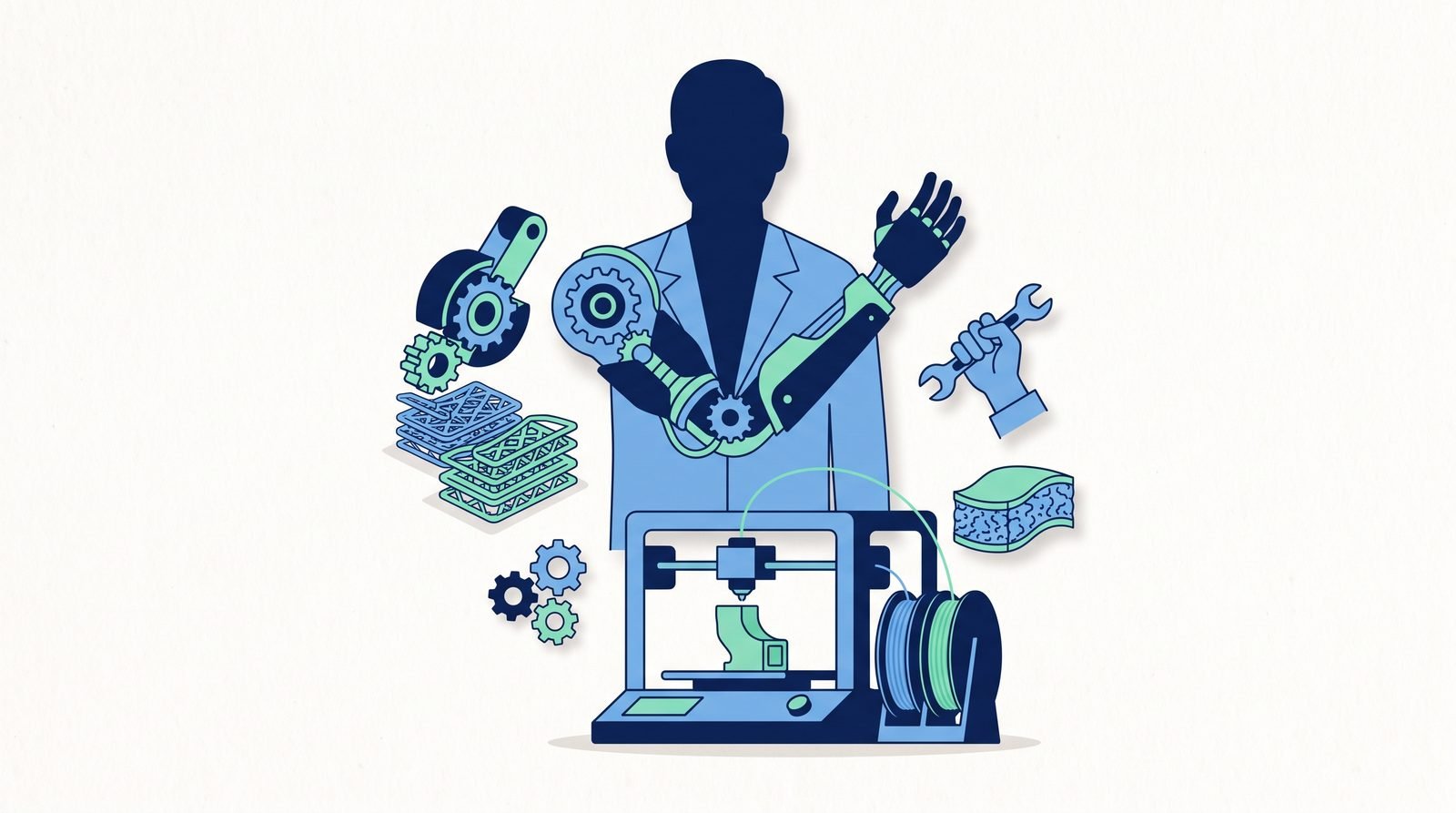
Benjamin Lothamer designed a gear-based upper-limb prosthesis using additive manufacturing and a viscoelastic material. Adaptability, manufacturability and mechanical simplicity can be vital when a prosthetic must fit different users and remain serviceable.
Innovation mindset: Combine clever mechanics with accessible manufacturing so a useful device can move beyond one perfect prototype.
Official project title: Design and Development of an Adaptable Gear-Based Upper Limb Prosthesis Using Additive Manufacturing and a Novel Visco-Elastic Material (Biomedical Engineering).
IP note
No public IP record; any filing made around the May 2025 fair would not yet be published under the 18-month rule — register check due from late 2026.
Recognition
Regeneron ISEF 2025 — Second Award ($2,400).
What this means for a student inventor in India
[Editor: 120–200 words connecting this story to the Indian route — Section 6 (any true inventor may apply), provisional vs complete specification, disclosure at fairs (Section 31), renewals, and who owns what when a school is involved. Link to the relevant MYCrave guide.]
Related young innovators
- Easton LaChappelle — 3D-printed robotic prosthetic arm; later TrueLimb
- Shalini Kumari — Stair-climbing walker with adjustable front legs
- Arsh Shah Dilbagi — TALK
Sources
[Editor: list the 2–4 primary sources from the research notes for this entry, with the date checked.]
Working on something like this?
Start with a patentability search, not a filing. Request an expert assessment