Brad Wu: A Brain-Driven Forearm Exoskeleton for Stroke Rehabilitation
A Brain-Driven Forearm Exoskeleton for Stroke Rehabilitation.
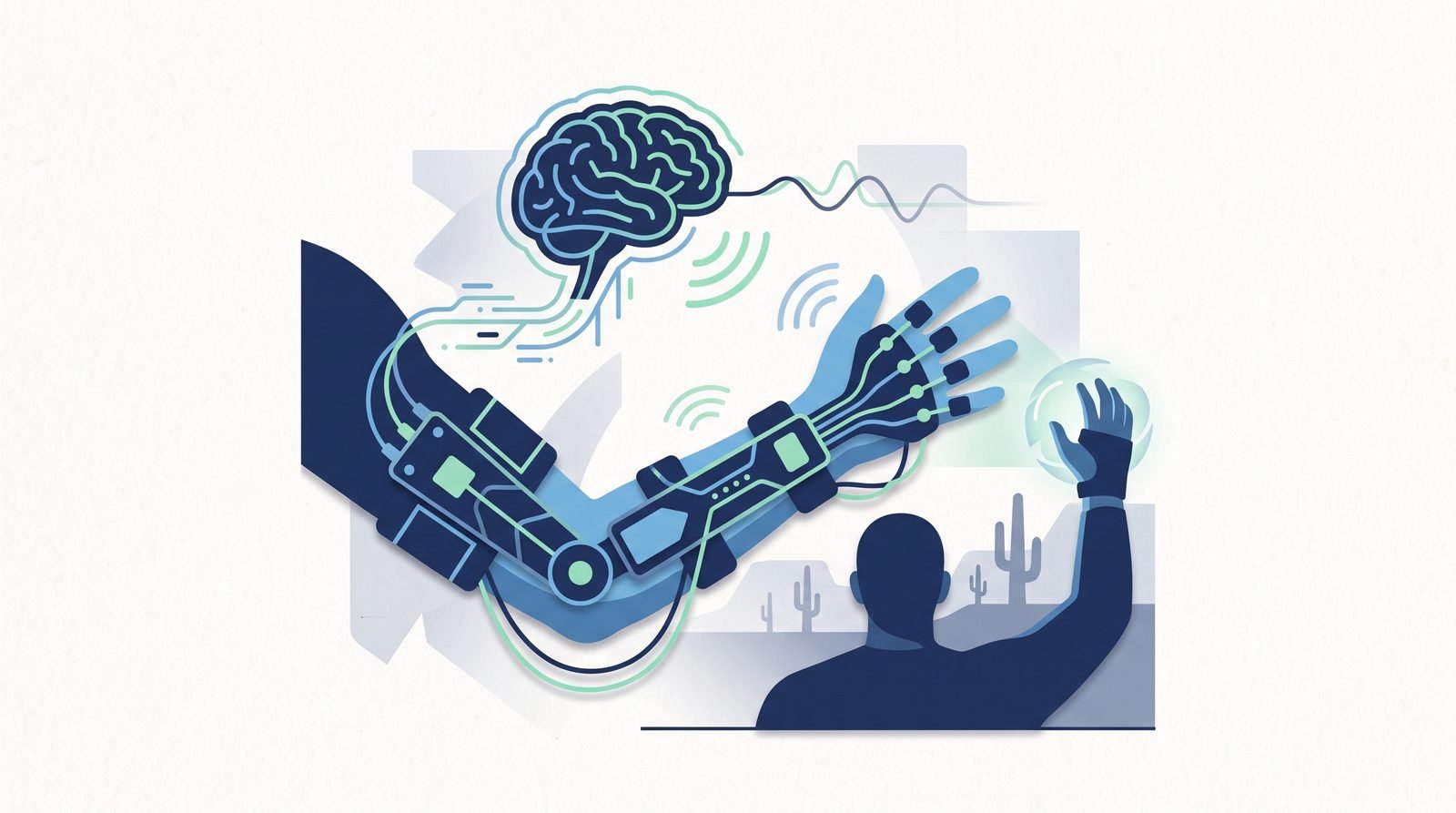
Brad Wu developed a brain-driven forearm exoskeleton with adaptive neuroregulation feedback for people recovering from stroke. Rehabilitation technology becomes more meaningful when assistance responds to neurological intent and changes with the user’s progress.
Innovation mindset: Build rehabilitation as a feedback loop: sense intention, assist movement, measure response and adapt again.
Official project title: A Novel Brain-Driven Forearm Exoskeleton With Adaptive Neuroregulation-Based Feedback for Subacute and Chronic Stroke Rehabilitation (Biomedical Engineering).
IP note
No public IP record; any filing made around the May 2025 fair would not yet be published under the 18-month rule — register check due from late 2026.
Recognition
Regeneron ISEF 2025 — Third Award ($1,200).
What this means for a student inventor in India
[Editor: 120–200 words connecting this story to the Indian route — Section 6 (any true inventor may apply), provisional vs complete specification, disclosure at fairs (Section 31), renewals, and who owns what when a school is involved. Link to the relevant MYCrave guide.]
Related young innovators
- Easton LaChappelle — 3D-printed robotic prosthetic arm; later TrueLimb
- Shalini Kumari — Stair-climbing walker with adjustable front legs
- Arsh Shah Dilbagi — TALK
Sources
[Editor: list the 2–4 primary sources from the research notes for this entry, with the date checked.]
Working on something like this?
Start with a patentability search, not a filing. Request an expert assessment