Matthew Li and Taha Rawjani: MobyGlobal: AI Buoys That Detect Whales in Real Time
MobyGlobal: AI Buoys That Detect Whales in Real Time.
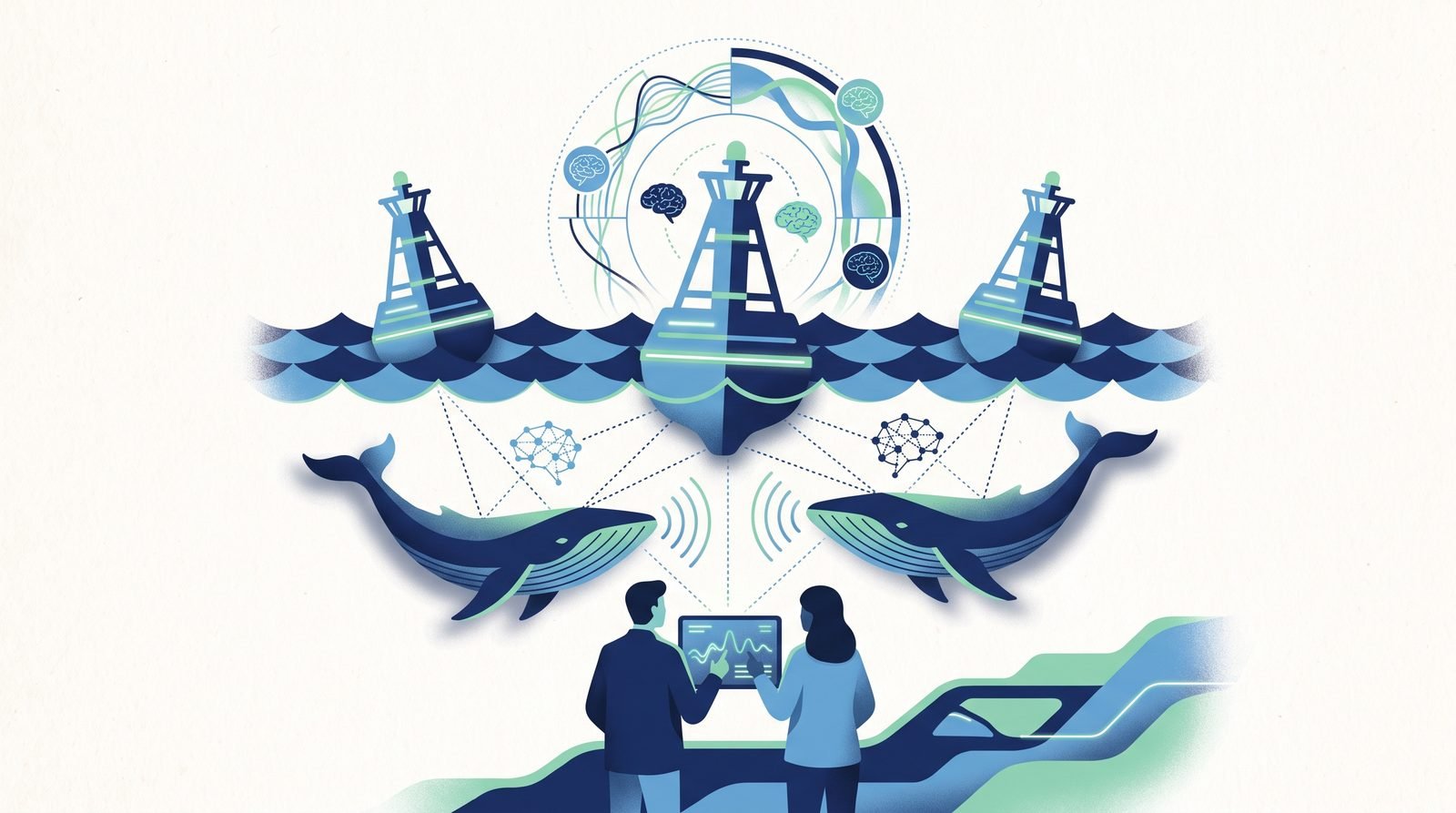
Matthew Li and Taha Rawjani developed MobyGlobal, a whale-detection network using a custom convolutional neural network and 3D-printed buoys. A distributed ocean-sensing system could support research and help reduce dangerous encounters when deployed responsibly.
Innovation mindset: Protect a vast moving ecosystem by distributing many small, connected observation points rather than relying on one expensive station.
Official project title: MobyGlobal: Real-Time Whale Detection Network Powered by a Custom CNN and 3D Printed Buoys (Robotics and Intelligent Machines). Reduction of dangerous encounters is a stated aim, not a result.
IP note
No public IP record; any filing made around the May 2025 fair would not yet be published under the 18-month rule — register check due from late 2026.
Recognition
Regeneron ISEF 2025 — Fourth Award ($600).
What this means for a student inventor in India
[Editor: 120–200 words connecting this story to the Indian route — Section 6 (any true inventor may apply), provisional vs complete specification, disclosure at fairs (Section 31), renewals, and who owns what when a school is involved. Link to the relevant MYCrave guide.]
Related young innovators
- Mihir Garimella — FlyBot
- Harshwardhan Zala — Drone that detects and maps buried landmines (Aerobotics7, EAGLE A7)
- Chinmayi Goyal — MyoAssist: User-Driven AI Exoskeleton Control
Sources
[Editor: list the 2–4 primary sources from the research notes for this entry, with the date checked.]
Working on something like this?
Start with a patentability search, not a filing. Request an expert assessment