William Kamkwamba: Home-built windmill from scrap parts
Home-built windmill from scrap parts.
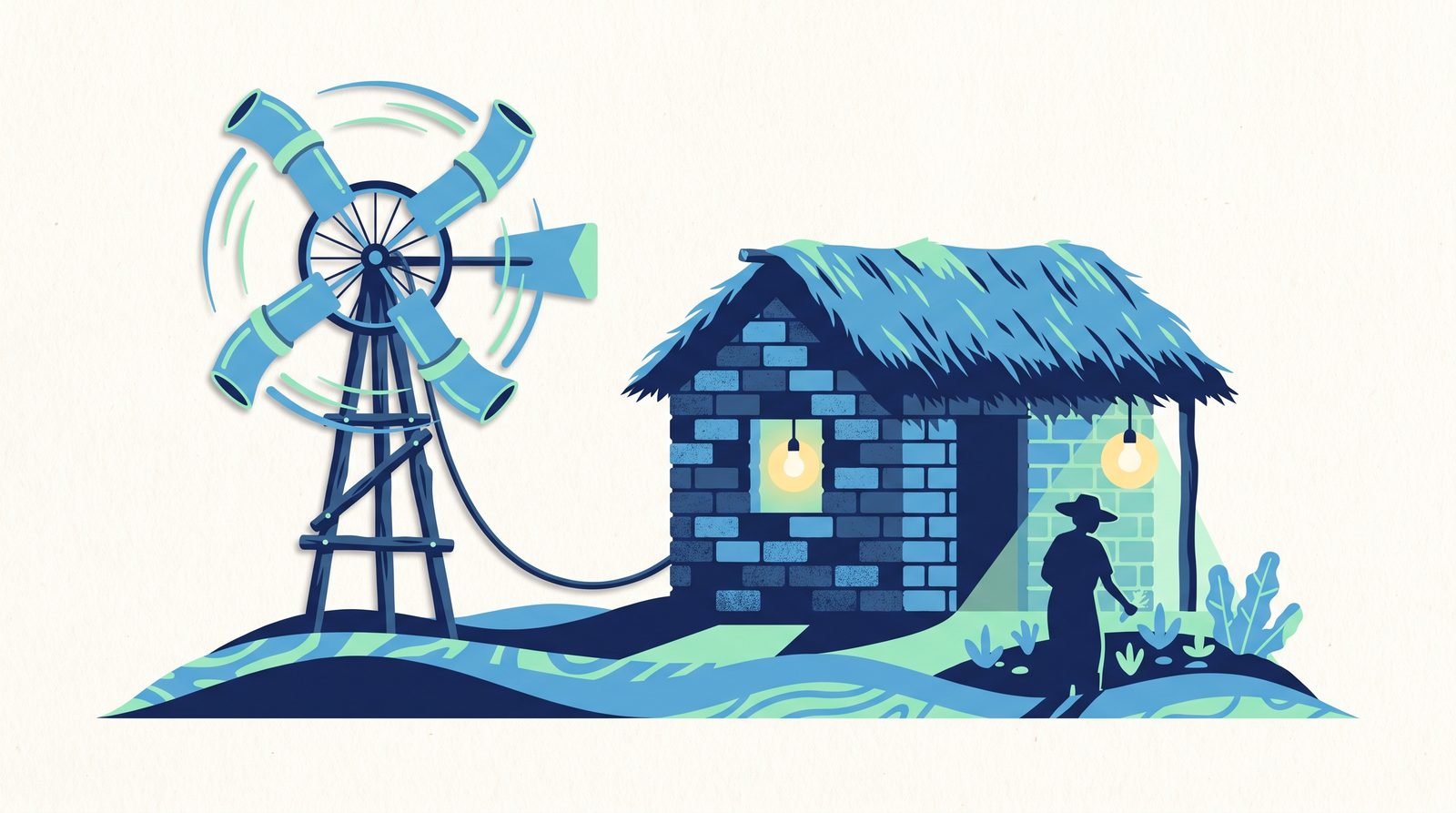
Forced out of school by the 2001–02 famine, Kamkwamba found a book called *Using Energy* in a donated library and copied the windmill diagram with what he had: blue-gum poles, flattened PVC pipe for blades, a bicycle frame and a dynamo. It lit four bulbs and two radios and later charged neighbours' phones. The output was small; the story was not. It became the memoir *The Boy Who Harnessed the Wind* and a 2019 Netflix film, and he went on to Dartmouth College.
IP note
No patent (assembled from known parts); book and film copyrights held by publishers.
Recognition
TED 2007/2009; memoir and 2019 Netflix film; Moving Windmills Project.
What this means for a student inventor in India
[Editor: 120–200 words connecting this story to the Indian route — Section 6 (any true inventor may apply), provisional vs complete specification, disclosure at fairs (Section 31), renewals, and who owns what when a school is involved. Link to the relevant MYCrave guide.]
Related young innovators
- Vinisha Umashankar — Solar-powered ironing cart replacing charcoal box-irons
- Ann Makosinski — Hollow Flashlight powered by body heat
- Eesha Khare — Flexible supercapacitor electrode
Sources
[Editor: list the 2–4 primary sources from the research notes for this entry, with the date checked.]
Working on something like this?
Start with a patentability search, not a filing. Request an expert assessment