
Part of The MYCrave Young Innovators Index.
On this page
- Quick answer
- How to read the entries
- Tier 1 — Inventions that changed how the world works (ranks 1–10)
- Tier 2 — Reached real users, or real intellectual property (ranks 11–25)
- Tier 3 — Proof of concept with a real record (ranks 26–40)
- Tier 4 — Recognised prototypes worth watching (ranks 41–50)
- What these 50 stories teach about protecting a young invention
- How MYCrave helps young inventors and their schools
- Conclusion
- Frequently asked questions
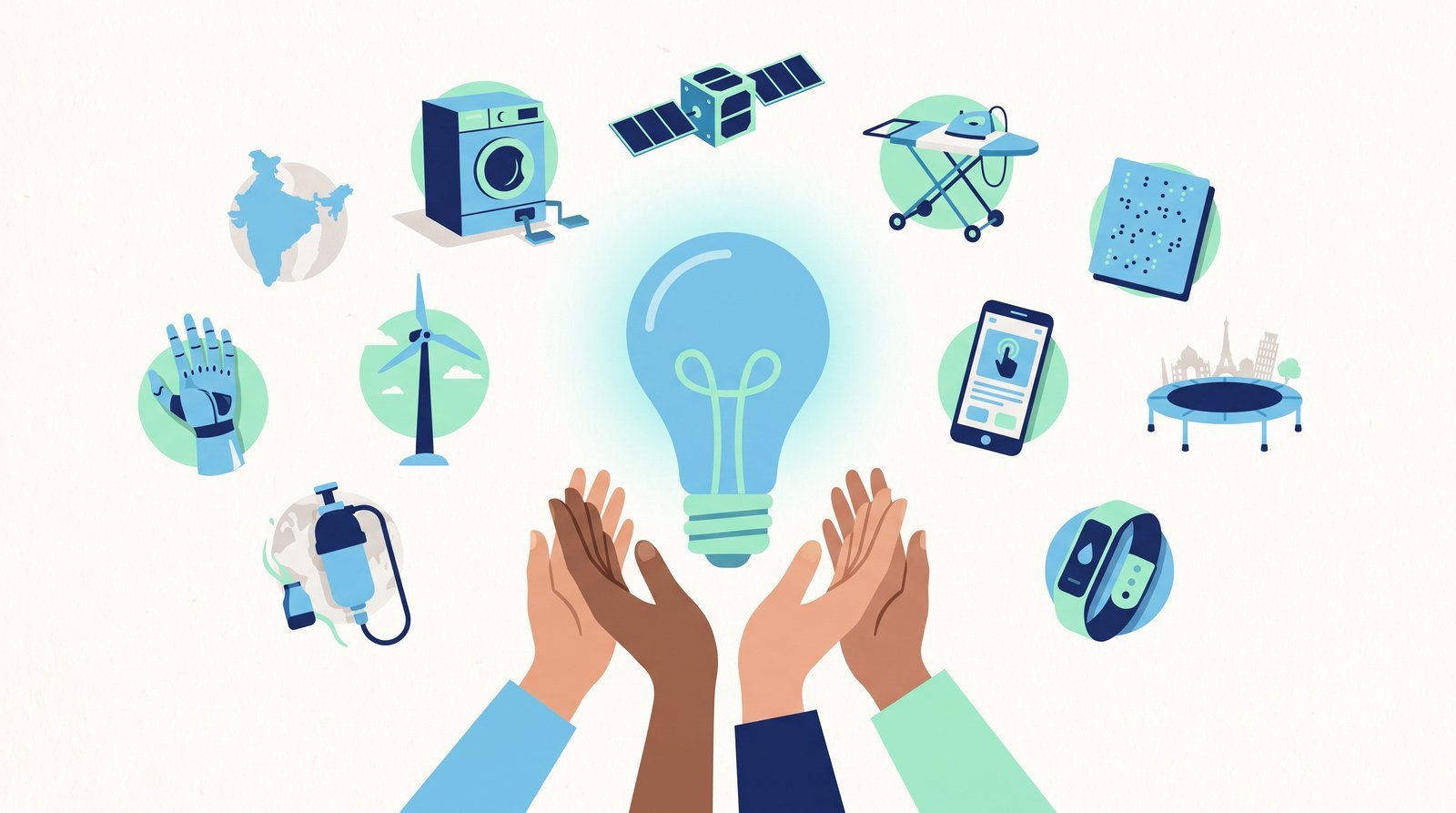
Illustration (AI-generated). None of the images in this guide are photographs of the inventors; licensed photo sources are listed at the end.
A fourteen-year-old in Kerala built a washing machine out of bicycle parts because her mother was unwell and washing at the river was eating into her study time. A fifteen-year-old in Paris squeezed an alphabet into six dots so blind students could read with one fingertip. A fourteen-year-old in Texas fitted a jar of algae to a car exhaust, filed a patent at fifteen, saw it granted at eighteen, and lost it at twenty-two because a maintenance fee went unpaid.
That last detail is why this list exists. Plenty of pages celebrate teenage inventors. Almost none record what happened to the idea after the award ceremony: whether it reached anyone, whether it was protected, whether the protection survived. We checked all three for fifty teens, from India and around the world, and ranked them.
The ranking is editorial, not a formula. We asked four questions of each entry: did the invention reach real users, did it survive as intellectual property or as a company, was it independently recognised by a body that checks its facts, and does the way the inventor thought about the problem teach something a reader can use. Historical figures sit alongside 2025 award winners because the questions are the same.
Quick answer
Who are the most impactful teenage inventors? By reach, the six-dot braille cell (Louis Braille, 15, 1824) and electronic television (conceived by Philo Farnsworth at 14–15) top any list. Among living inventors, Boyan Slat's Ocean Cleanup, Palmer Luckey's Oculus Rift prototypes and Trisha Prabhu's ReThink patent family have travelled furthest. India's strongest entries are Remya Jose's pedal washing machine (Indian patent granted through NIF), Vinisha Umashankar's solar ironing cart (Earthshot Prize finalist) and Rifath Sharook's 64-gram KalamSat. Of the 50, only 14 hold or held a granted patent, personally or through a company they founded; 4 let a filing lapse.
How to read the entries
Each entry gives the inventor's age when the work was done (with a range where sources disagree), what the invention does, how the inventor approached the problem, the recognition it earned, and an IP note: what was filed, granted, licensed, abandoned or never sought. "No public IP record found" means exactly that: our search of Google Patents, Justia, IP India-linked sources and award-body pages on 31 August 2026 found nothing. It does not prove nothing was filed.
A word on ages. "Teenager" here means 13 to 19 at the time of the core work. A few widely celebrated names did their headline work at 11 or 12 and were recognised as teens; we include four of them and say so plainly. We excluded several famous "teen inventors" who turn out to have been under 13 (or over 19) at the time.
Tier 1 — Inventions that changed how the world works (ranks 1–10)
1. Louis Braille — the six-dot braille cell (France, 1824, age 15)
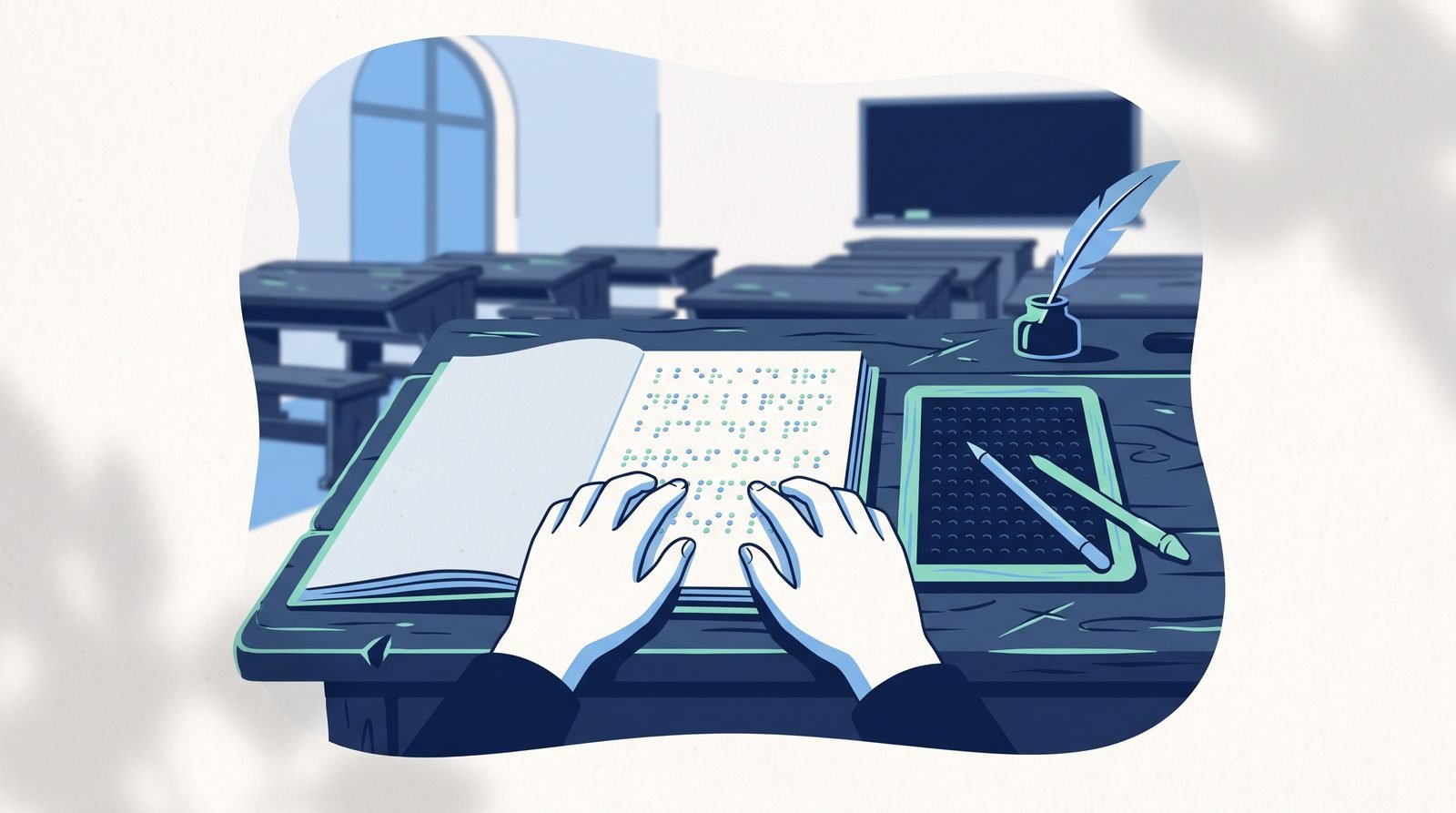
Blinded at three in his father's saddlery, Braille arrived at the Royal Institute for Blind Youth in Paris to find books embossed with ordinary letters, which took a whole hand to trace. A visiting army captain's "night writing" used twelve dots and encoded sounds rather than spelling. Braille's insight was to shrink the cell to six dots, two columns of three, so a single fingertip reads a whole character at once. Sixty-three combinations cover letters, numbers, punctuation and, later, music.
He published his method in 1829, and it was officially adopted by his own institute only in 1854, two years after his death. Every braille script in use today, including Bharati Braille for Indian languages, descends from that cell.
IP note: No patent or privilege was ever sought, although France had patent law from 1791. Braille became a public standard from the moment it was published. That openness is why it spread; it is also why he earned nothing from it. The popular quote about "access to communication" attributed to him cannot be traced to any primary document, so we have not used it.
2. Philo Farnsworth — electronic television (USA, concept 1921–22, age 14–15)
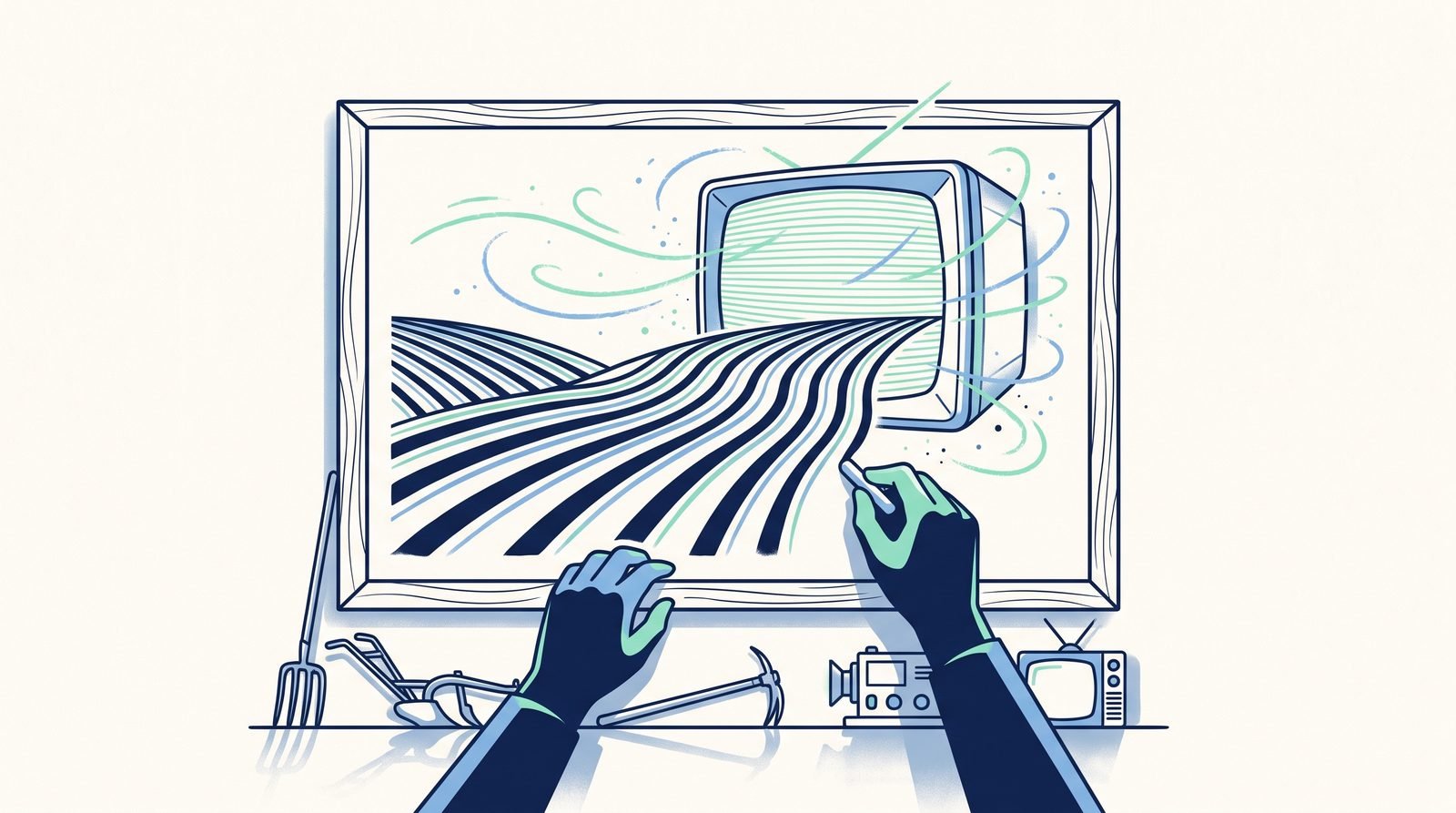
Ploughing a field in Rigby, Idaho, the summer before he turned fifteen, Farnsworth saw an image in the parallel furrows: a picture could be captured and rebuilt line by line by a beam of electrons, with no spinning discs. In spring 1922 he drew the "image dissector" on the blackboard for his chemistry teacher, Justin Tolman. The patent came later, filed in January 1927 at 20, and the first electronic transmission followed that September.
The teenage sketch mattered legally. In 1935 the US Patent Office had to decide whether Farnsworth or RCA's Vladimir Zworykin invented electronic television first. Tolman testified and reproduced the 1922 drawing from memory; Farnsworth won priority, and in 1939 RCA agreed to pay him royalties for the first time in its history.
IP note: US Patent 1,773,980, "Television System", filed 7 January 1927, granted 26 August 1930. The lesson survives the change in law: dated, witnessed records of when you conceived an idea are worth keeping even under today's first-to-file systems, because they prove what you knew and when if ownership or inventorship is later disputed. His core patents expired in 1947, just as commercial television took off.
3. Boyan Slat — The Ocean Cleanup (Netherlands, idea at 16, founded at 18)
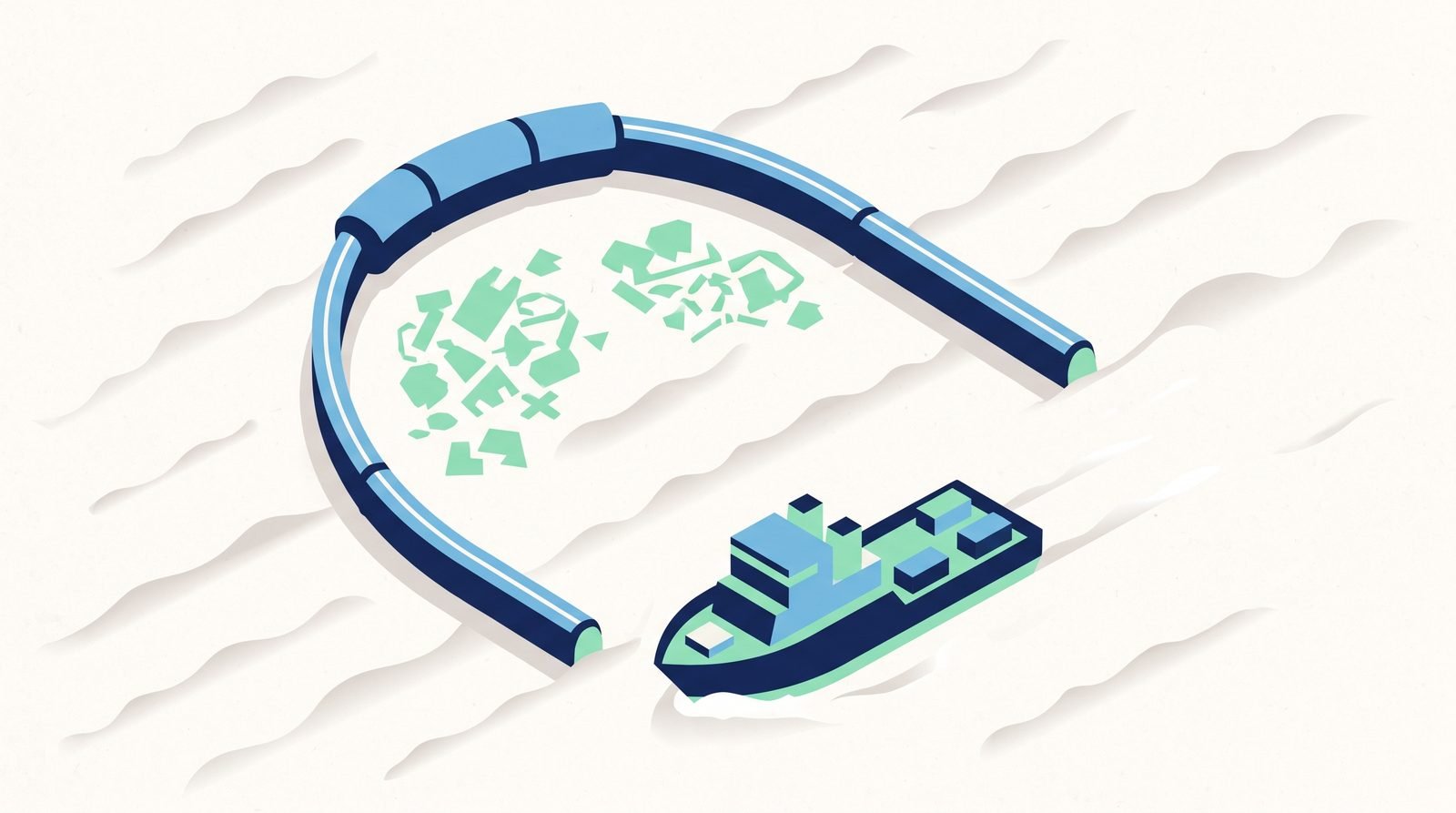
Diving in Greece at sixteen, Slat saw more plastic than fish and asked why nobody cleaned it up. His reframing was the invention: instead of chasing plastic with ships, put a long floating barrier in the current and let the ocean bring the plastic to you. He presented the concept at TEDxDelft at 18 and founded The Ocean Cleanup as a non-profit in 2013.
The first full system broke in 2018 and failed to hold plastic. Redesigned systems worked. The organisation reported over 45 million kilograms removed cumulatively by the end of 2025, and its river "Interceptor" barges now operate in Indonesia, Malaysia, Jamaica, Guatemala, Vietnam and elsewhere. Marine scientists still debate cost-effectiveness against stopping plastic at source; the organisation publishes its own multi-billion-dollar estimate for cleaning the whole Pacific patch.
IP note: Patents sit with the foundation's technology company, not with Slat personally. Example: Dutch patent NL2018882B1 (granted 2018, since lapsed for non-payment of annual fees) with an international family including WO2018208159A1. No record shows his original 2012 concept was ever patented. Structuring ownership through an entity from day one is the pattern worth copying.
4. Palmer Luckey — the Oculus Rift prototypes (USA, 2009–2012, age 16–19)
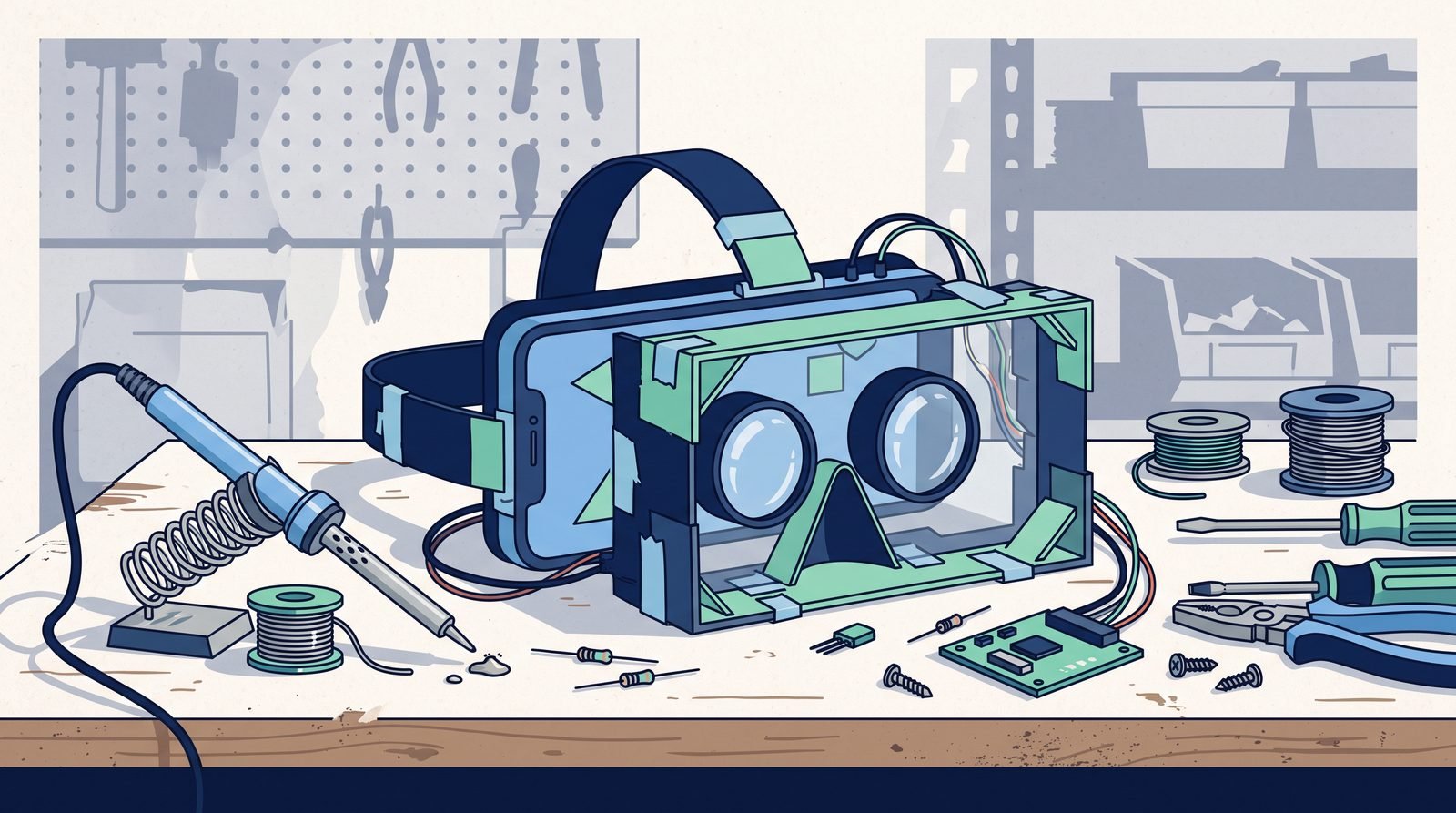
A teenage collector of old virtual-reality headsets, funded by repairing and reselling phones, Luckey started building his own in his parents' garage at 16. His trade-off was the breakthrough: accept cheap optics and a phone-class screen, but deliver a 90-degree field of view and low latency, then fix the lens distortion in software. Research headsets at the time cost tens of thousands of dollars. His did not.
He documented the builds on a hobbyist forum; id Software's John Carmack asked for one and demonstrated it at E3 in 2012. The Kickstarter that August raised about US$2.4 million. Facebook bought Oculus VR for around US$2 billion in 2014.
IP note: Nothing was filed during his teens. His first patent record is design patent D701,206, filed in June 2013 at age 20 and assigned to Oculus VR. A caution belongs here too: in 2017 a jury in ZeniMax v. Oculus found Luckey had breached a non-disclosure agreement and found copyright infringement; the award was later halved and the case settled. NDAs signed as a teenager can follow you.
5. Trisha Prabhu — ReThink, software that makes you pause before you post (USA, 2013, age 13)
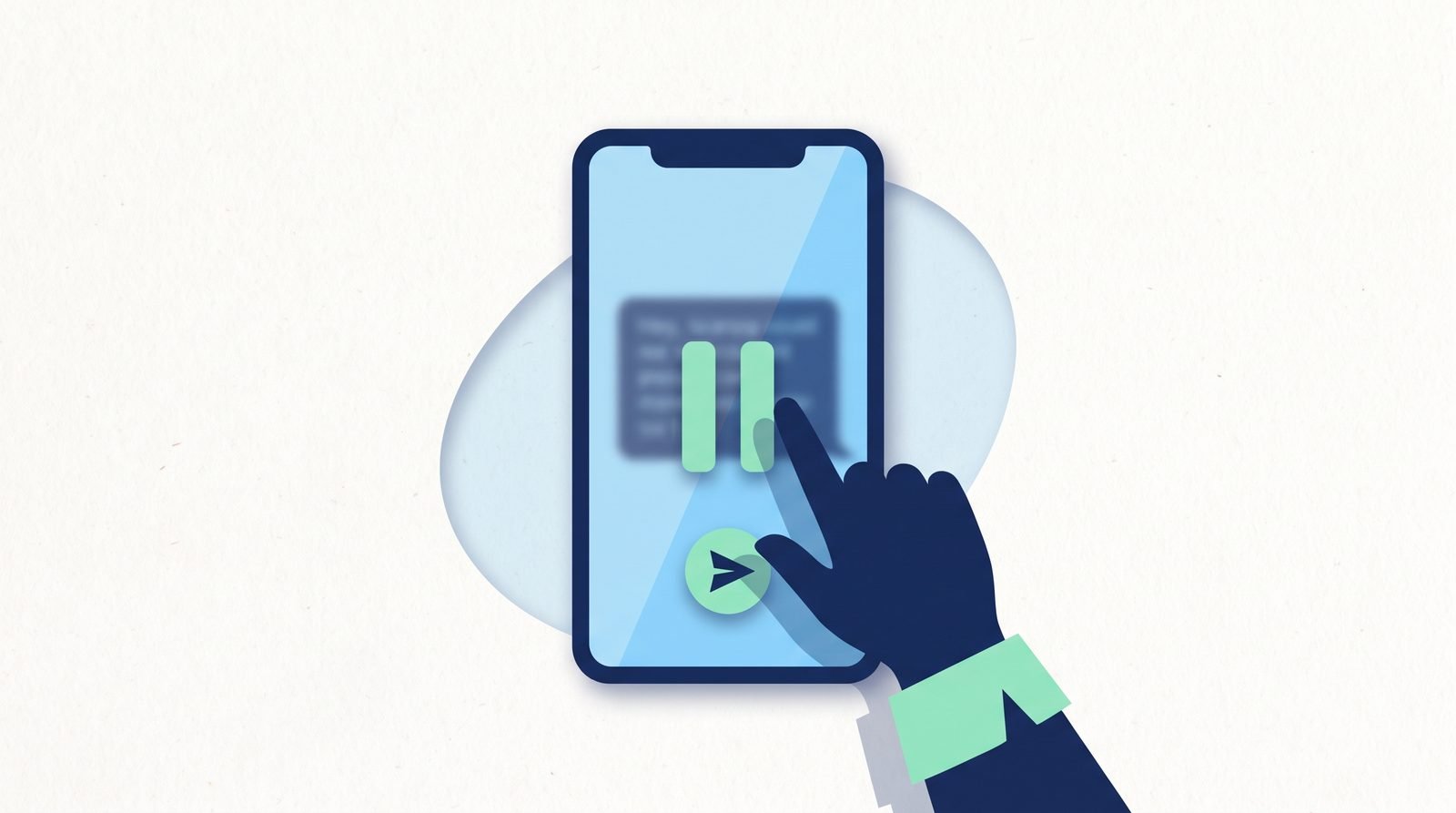
After reading about a girl who died by suicide following online bullying, Prabhu, then 13 and from an Indian-American family in Illinois, tested a simple hypothesis: adolescents post hurtful things impulsively, so a pause might change the outcome. ReThink scans a message before it is sent and asks the author to reconsider. In her trial, most users chose not to post once nudged. She was a Google Science Fair global finalist in 2014 and presented at the White House Science Fair in 2015.
IP note: This is the strongest IP story on the list. US Patent 9,686,217 B2, "Method to stop cyber-bullying before it occurs", claims priority from June 2014, when she was 14, and was granted in 2017. It has grown into a family that includes US 11,706,176 (2023), several 2025 grants and a design patent. She is a Rhodes Scholar and Knight-Hennessy Scholar and runs the ReThink Citizens non-profit. A software idea that most readers would assume is "unpatentable" became a defensible portfolio because it was drafted as a method with technical steps.
6. Nick D'Aloisio — Summly, automatic news summaries (UK, 2011–2013, age 15–17)
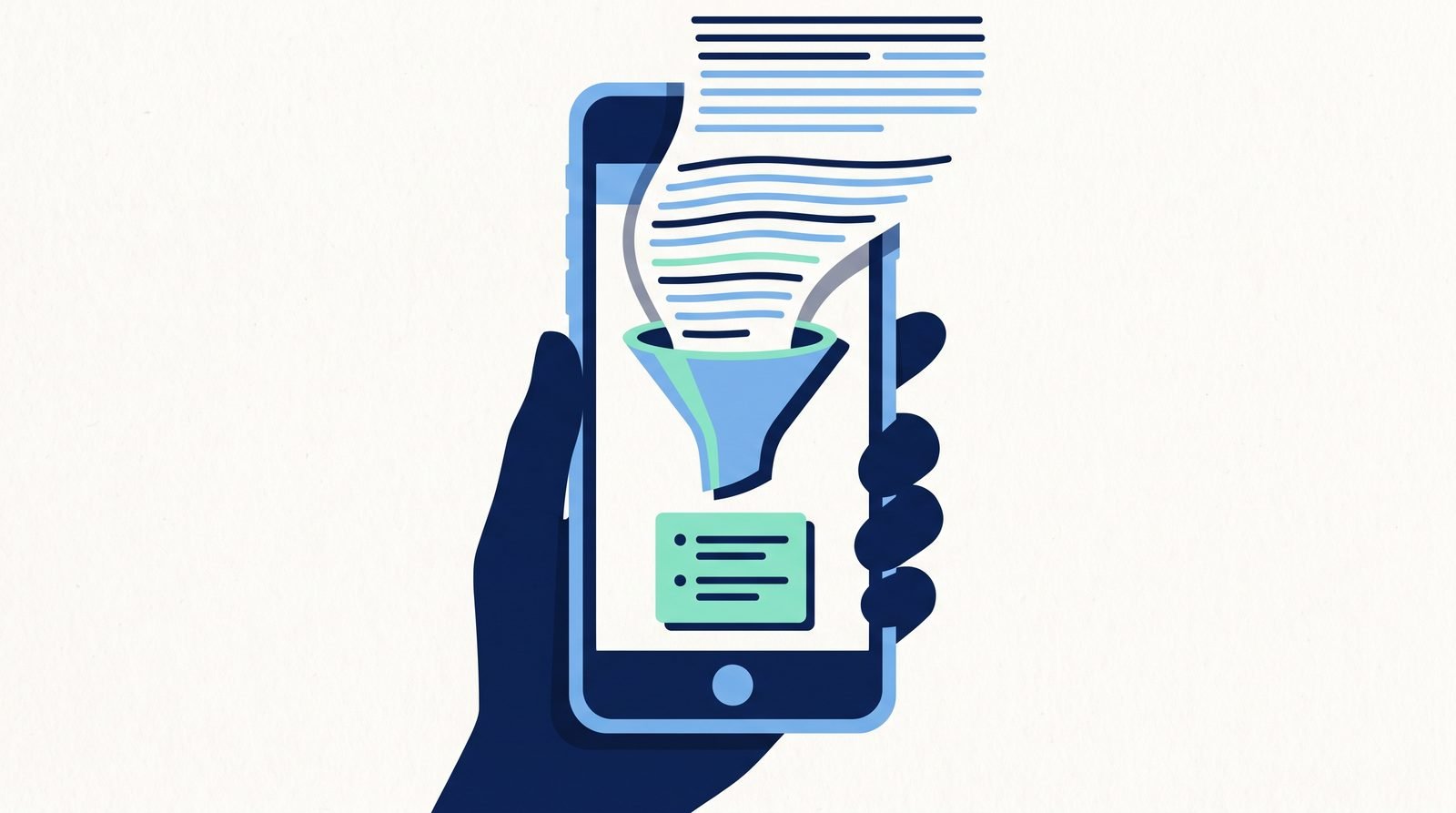
Revising for exams, D'Aloisio found long articles slow to scan on a phone and built Trimit at 15, then Summly at 16: an app that condensed articles to about 400 characters by scoring sentences for information and coherence. He raised US$300,000 from Horizons Ventures at 15, brought in natural-language researchers from SRI International, and sold the company to Yahoo in March 2013 at 17 for a reported US$30 million. Yahoo folded the engine into Yahoo News Digest.
IP note: US Patent 9,916,309 B2, "Method and apparatus for automatically summarizing the contents of electronic documents", priority date 14 October 2011 (he was 15), granted 2018, now assigned to Yahoo Assets LLC. He is a co-inventor with the research team, not sole inventor, which is the honest picture of how the technology matured. The technology and the team, not the app, were what Yahoo bought; the patent itself was granted five years after the sale.
7. Easton LaChappelle — the 3D-printed robotic arm (USA, 2010–2013, age 14–17)
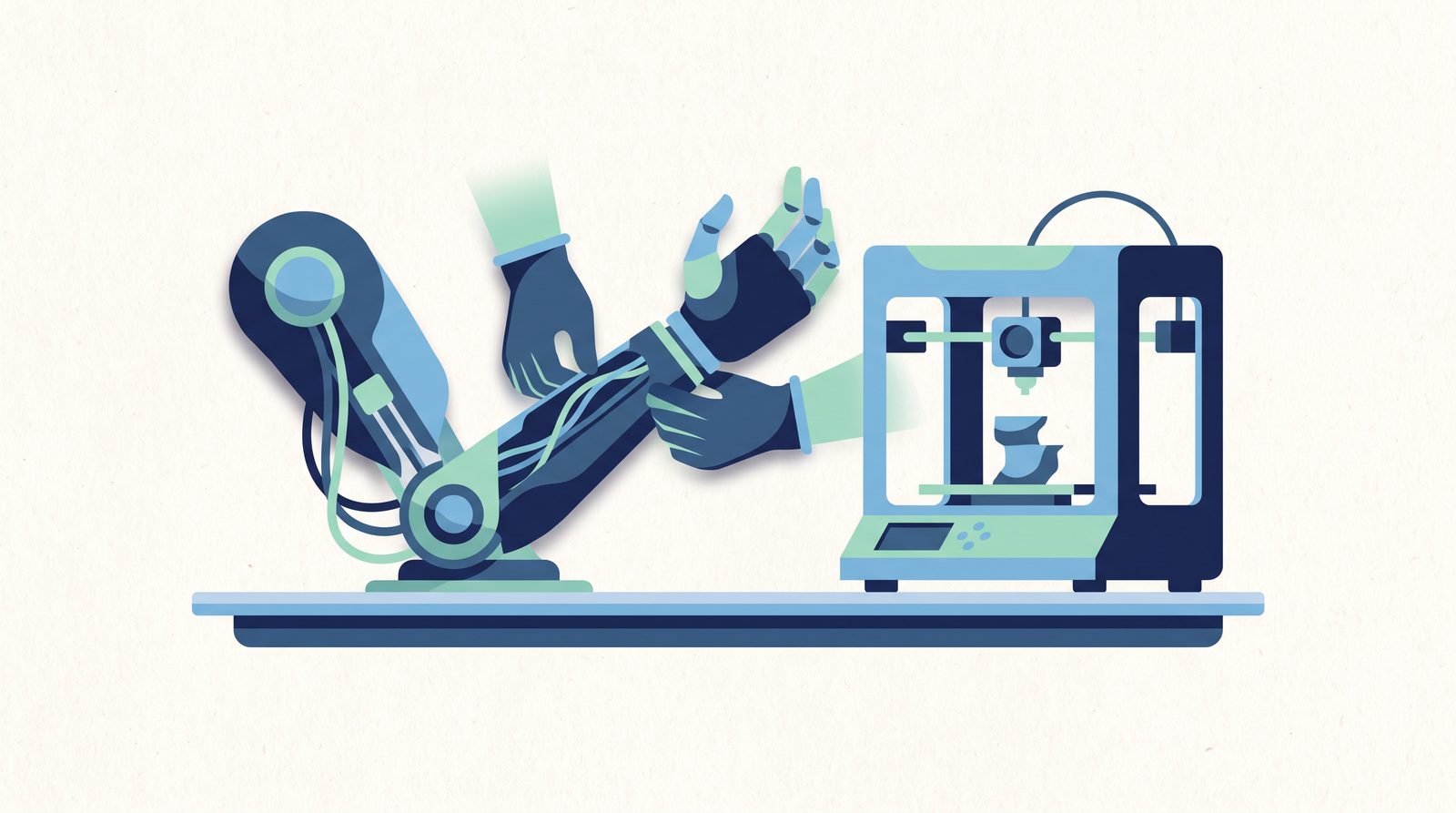
LaChappelle built his first robotic hand from Lego, fishing line and electrical tubing at 14. At a science fair he met a seven-year-old girl wearing an US$80,000 prosthetic she would outgrow within a year, and the project changed direction: a 3D-printed arm driven by muscle signals that a family could actually afford. The design took him to the White House Science Fair in 2013.
He released the teenage design as open source, then founded Unlimited Tomorrow in 2014. Its TrueLimb, launched in 2020, is scanned and printed to each user's limb and sold at roughly US$8,000 against tens of thousands for conventional bionic arms.
IP note: The company now holds a substantial US portfolio: US 10,940,026 (adaptive grip, 2021), US 11,364,131 (socket, 2022), US 11,974,857 (biometric sensor array, 2024) and 2025–26 filings on haptic gloves. Note the sequence: give away the early version to build a community, patent the commercial generation.
8. George Nissen — the trampoline (USA, first rig 1930 at 16, patent 1945)
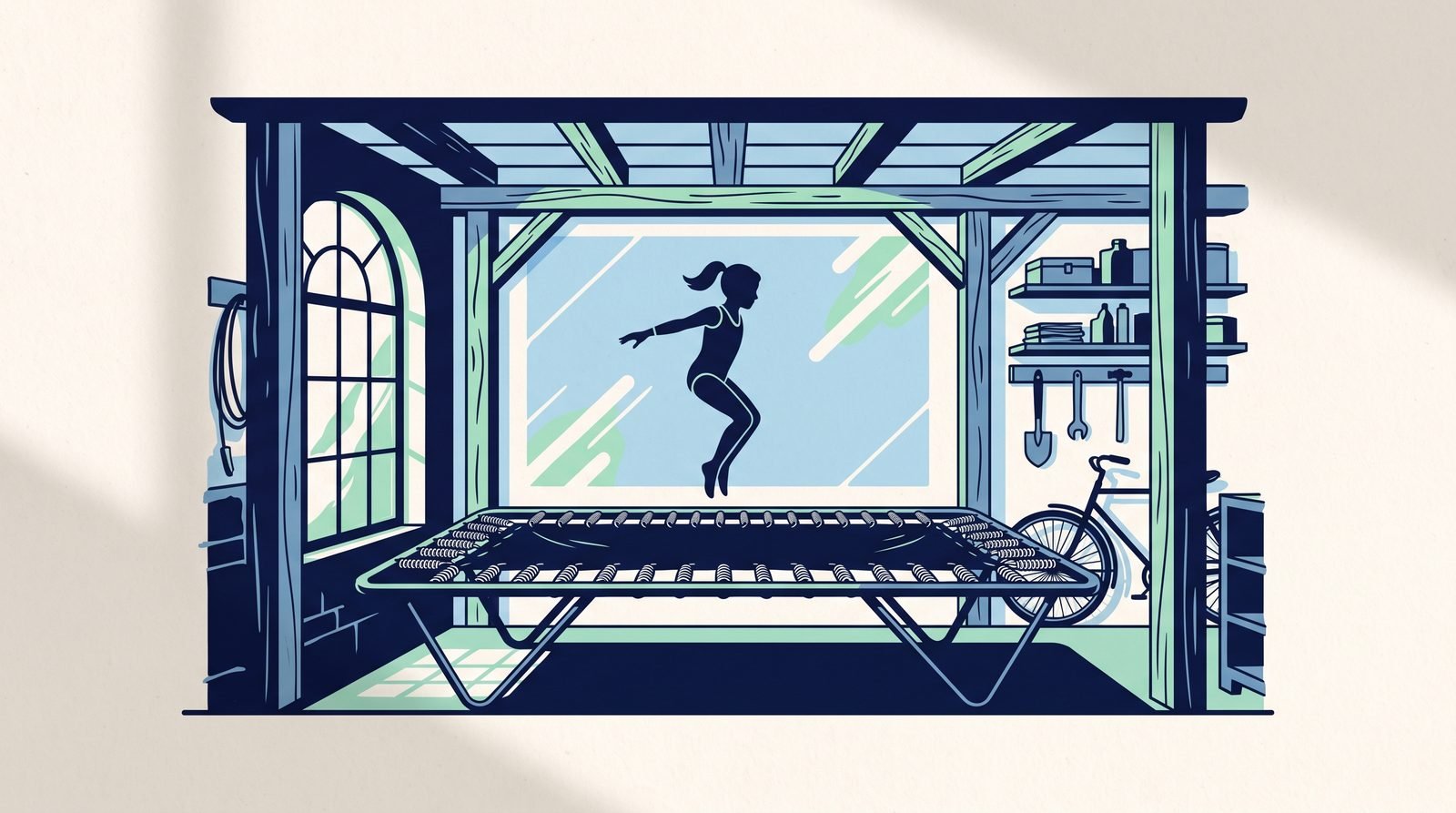
Watching circus aerialists drop into safety nets, a 16-year-old Cedar Rapids gymnast wanted a device for continuous bouncing rather than a single catch. He built a first rig from angle iron and inner-tube rubber in his parents' garage in 1930; a working prototype followed with his university coach in 1934, and a company in 1942. Trampolining became an Olympic sport at Sydney 2000. Nissen, aged 86, was there.
IP note: US Patent 2,370,990, "Tumbling device", filed 1941, granted 1945. The more important lesson is the trademark. Nissen registered "Trampoline" (from the Spanish for diving board) in 1943. In 1961 a US court cancelled it as generic: the public had come to use the word for the product itself. It sits in the textbooks beside "escalator" and "aspirin" as a warning about letting a brand name become the category name.
9. Chester Greenwood — earmuffs (USA, 1873, age 14–15)
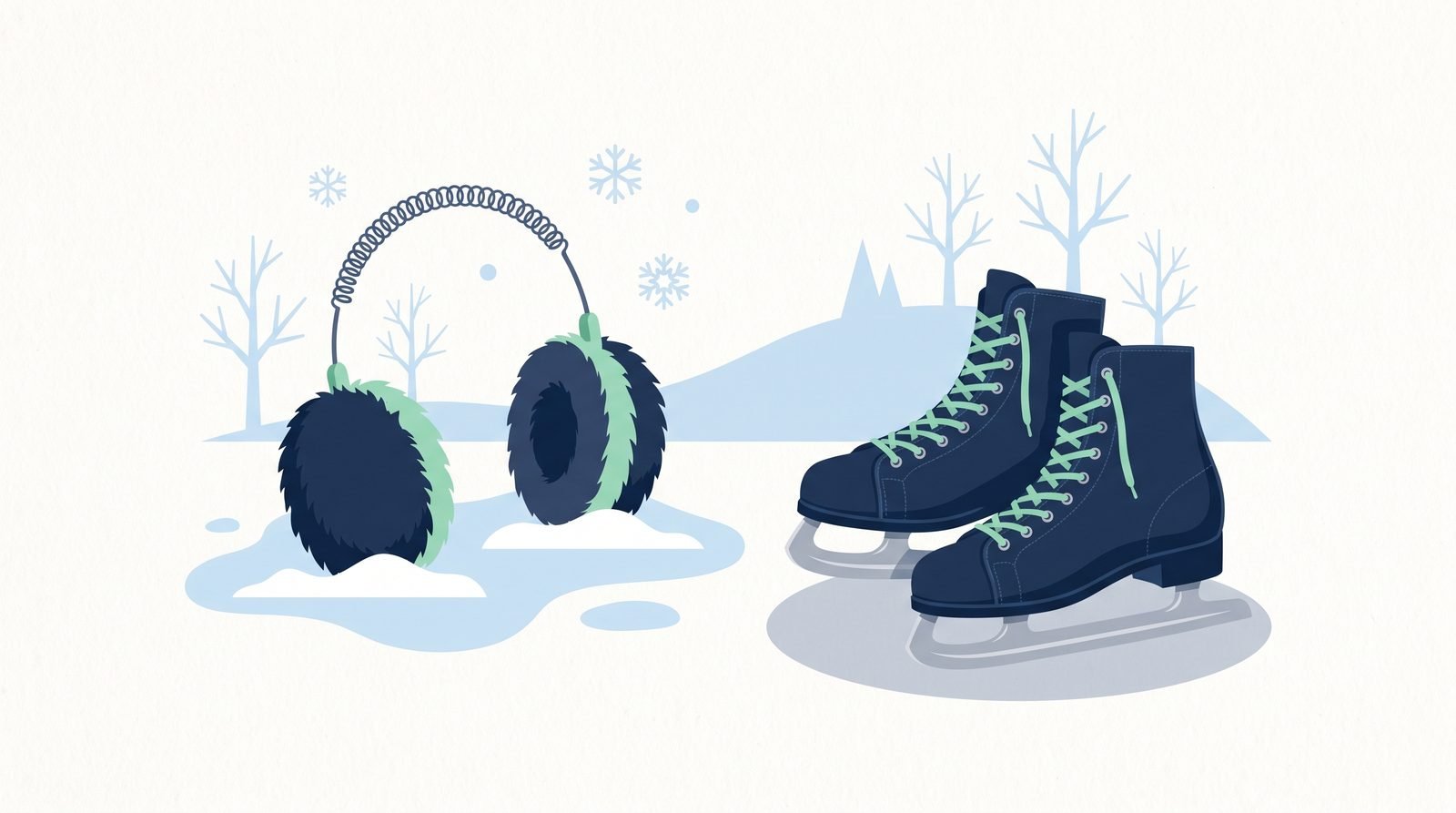
Skating on a frozen pond in Farmington, Maine, Greenwood's ears hurt in the cold and the wool caps of the day made him itch. He bent two loops of wire, had his grandmother sew beaver fur to the outside and flannel to the inside, and connected them with a band. His patented improvement, filed at 18, was the spring-steel headband and swivel joint that pressed the pads snugly and let them fold flat.
IP note: US Patent 188,292, "Improvement in Ear-Mufflers", filed 8 February 1877, granted 13 March 1877. He was not the first to think of covering ears; he was the first to protect a specific, better mechanism, and then he built the factory. Farmington's earmuff plant ran for almost sixty years and made over 400,000 pairs in 1936 alone. Maine still marks Chester Greenwood Day every December.
10. Gitanjali Rao — Tethys, a lead-in-water detector (USA, built at 11, patented at 15)
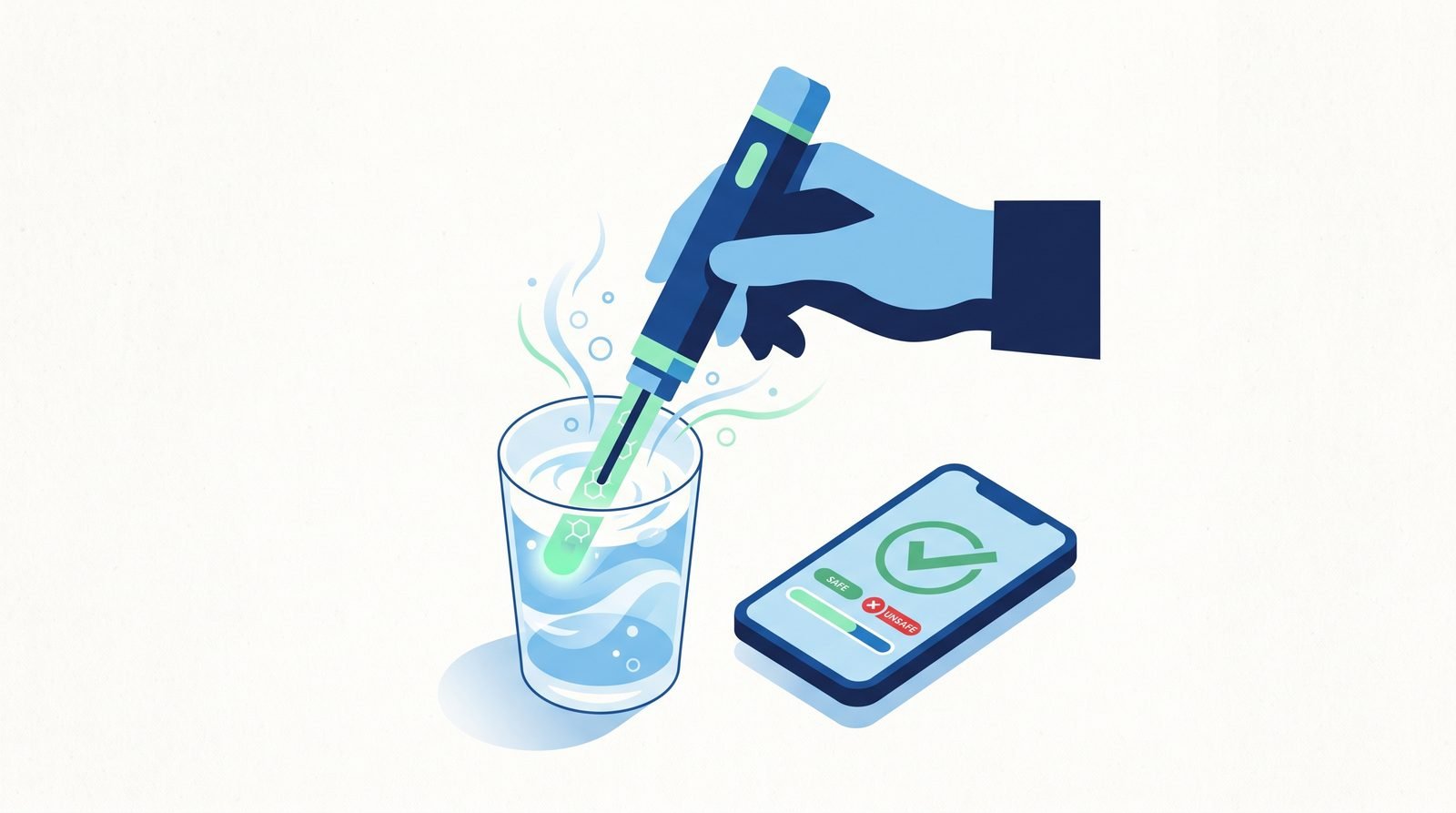
Rao, from an Indian-American family in Colorado, was 11 when the Flint water crisis made her ask why a household could not test its own tap water quickly. Tethys uses carbon nanotubes whose electrical resistance changes in the presence of lead ions; a processor compares the reading with a baseline and a phone app shows safe, moderate or unsafe. She won the 3M Young Scientist Challenge in 2017 and became TIME's first Kid of the Year in 2020, at 15.
We include her with the age stated plainly: the build was pre-teen; the recognition and the patent grant were in her teens. Her stated method, "observe, brainstorm, research, build, communicate", is the most repeatable thing on this list.
IP note: US Patent 11,085,907 B2, "System and method for detecting contaminants in water", sole inventor, filed December 2018, granted 10 August 2021. She filed as an individual, which means she owns it outright.
Tier 2 — Reached real users, or real intellectual property (ranks 11–25)
11. Deepika Kurup — a solar photocatalytic water purifier (USA, 2012, age 14)
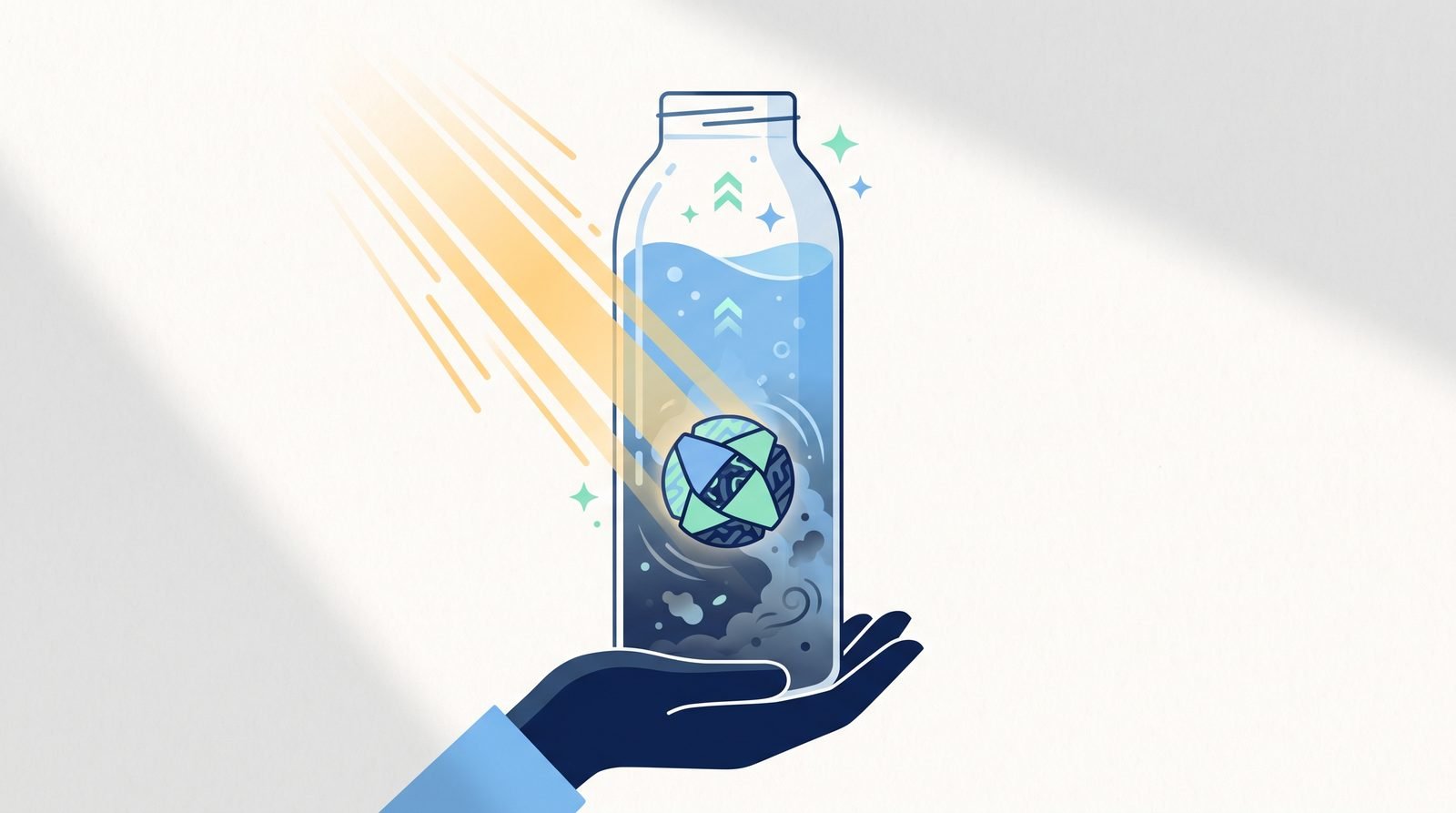
On visits to her grandparents in India, Kurup saw children drinking water that looked too dirty to touch. Her answer was a composite of titanium dioxide and zinc oxide bound in cement that, under sunlight, generates reactive species that kill bacteria; a later version used sand, cement and silver nitrate and reported inactivating coliform bacteria in about 15 minutes of sun. She won the 3M Young Scientist Challenge in 2012 at 14 and later founded Catalyst for World Water.
IP note: Two granted US patents, both titled "Photocatalytic composition for water purification": US 10,183,277 (2019) and US 10,751,702 (2020). Her original 2013 application was abandoned and the invention carried forward in later filings, which is an ordinary and legitimate way to keep a young idea alive while it improves.
12. Remya Jose — the pedal-powered washing machine (Kerala, India, 2003, age 14)
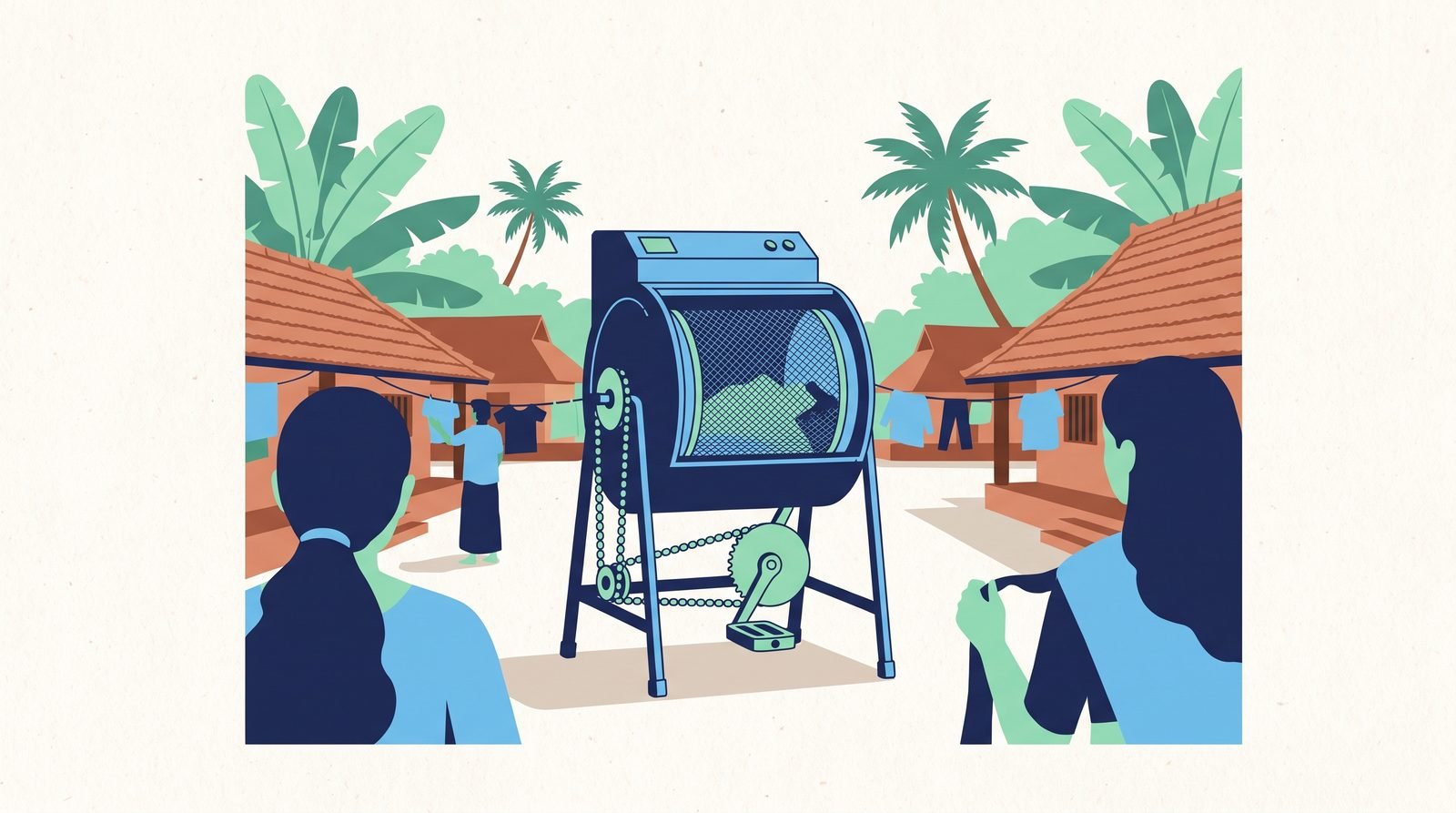
With her mother unwell, Remya and her twin sister were washing the family's clothes at the river and losing study time after Class 10 exams. She sketched a horizontal mesh drum inside a cabin, driven by a bicycle pedal, chain and sprocket, and had a local automobile workshop fabricate it. Soak for ten minutes, pedal for three or four, drain, rinse, pedal again and the clothes come out about 80 per cent dry. No electricity, and it doubles as exercise. Her advice, recorded by NIF: "Whatever you have in mind, try it. Don't worry about making mistakes, they can surely be corrected."
She won the National Innovation Foundation's student award in its third national cycle, presented by President A.P.J. Abdul Kalam.
IP note: The rare Indian entry with a full record. NIF filed Indian patent application 643/CHE/2003 on 7 August 2003; NIF's page records it as granted (Patent No. 207634) and renewed to the eighth year. A 2003 filing has now run its 20-year term, so the design is free for anyone to make. NIF's attempts to license it in India largely failed, while pedal washers are now sold abroad by others. The gap between a grant and a licensee is the whole story of Indian grassroots innovation.
13. Vinisha Umashankar — the solar-powered ironing cart (Tamil Nadu, India, 2018–19, age 12–14)
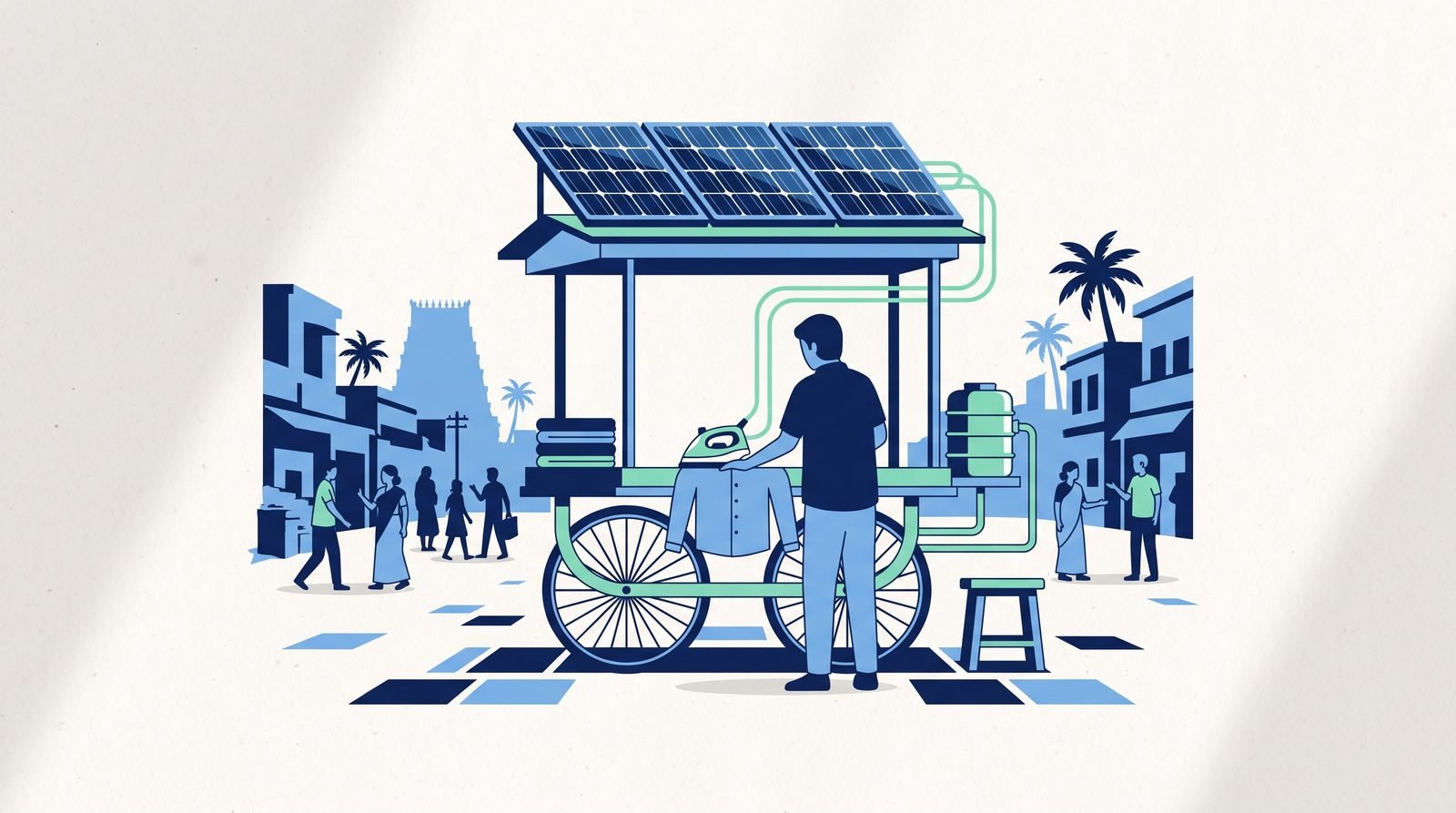
Watching an ironing vendor near her home in Tiruvannamalai tip out spent charcoal, Vinisha calculated how much charcoal India's street ironing trade burns every day, read the physics from college textbooks, and sent a design to the National Innovation Foundation at 12. NIF's engineers built it: roof-mounted solar panels charging a battery bank that powers a steam iron, with about six hours of ironing from a day's sun, plus a coin-operated phone-charging point so the vendor earns more. She won the Dr APJ Abdul Kalam IGNITE Award in 2019, the Children's Climate Prize in 2020, and in 2021, at 14, was the youngest finalist of the Earthshot Prize, then addressed COP26 in Glasgow.
IP note: NPR and The Better India report that NIF assisted with a patent application; TIME described the design as "patented" in 2021. No application number is published on NIF's innovation page and none could be located, so we record it as "NIF-assisted filing reported; number and status unconfirmed". Manufacturing at scale has not been verified as of August 2026. If your school's IGNITE or INSPIRE entry wins, ask NIF for the application number in writing; you will need it later.
14. William Kamkwamba — a windmill from scrap (Malawi, 2002, age 14–16)

Forced out of school by the 2001–02 famine, Kamkwamba found a book called Using Energy in a donated library and copied the windmill diagram with what he had: blue-gum poles, flattened PVC pipe for blades, a bicycle frame and a dynamo. It lit four bulbs and two radios and later charged neighbours' phones. The output was small; the story was not. It became the memoir The Boy Who Harnessed the Wind and a 2019 Netflix film, and he went on to Dartmouth College.
IP note: No patent, and none would have been available for a device assembled from known parts. The copyright in the book and film belongs to publishers and producers, not to the windmill. His Moving Windmills Project now works on wells, solar power for schools and an innovation centre in Kasungu district. Sometimes the asset is the story, and copyright, not patent, is the right tool.
15. Ann Makosinski — the Hollow Flashlight (Canada, 2013, age 15)
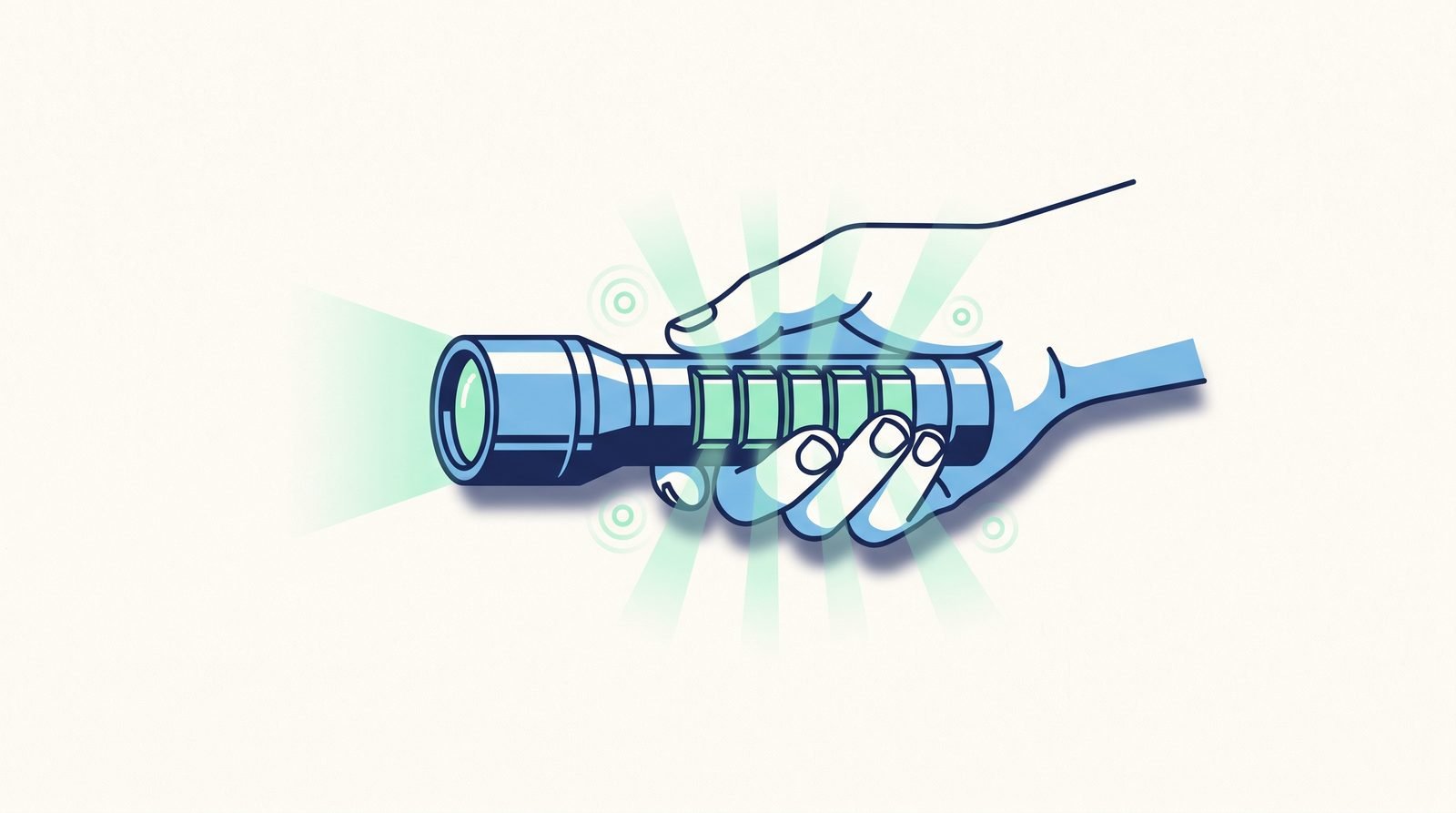
A friend in the Philippines had failed a school year because there was no electricity to study after dark. Makosinski started from a fact she liked: a human body radiates about as much heat as a 100-watt bulb. Four Peltier tiles on an aluminium tube turn the difference between palm heat and the cool air flowing through the hollow core into enough current for LEDs. Parts cost about US$26. She won her age category at the Google Science Fair in 2013.
IP note: Granted and still active. US 9,723,659 and its continuation US 10,178,713, "Thermoelectrically powered portable light source", claim priority from July 2013 and run to 2034; a second family covers a mug that charges from hot drinks (US 10,573,799, 2020). She co-invented with her father through a family company. Neither product was mass-produced, but the patents are real assets, which is more than most science-fair winners can say.
16. Rifath Sharook — KalamSat, a 64-gram space payload (Tamil Nadu, India, 2017, age 18)
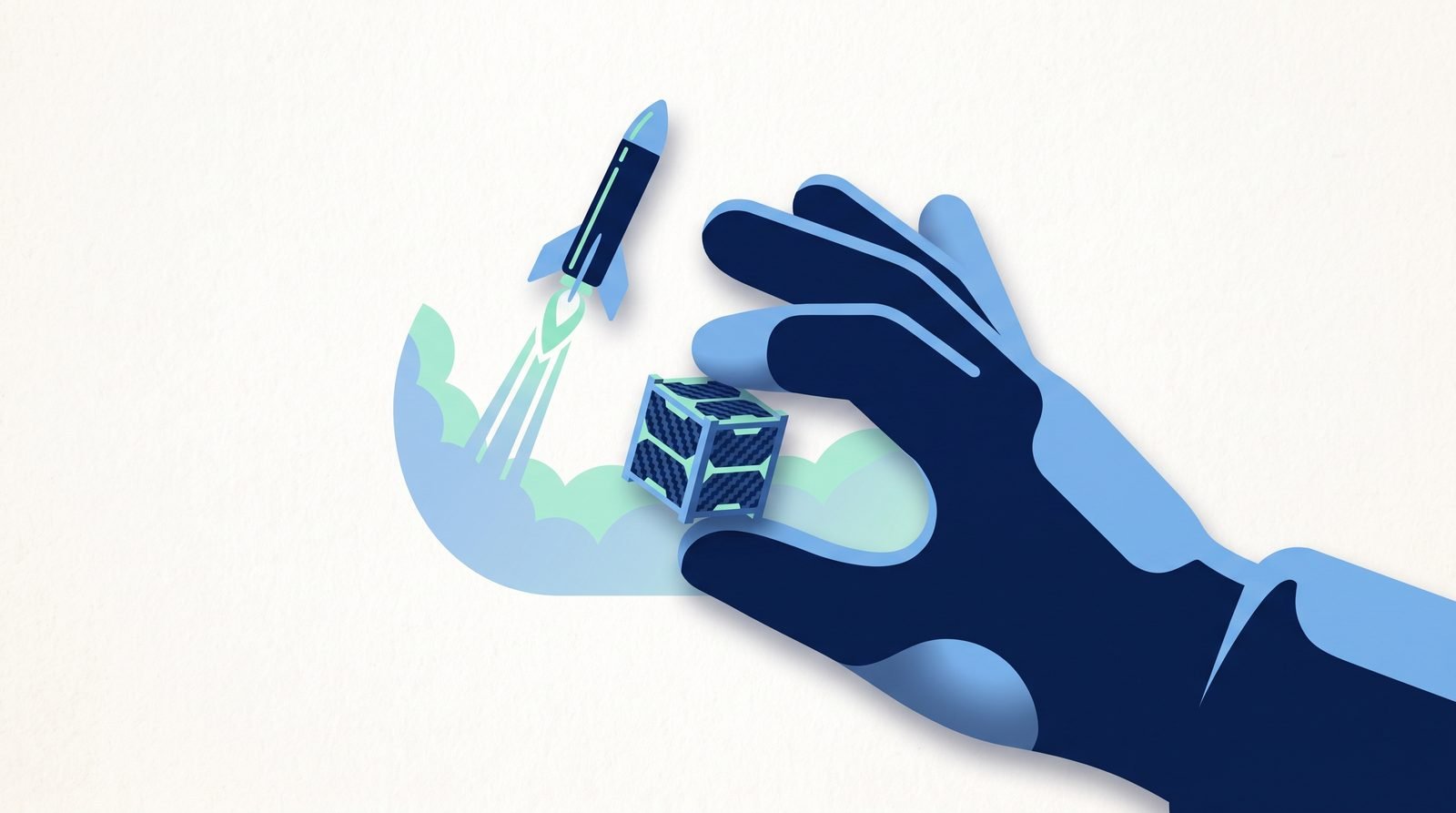
Working with Chennai's Space Kidz India, Rifath led the design of a 3.8 cm, 64-gram payload with a 3D-printed reinforced carbon-fibre shell, an onboard computer and eight indigenous sensors. Its job was to test whether a 3D-printed structure could survive launch and about twelve minutes of microgravity. It flew on 22 June 2017 on a NASA sounding rocket from Wallops Island as part of the Cubes in Space education programme. Space Kidz India's follow-on Kalamsat-V2 was launched by ISRO on PSLV-C44 in January 2019.
Two corrections to the viral version: NASA provided the rocket for an education programme run by a third party, it did not "select" the design from 86,000 entries, and the flight was sub-orbital, so "satellite" is a courtesy title. The engineering achievement stands without the embroidery.
IP note: No public IP record found for KalamSat, in Rifath's name or Space Kidz India's. That is common in student space projects, where the value is the demonstration, not exclusivity.
17. Shalini Kumari — the stair-climbing walker (Bihar, India, 2011, age 12–13)
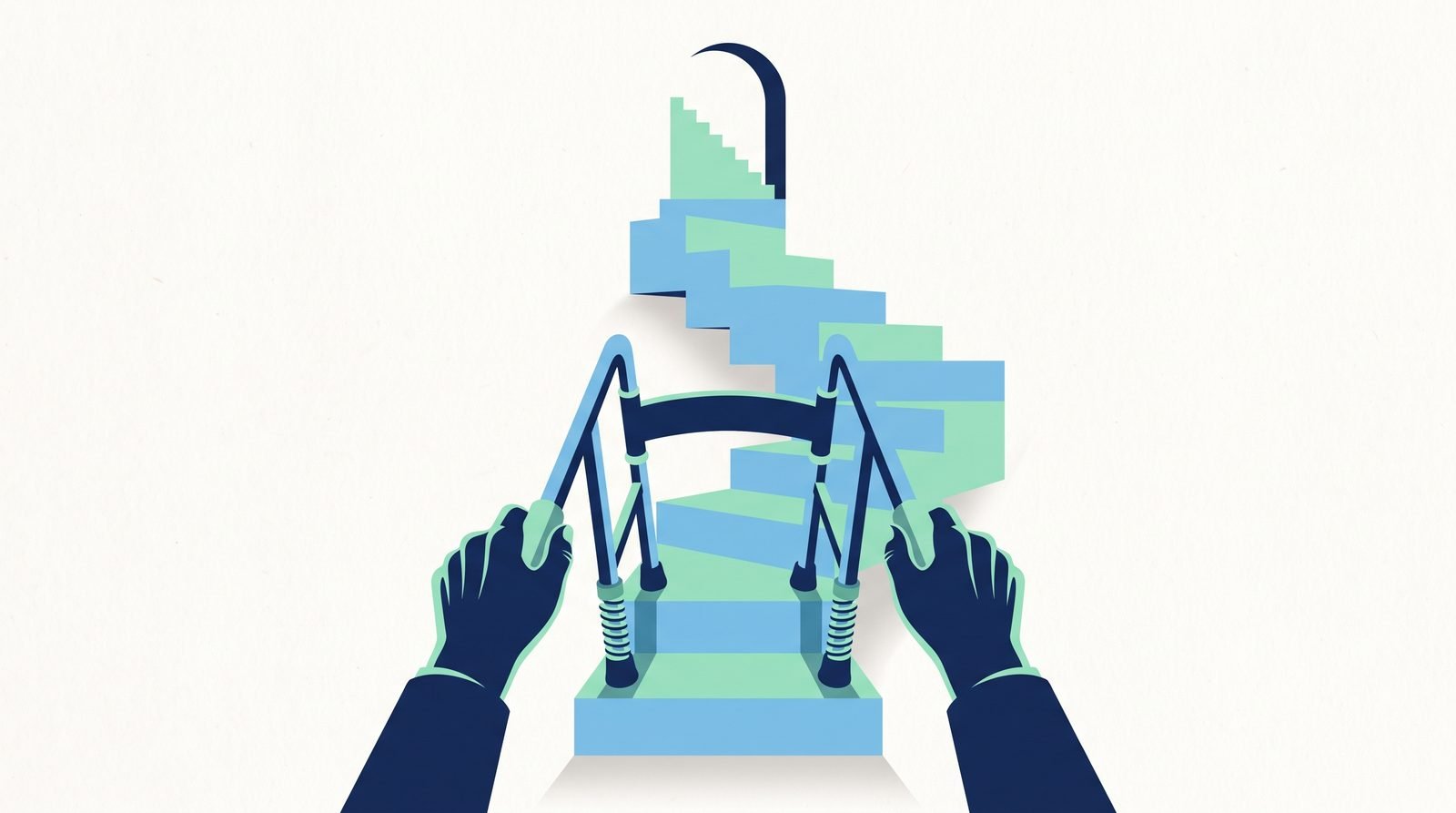
Her grandfather could not use a standard walker on the stairs of their Patna home. Shalini, in Class 8, saw that the fixed length of the front legs was the constraint and made them spring-loaded and self-locking, so they shorten to the height of a step; the frame also folds out a seat and carries a light and horn. NIF's version weighs about 4 kg and was costed around ₹3,000. She won the IGNITE Award in 2011, the National Grassroots Innovation Award in 2015, and a place in the President's Innovation Scholars In-Residence programme at Rashtrapati Bhavan.
IP note: NIF filed Indian patent application 1434/KOL/2011 at the Kolkata office, and its site records a technology transfer to Kaviraa Solutions for manufacture, although the agreement page has since gone offline and the terms and date could not be verified. Grant status was not confirmed on IP India in our check. Even so, this is one of very few Indian school inventions with both a filing number and a named licensee.
18. Angad Daryani — the Shark 3D printer (Mumbai, India, c. 2013, age 13–15)
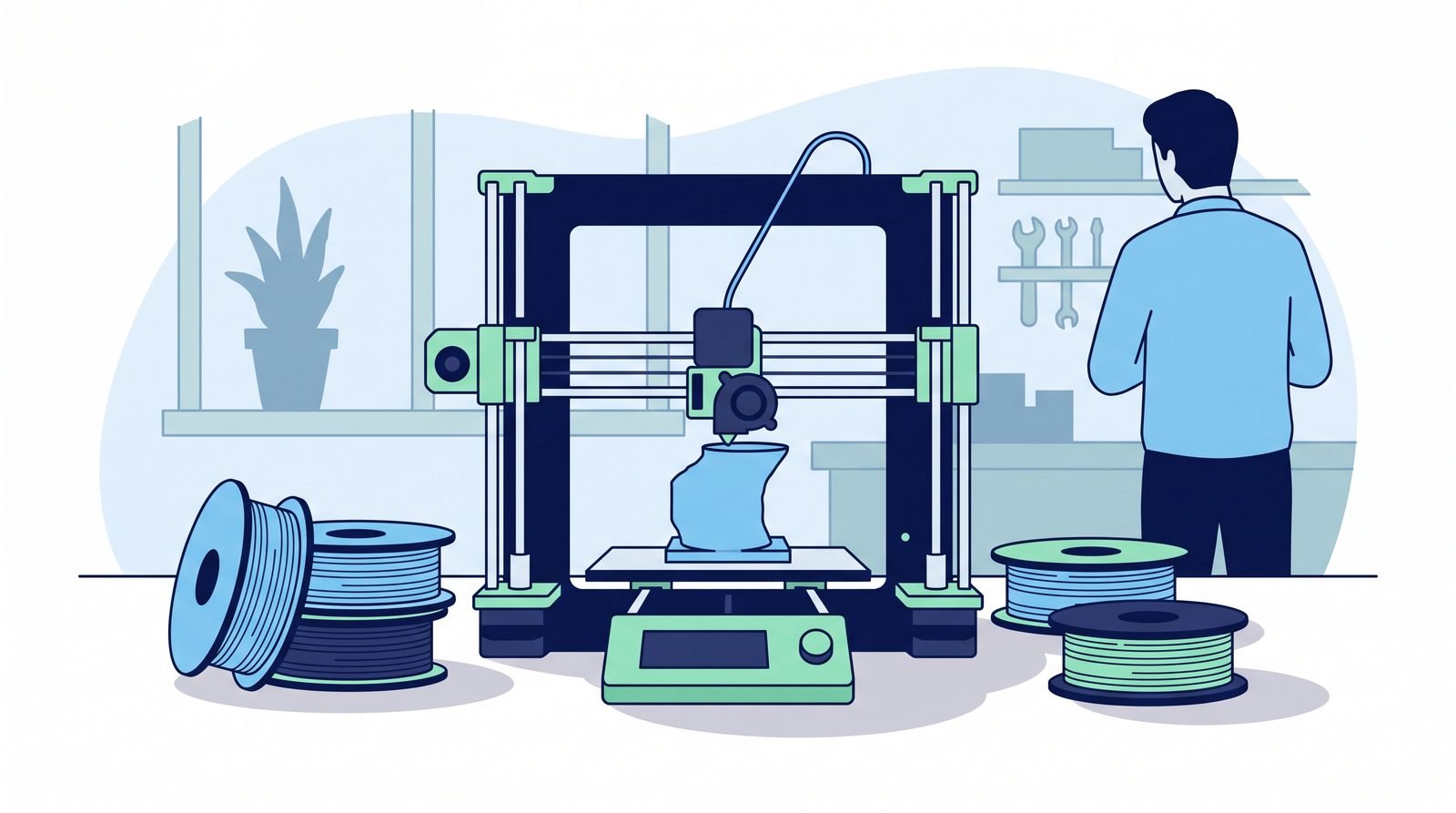
Daryani wanted a 3D printer, could not afford a US$2,000 MakerBot, and built his own from open-source RepRap plans, then sold it as the Shark at roughly ₹20,000–25,000, about a third of competing Indian models. He also ran SharKits, electronics kits for children, and spoke at TEDxGateway at 14. Both companies wound down when he left for Georgia Tech.
IP note: The teenage work was built on an open-source hardware platform, so there was nothing to patent and nothing was filed. As an adult he founded Praan, a filterless air-purification company, and is a named inventor on granted US patents including US 11,772,103 B2 (2023) and design patent D997,329. The teenage tinkering was the training; the patents came with the company.
19. Kelvin Doe — a radio station from scrap (Sierra Leone, c. 2009–2012, age 13–16)
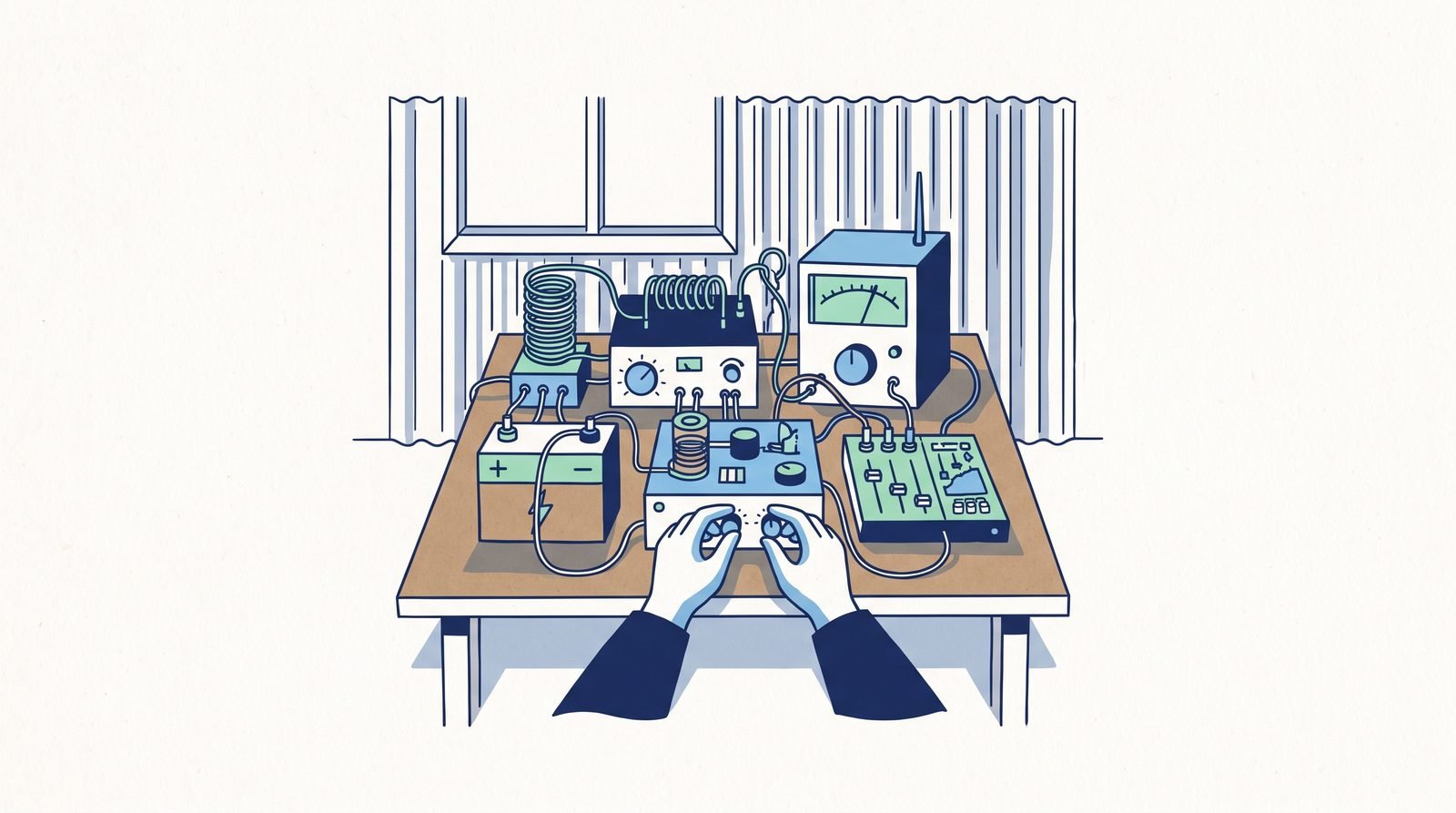
Electricity came to his Freetown neighbourhood about once a week. Doe made batteries from acid, soda and metal wrapped in tape, built a generator from scrap to run a community radio station, and assembled the FM transmitter, mixer and amplifier himself, broadcasting as "DJ Focus". He became the youngest visiting practitioner at MIT in 2012, at 16.
IP note: No public IP record found, and no patentable device: the significance is self-taught engineering under scarcity. He now runs the Kelvin Doe Foundation, a registered Canadian non-profit with a makerspace in Toronto. When the invention is not protectable, the durable asset is the person and the institution built around them.
20. Nilay Kulkarni — Ashioto, footstep mats that count crowds (Nashik, India, 2014–15, age 14–15)
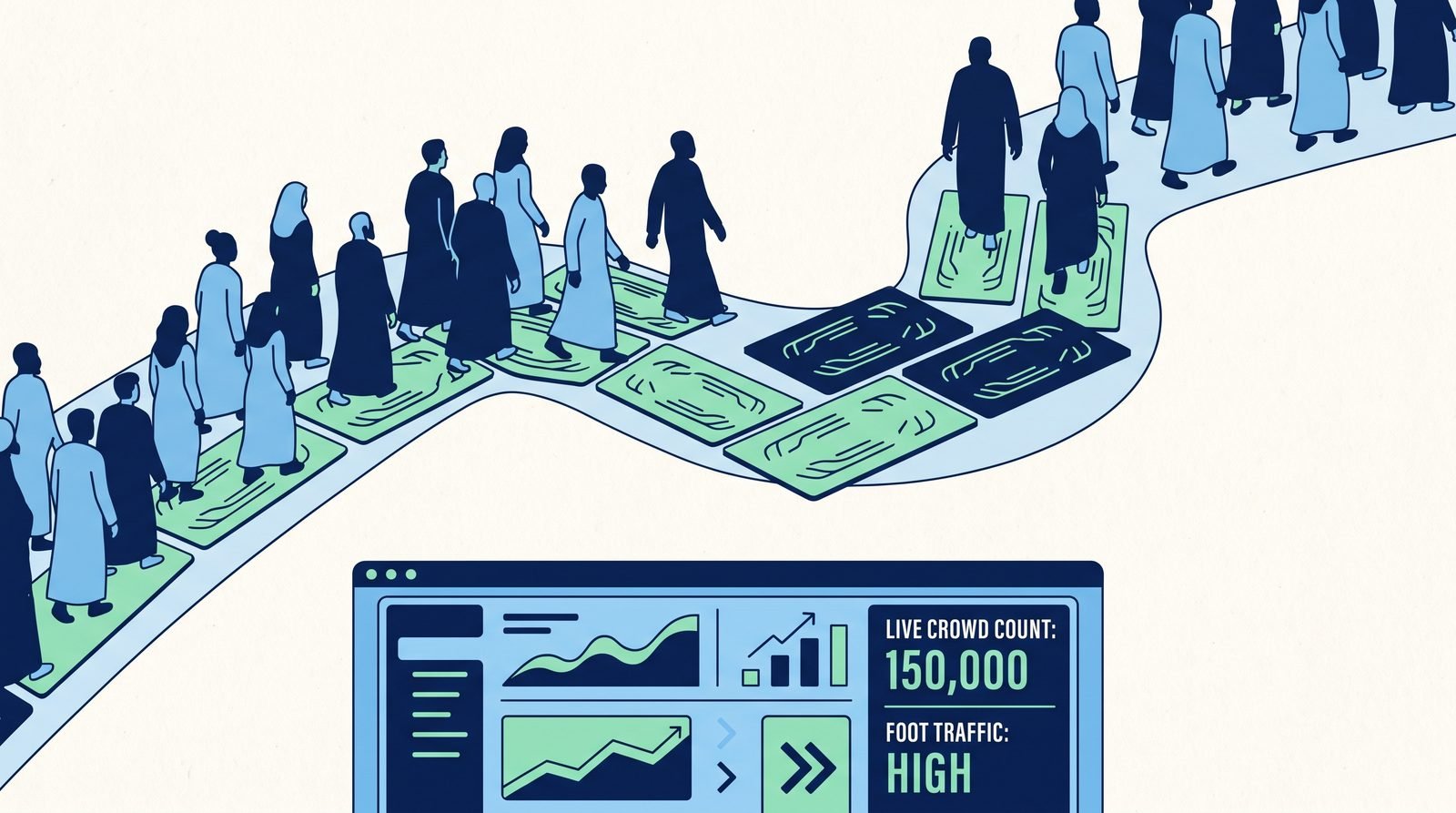
Nashik's 2003 Kumbh Mela stampede killed 39 people. At MIT Media Lab's Kumbhathon in 2014, Kulkarni asked what data the police actually had at the moment of decision, and found the answer was none in real time. Ashioto is a rubber mat with a matrix of piezoelectric pressure switches; each footfall is counted and a microcontroller sends people-per-minute figures to a dashboard so officers can re-route crowds before density becomes dangerous. It counted about 500,000 people over 18 hours across five exit routes at the 2015 Kumbh.
IP note: A company, Ashioto Analytics, was co-founded and is now defunct; Kulkarni chose to release the code as open source. No patent was located. This is a deliberate choice, not an omission, and it is a legitimate one when the goal is adoption by public authorities who cannot pay licence fees.
21. Arsh Shah Dilbagi — TALK, speech from breath (Panipat, India, 2014, age 16)
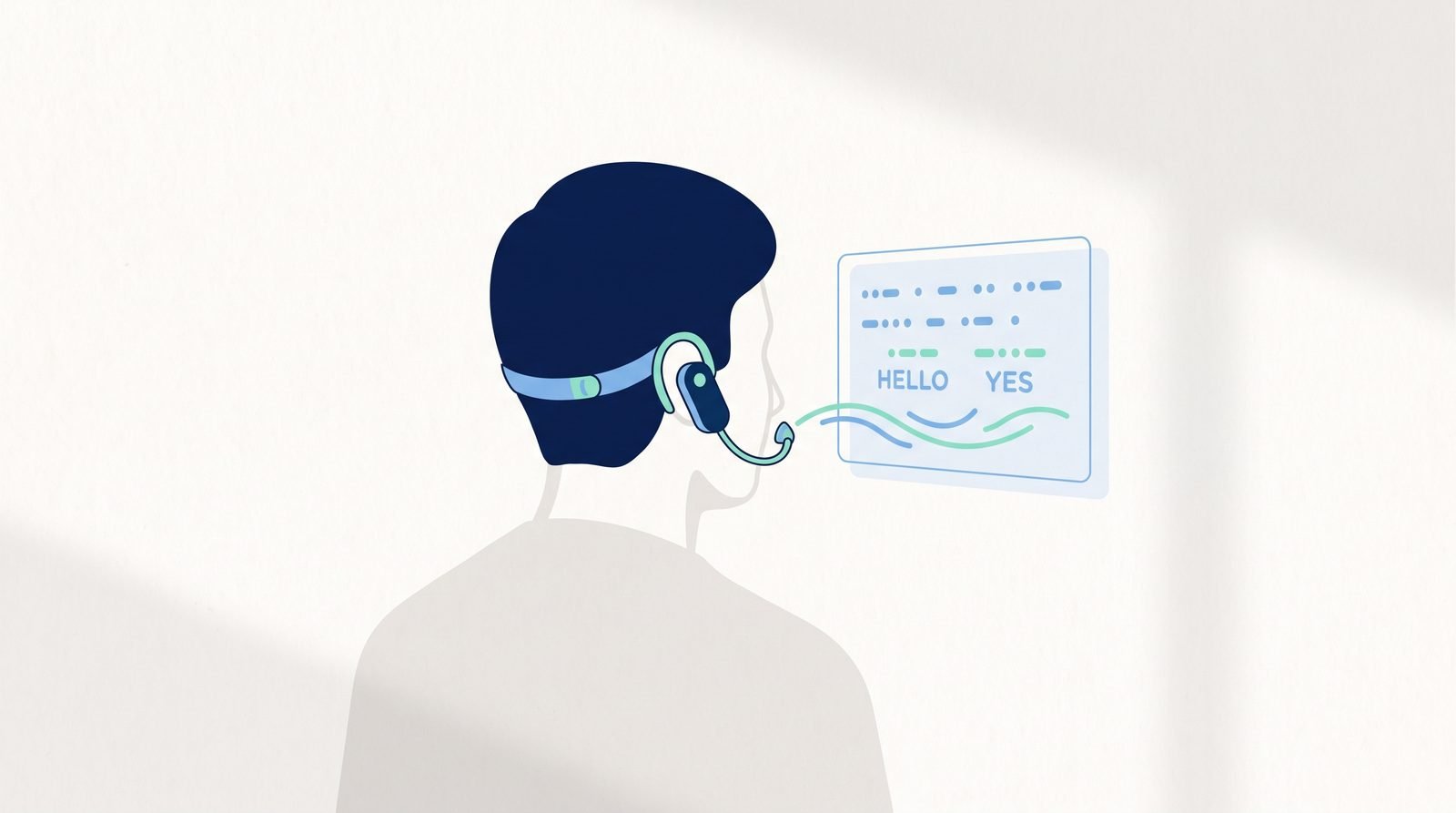
Dilbagi looked for the one motor function almost every locked-in patient keeps: breathing. A MEMS microphone near the nose distinguishes short and long exhalations, a microcontroller reads them as Morse code and a second processor speaks the words. Target cost was under US$100 against thousands for commercial devices; it was tested with a patient at Sir Ganga Ram Hospital, Delhi. He was Google Science Fair 2014's only finalist from Asia and won the Voter's Choice Award; at Intel ISEF 2015 he is recorded as receiving a special award from the American Intellectual Property Law Association.
IP note: In October 2014 he said, "I have filed a patent for it, which is in process right now." No application number or publication could be located, so treat it as self-reported. TALK did not reach market; he went to Princeton and later founded a Y Combinator startup. An AIPLA award for a device whose patent cannot be traced is itself a lesson in following through.
22. Ryan Patterson — the sign-language glove (USA, 2001, age 17)
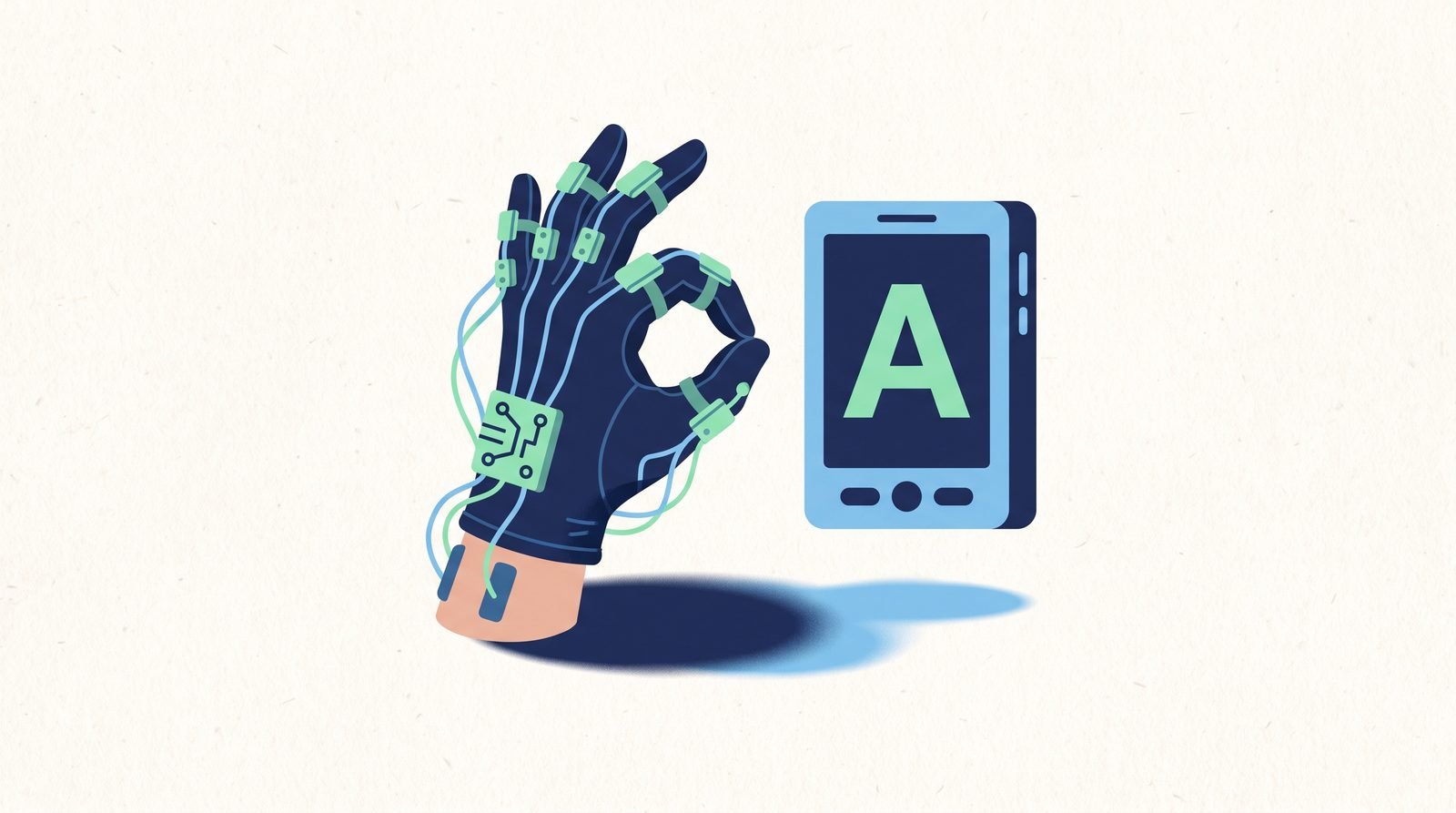
Watching deaf customers at a Burger King rely on an interpreter to order, Patterson fitted a leather golf glove with ten flex sensors and a small circuit board that matched hand shapes to the American Sign Language alphabet and displayed each letter in under half a second. It won top honours at Intel ISEF 2001, first place at the Siemens Westinghouse Competition in December 2001 and first place at the Intel Science Talent Search in March 2002, with scholarships exceeding US$400,000.
IP note: Lemelson-MIT records that he obtained a provisional patent. No granted patent or published application followed. A US provisional application lapses after twelve months if it is not converted; India's provisional specification works the same way, with a complete specification due within twelve months. The glove was never commercialised; Patterson now runs an engineering firm that has worked on medical-delivery drones. A provisional is a promise to yourself with a deadline attached.
23. Jack Andraka — a paper sensor for pancreatic cancer (USA, 2012, age 15)
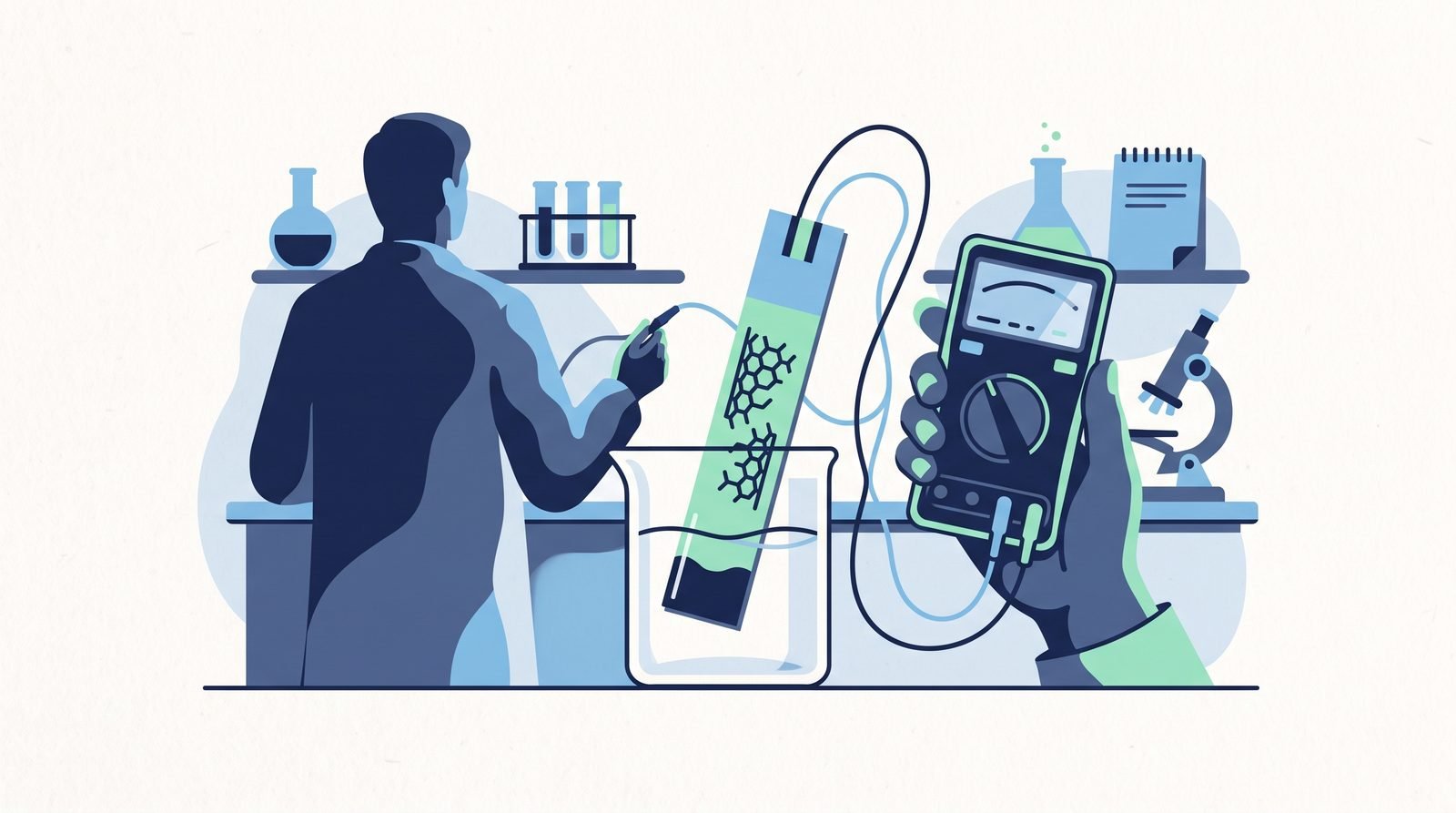
After a family friend died of pancreatic cancer, Andraka wrote to about 200 researchers asking for lab space; one at Johns Hopkins said yes. His dipstick coats filter paper with carbon nanotubes and antibodies to mesothelin, a protein over-expressed in the cancer; binding changes the paper's conductivity, read with a multimeter. He won the top award at Intel ISEF 2012 and a global speaking career followed.
The claims did not hold up. The work was never published in a peer-reviewed journal, senior scientists said the speed and cost comparisons used outdated baselines, and Johns Hopkins called the results highly preliminary. Andraka himself later described it as a proof of concept. He appears here because the episode is instructive, not because the device works.
IP note: International application WO2013172866, "Sensors for detection of mesothelin", priority May 2012. Google Patents lists it as ceased, with no national-phase entry; the international examination reportedly cited prior art and a lack of inventive step. Publicity is not prior art in your favour. Examiners read the literature that the news cycle skips.
24. Param Jaggi — the Algae Mobile (USA, 2008–09, age 14–15)
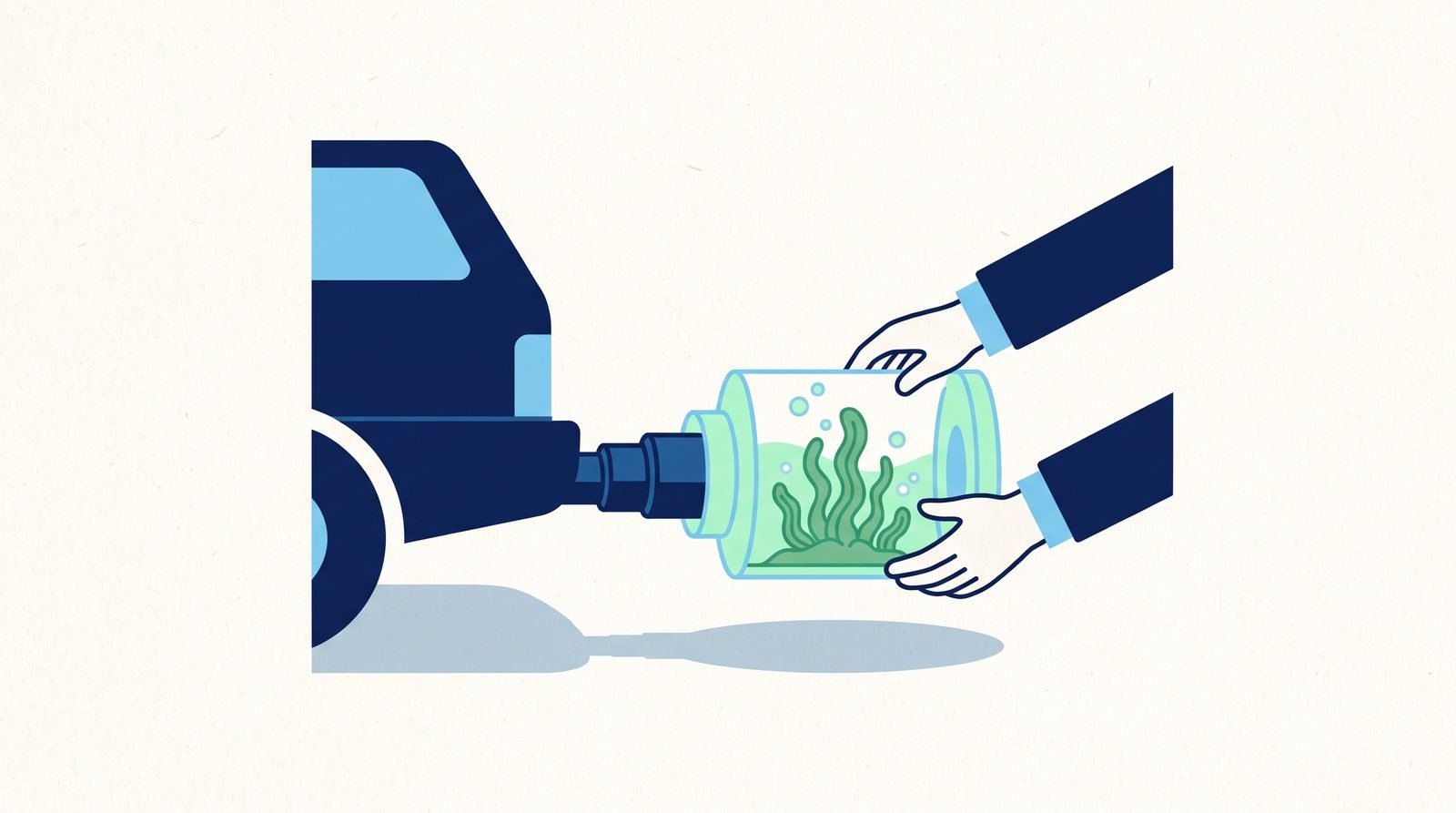
Stopped at a stop sign in Plano, Texas, Jaggi, from an Indian-American family, watched exhaust leave the car in front and asked whether a living filter could sit on the tailpipe. His canister bubbles exhaust through an algae culture so photosynthesis converts part of the carbon dioxide. Algae survival at exhaust temperatures kept it a prototype, but it won the EPA's sustainability award at Intel ISEF 2011 and put him on two Forbes 30 Under 30 lists.
IP note: The clearest cautionary tale on the list. US Patent 8,409,851 B2, "Bioactive carbon dioxide filter apparatus", priority 23 December 2008 (age 14), granted 2 April 2013 (age 18), sole inventor. It expired on 2 April 2017 for non-payment of the first maintenance fee, with fourteen years of term left. India's renewal fees start from the third year and, if you miss them and the six-month extension, restoration is possible but not guaranteed. Diarise the renewals the day the grant arrives.
25. Heman Bekele — a soap that carries a skin-cancer drug (USA/Ethiopia, 2023, age 14)
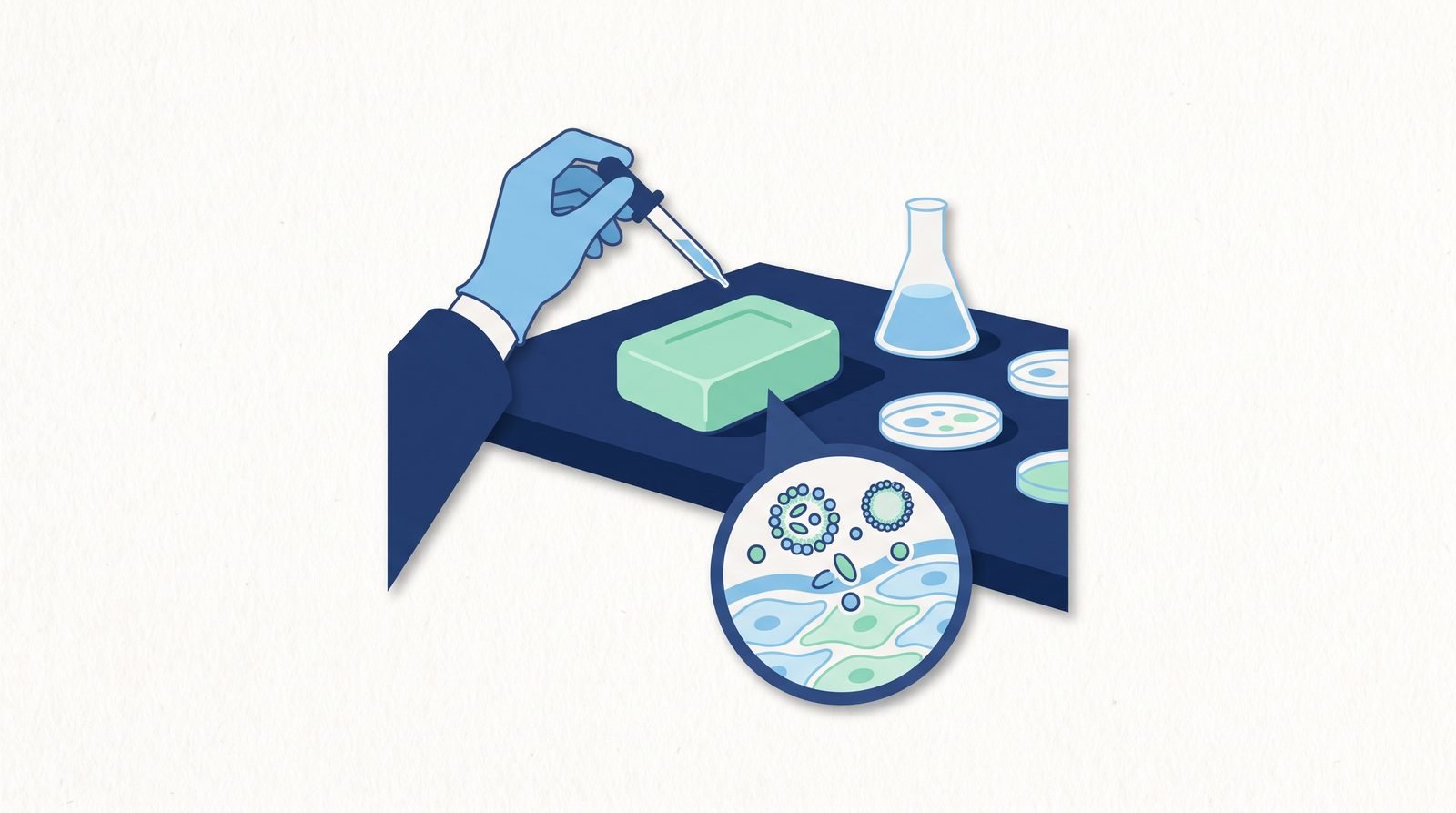
Remembering labourers working in strong sun in Ethiopia, Bekele looked for the cheapest possible way to deliver an existing drug. His soap carries imiquimod, a topical immune-response medicine already used for some skin cancers, in lipid nanoparticles designed to stay on the skin after the suds rinse off. He won the 3M Young Scientist Challenge in 2023 and was TIME's Kid of the Year in 2024; he now works in a Johns Hopkins lab while finishing school.
Two journal commentaries have cautioned that no peer-reviewed data exist and that imiquimod does not treat melanoma, so "cure" headlines overstate the case. The idea is credible; the evidence is pending.
IP note: US application 2025/0332089 A1, "Water-soluble medicine delivery form", filed 29 April 2024 by Bekele as an individual applicant, published 30 October 2025, with a non-final office action issued in April 2026. Pending, not granted. He filed before the publicity peaked, which is exactly the right order.
Tier 3 — Proof of concept with a real record (ranks 26–40)
26. Taylor Wilson — nuclear fusion at 14 (USA, 2008)
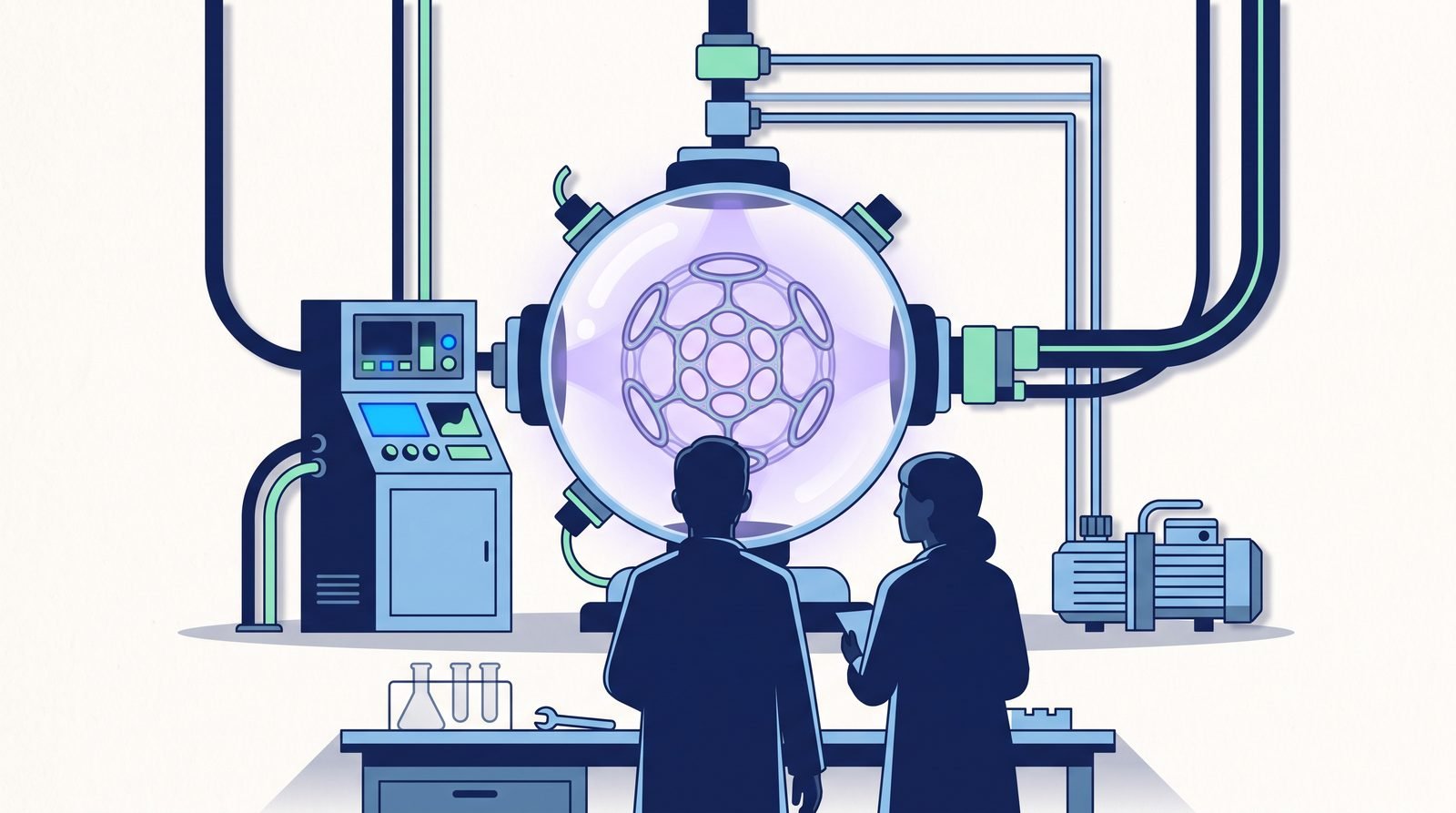
Wilson persuaded the University of Nevada, Reno's physics department to host a 14-year-old after his parents' garage became unsafe. His inertial electrostatic confinement fusor accelerates deuterium ions into a central grid until a small fraction fuse and release neutrons. It consumes far more energy than it makes; the achievement is building one at 14, which is widely reported, though not formally adjudicated, as the youngest ever. He later won the Intel Young Scientist Award for a low-cost radiation detector and a Thiel Fellowship.
IP note: The fusor is a 1960s Farnsworth-era design (see rank 2), so there was nothing to patent in the fusion feat itself. His first filings came at 18: US applications for a neutron detector (2012), radioisotope production (2012, 2017) and a molten-salt reactor (2015). Grant status of those was not confirmed in our check. Building something famous and inventing something new are different acts, and only the second is patentable.
27. Blaise Pascal — the Pascaline calculator (France, begun 1642, age 18–19)

To spare his father, a royal tax commissioner in Rouen, endless hand additions, Pascal began a mechanical adding machine at 18 or 19. Its key invention is the sautoir, a gravity-assisted carry lever that advances the next wheel by one when a wheel passes nine, so carries ripple across all digits without jamming. About fifty prototypes and twenty finished machines were made; nine survive, and in late 2025 a Christie's sale of one was suspended when France moved to declare it a national treasure.
IP note: On 22 May 1649 Pascal received a privilège du roi, an exclusive royal right to design and make calculating machines in France, forbidding others to make or sell them. It is the ancien-régime ancestor of the patent. Only the start of the project falls in his teens; the privilege came at 25. The machines were expensive and sold poorly. Exclusivity does not create a market.
28. Fionn Ferreira — magnets that pull microplastics from water (Ireland, 2017–19, age 16–18)
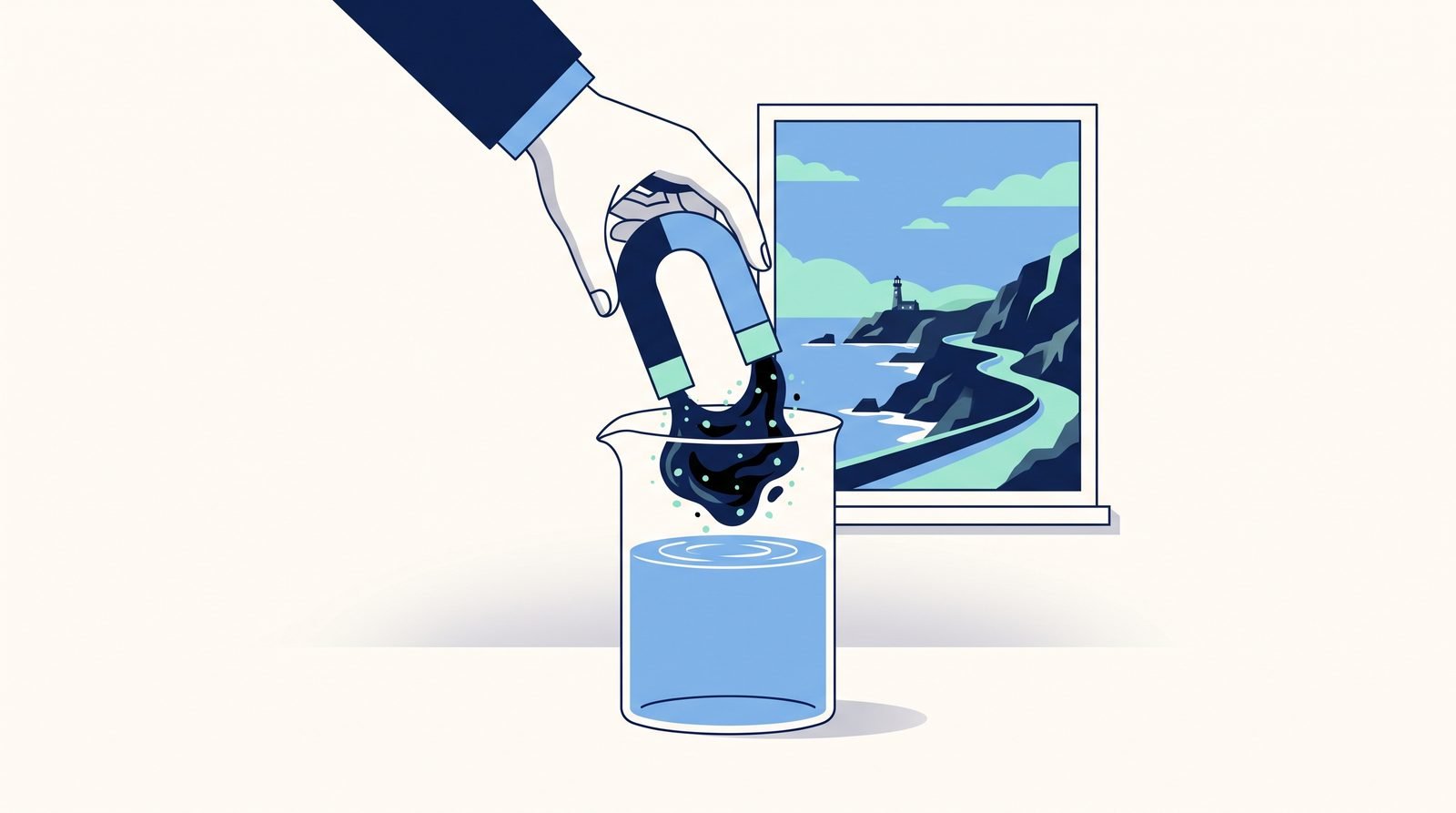
Kayaking near his West Cork home, Ferreira saw plastic stuck to an oil-coated rock and put two facts together: oil binds non-polar plastic, and magnetite binds to a magnet. Add a ferrofluid of magnetite in vegetable oil to contaminated water and a magnet lifts out the oil, plastic and all. His ISEF abstract reports 87.6 per cent average removal across ten plastic types. He won the Google Science Fair grand prize in 2019, placed third in the European Patent Office's Young Inventors Prize in 2023, and is now a doctoral researcher at ETH Zürich.
IP note: His website states a patent application titled "Ferrofluid-based separation of microplastic particles from aqueous media" was filed in 2020. No published application or grant could be found under his name, so the office, number and status are unconfirmed; it may be unpublished, withdrawn or filed under his company, Fionn & Co. An EPO prize for a filing nobody can see is a reminder to publish your application number once it is safe to do so.
29. Kiara Nirghin — a drought polymer from orange peel (South Africa, 2016, age 16)
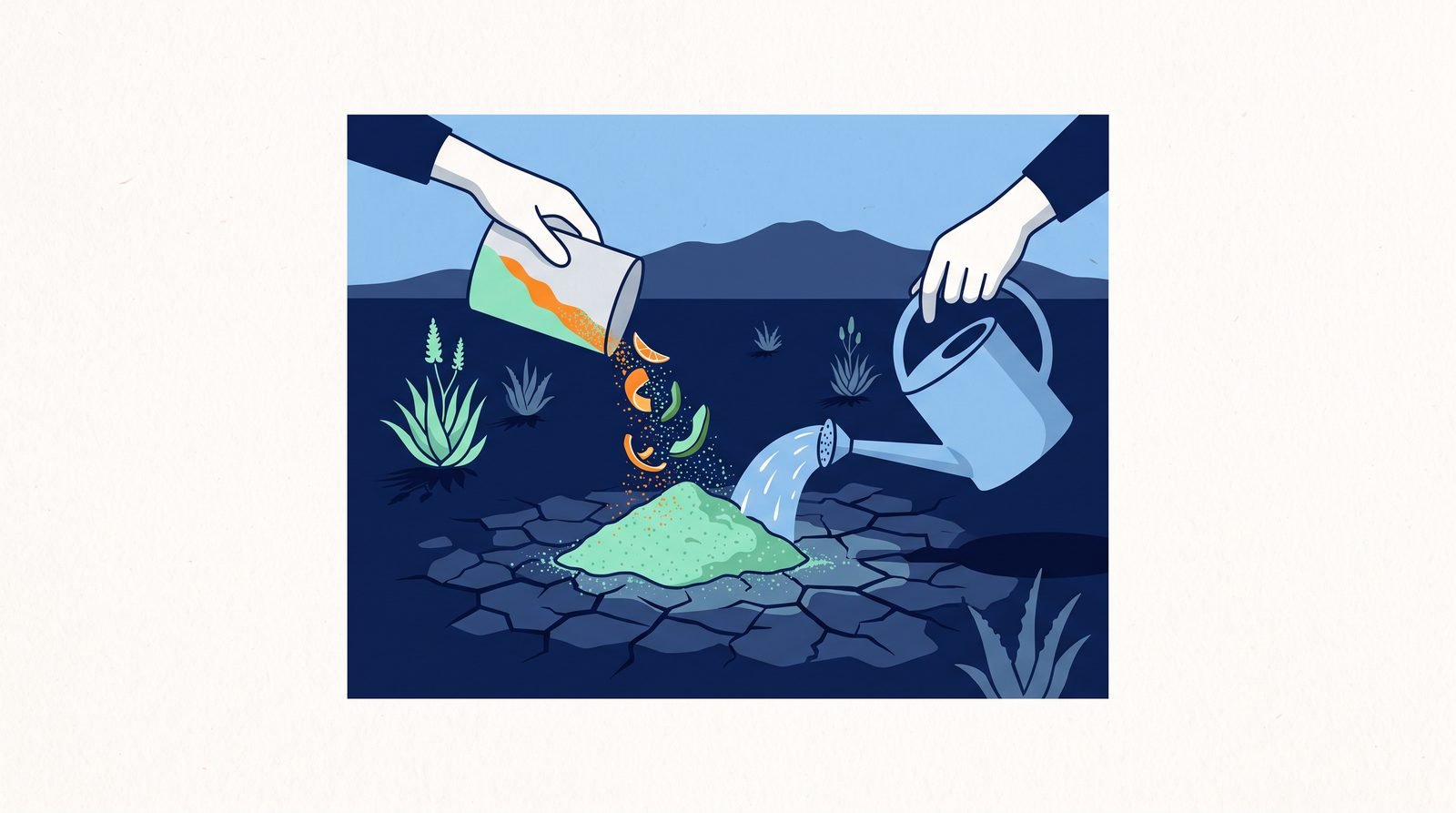
In the middle of South Africa's worst drought in decades, Nirghin asked why the superabsorbent polymers that could help farmers were petroleum-based and too expensive for smallholders. She boiled orange peel for its pectin, mixed it with dried peel and avocado skin, sun-dried the blend to cross-link it and ground it to a powder that holds many times its weight in water and releases it slowly to roots. She won the Google Science Fair grand prize in 2016.
IP note: No public IP record found for the polymer; the method was published openly in her project. She went on to Stanford, a master's in computer science and a career in AI; in February 2026 she was reported as founder and chief executive of Emanate, an industrial-AI startup backed by prominent Silicon Valley investors. The polymer was never commercialised. Open publication is fine when you never intend to sell; it forecloses the option later.
30. Nikhiya Shamsher — QuitPuff, a saliva test for oral-cancer risk (Bengaluru, India, 2016–19, age 14–17)
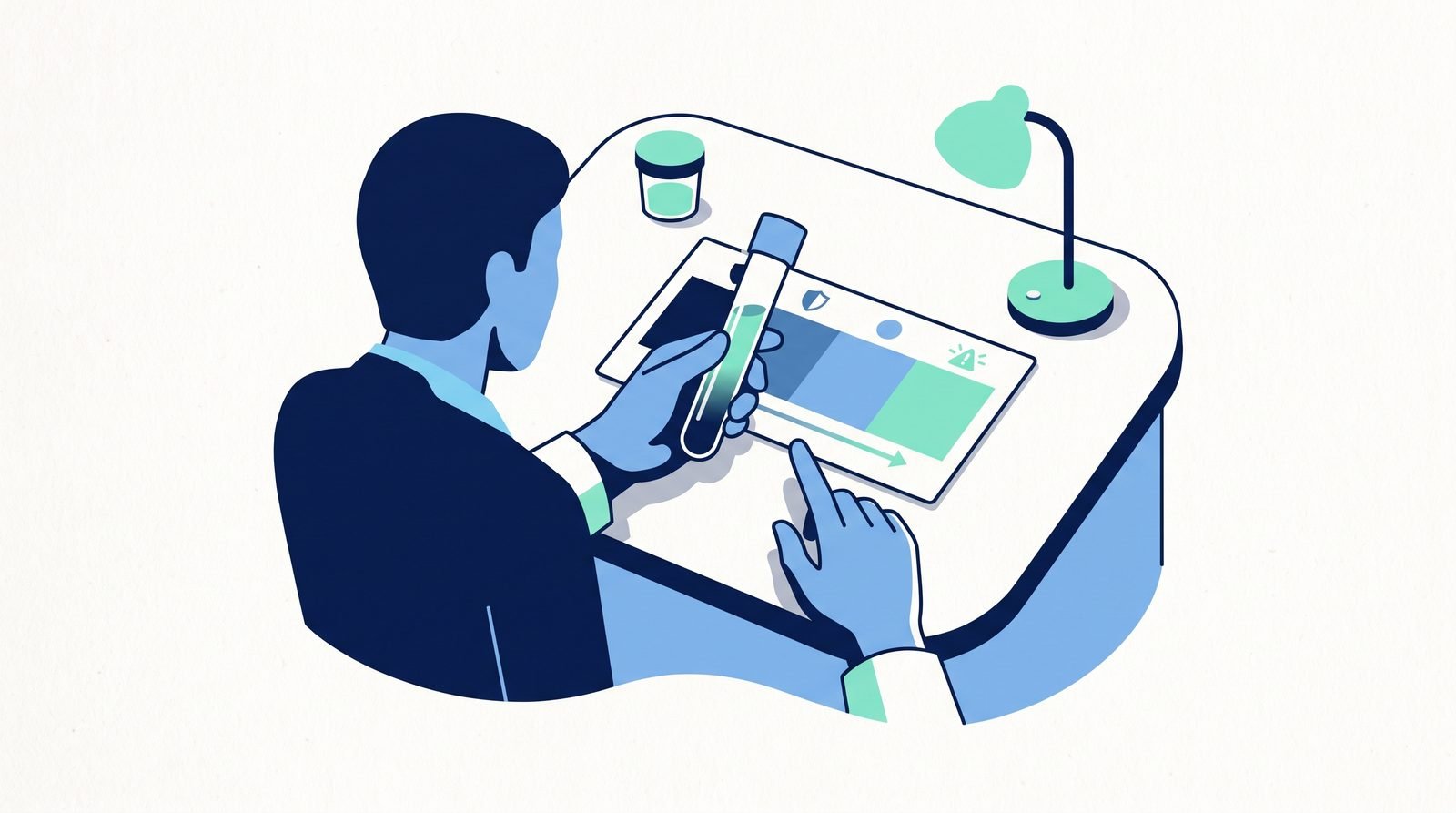
At 14, Nikhiya saw an oral-cancer patient and asked why a disease with a slow, visible onset in smokers had no cheap early screen. QuitPuff mixes saliva with a reagent that reacts with malondialdehyde, a by-product of lipid peroxidation; after fifteen minutes' heating the colour is matched against a chart. Her ISEF abstract reports 500 subjects, 96 per cent accuracy and a 0.93 correlation with laboratory spectroscopy, and the work was published in two peer-reviewed journals. She won a Third Award at Intel ISEF 2019 and the Gandhian Young Technological Innovation Award.
A correction that circulates widely: her 2017 Diana Award was for social work, supplying school materials to 4,200 children, not for an invention.
IP note: No public patent record found for QuitPuff; a product website exists. She is at Stanford studying bioengineering. Peer-reviewed publication before filing is the classic sequence that costs a student patent rights, because in India your own paper is prior art against you unless it falls within the narrow exceptions in Section 31 of the Patents Act, which protect only certain disclosures, such as a paper read before a learned society, and only for twelve months.
31. Akash Manoj — a patch to catch silent heart attacks (Tamil Nadu, India, c. 2015–17, age 15–17)
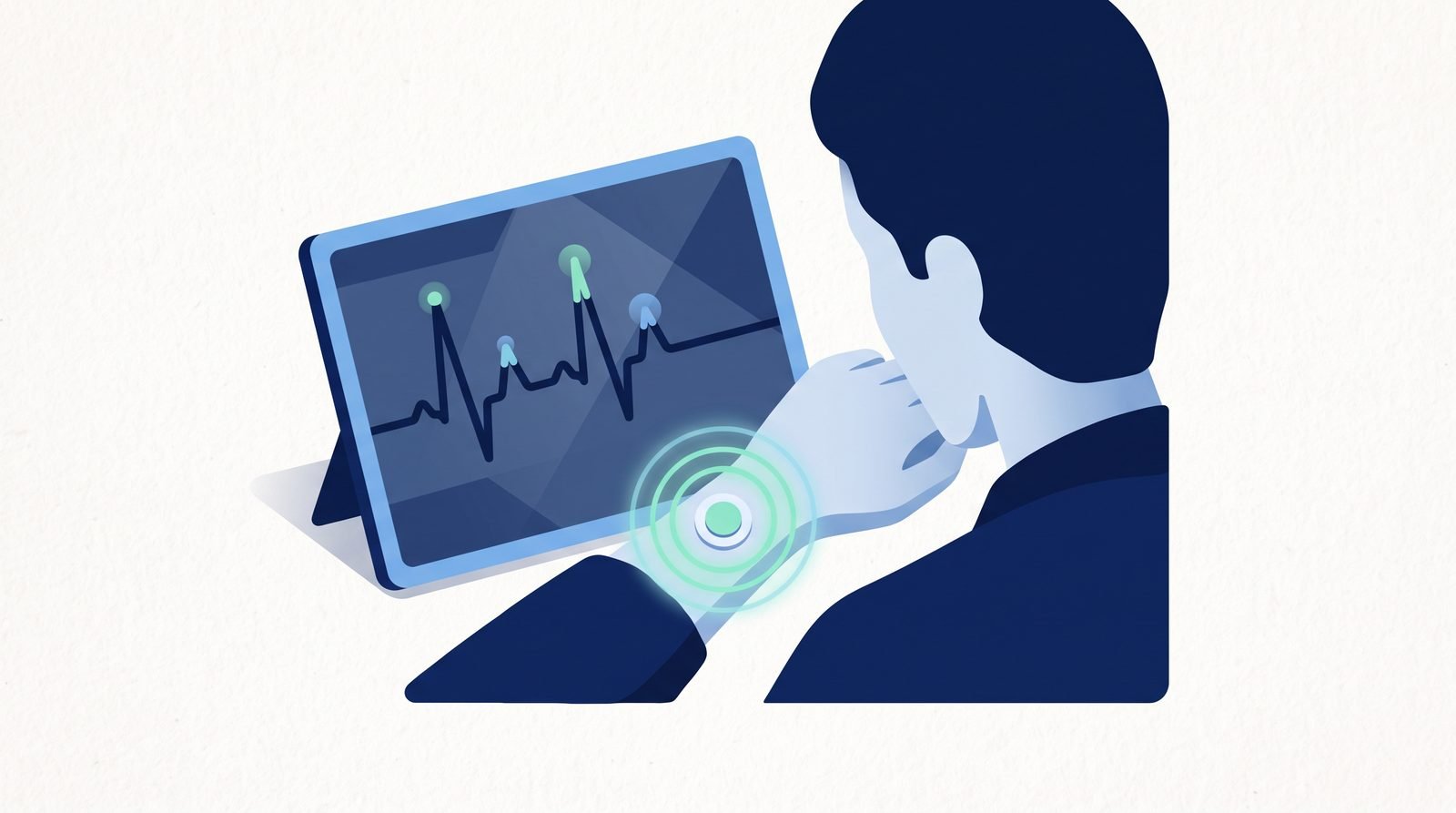
Akash's grandfather, a diabetic, died of a heart attack that produced no chest pain. Spending holidays in the IISc library in Bengaluru, Akash settled on an early biomarker rather than the ECG: a skin patch applies a small positive charge to draw the negatively charged protein h-FABP toward a sensor and reads its concentration, aiming to warn hours before an event. He received the National Child Award from the President in 2017 and gave a TED talk in 2019; he is now at medical school in Prague.
Claims that the device is endorsed by named foreign institutions could not be confirmed and should not be repeated. Detection six hours in advance is the inventor's target, not a validated result.
IP note: Forbes India reported in 2020 that he had filed a provisional patent. No number or publication was located. A provisional filed in India needs a complete specification within twelve months or it is deemed abandoned; if that happened here, the public record would show nothing, which is what we found.
32. Sahithi Pingali — citizen-science lake monitoring (Bengaluru, India, 2015–17, age 15–17)

Bengaluru's lakes were foaming and catching fire. Pingali's observation was that the problem was under-measured rather than unknown, so she made measurement something residents could do: a low-cost testing kit paired with an app that pools readings into a live map. She took second place in Earth and Environmental Sciences at Intel ISEF 2017 and had a minor planet named after her by MIT Lincoln Laboratory. She went on to Stanford.
IP note: No public IP record found for the kit or the WaterInsights platform. Citizen-science tools are usually run open, and a trademark for the platform name would have been the sensible protection to seek. If you are building a brand around a project, check the Trade Marks Registry before the name spreads.
33. Shubham Banerjee — Braigo, a Braille printer from Lego (USA, 2014, age 12–13)
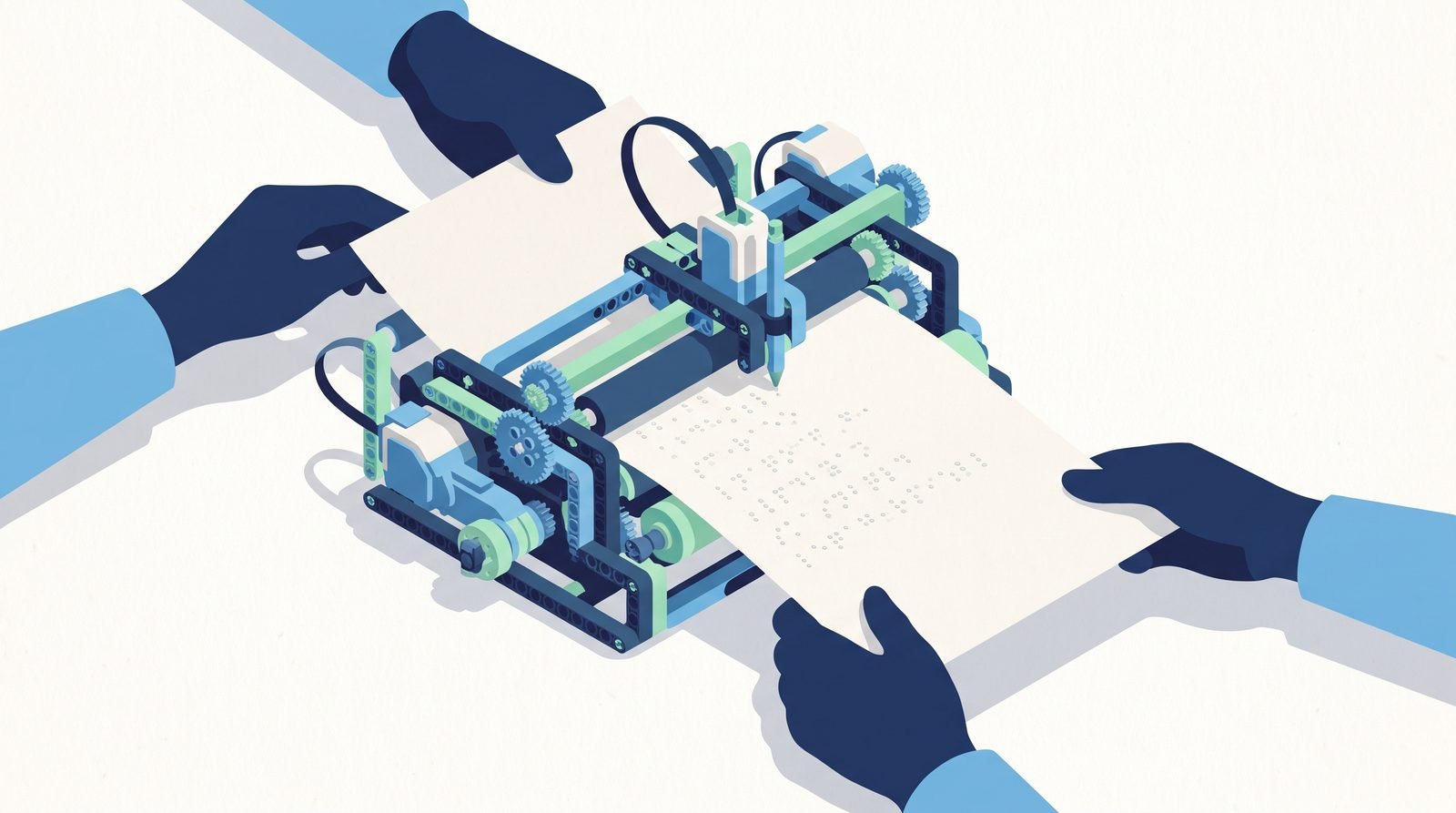
Told to "look it up" when he asked how blind people read, Banerjee built a Braille embosser from a Lego Mindstorms kit for a middle-school science fair, cutting the cost of a Braille printer from about US$2,000 to about US$350. At 13 he founded Braigo Labs with backing from Intel Capital and was a guest at the White House Maker Faire.
IP note: Press at the time said Braigo Labs had "patent-pending technology", but no granted US patent naming him for a Braille printer could be found. "Braigo" was described as a registered trademark of Braigo Labs Inc. The company appears dormant; the promised consumer version never shipped. Venture funding at 13 does not substitute for a filing that reaches grant.
34. Hemesh Chadalavada — Alpha Monitor for people who wander (Hyderabad, India, 2019–24, age 13–17)
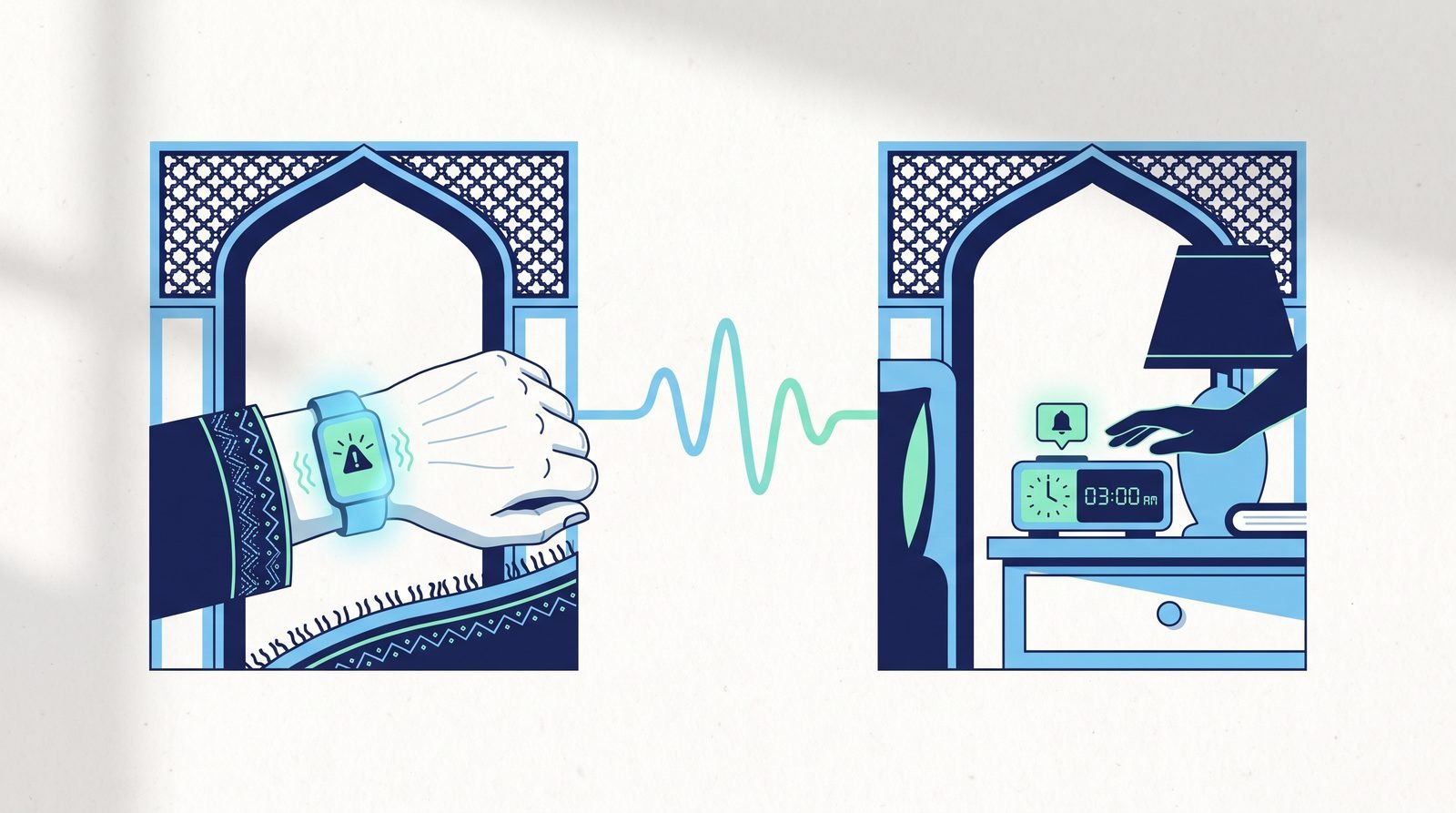
In 2019 Hemesh's grandmother, who has Alzheimer's, left a gas stove on and wandered at night. His wristband uses a gyroscope-based algorithm to tell sleeping from standing from walking, reads pulse and temperature, detects falls and alerts a caregiver's base unit; later versions use long-range LoRa radio so it works without Wi-Fi. He built about twenty prototypes, won the Pradhan Mantri Rashtriya Bal Puraskar in 2021 (not 2023, as some profiles say) and Samsung Solve for Tomorrow in 2022, and is now at Rice University.
IP note: His own site lists the wristband as "Patent pending (filed December 2019)". No application number or publication was located and a second review found no claim of a patent on the government NITI Frontier Tech profile. Record it as self-reported. A launch was targeted for late 2025; no product or company record was confirmed by August 2026.
35. Sindhoora Raja — a vibrotactile device for Parkinson's (Bengaluru, India, 2022–25, age 14–16)
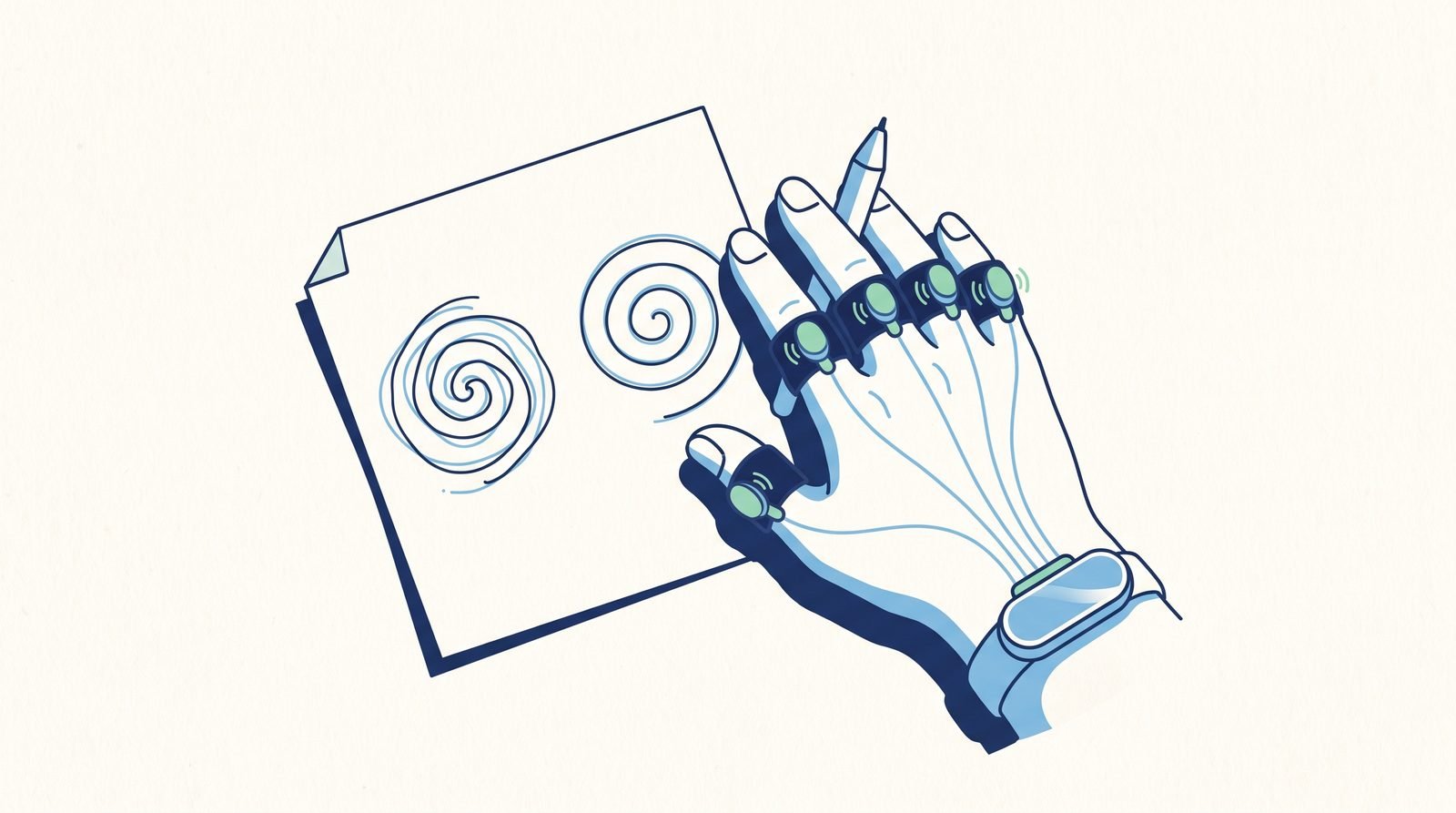
Sindhoora focused on elderly patients in rural India who cannot reach a neurologist. Her device delivers patterned vibrations to the fingertips to stimulate sensory-motor pathways and reduce tremor and "freezing of gait", and she has built screening tools, a spiral-drawing test and a voice test, using machine learning. She received the Pradhan Mantri Rashtriya Bal Puraskar in December 2024 while in Class 11.
IP note: Science India Magazine reports she filed a patent in Class 9 and that it has since been published. The application number could not be located in our search; an IP India InPASS check by inventor name is the one-step way to confirm it. If the report is right, her application has already passed the publication stage, which in India happens 18 months after the priority date unless early publication is requested.
36. Kavya Kopparapu — Eyeagnosis and GlioVision (USA, 2016–19, age 15–18)
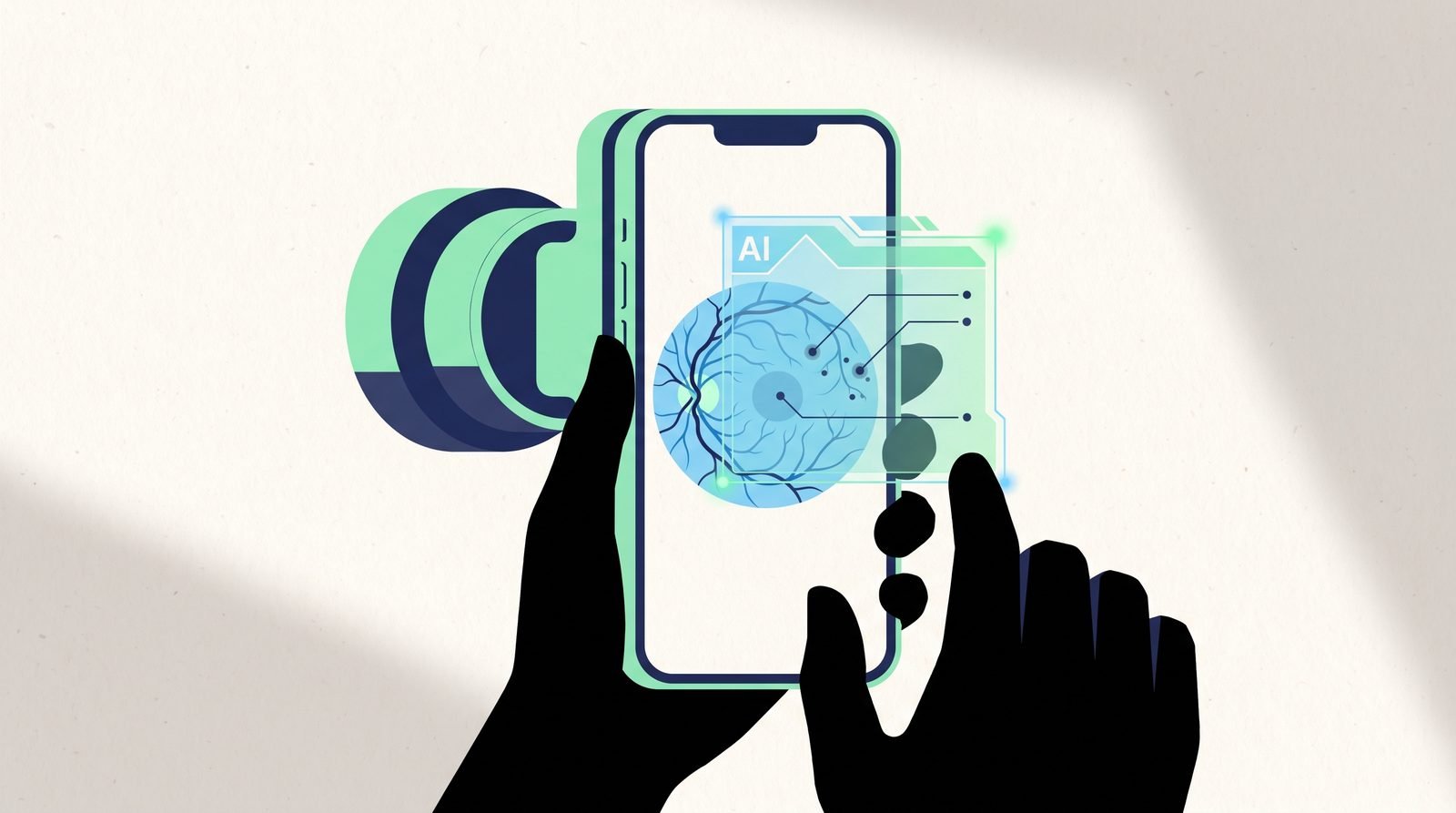
Her grandfather's diabetic retinopathy in India prompted Eyeagnosis: a 3D-printed lens clips onto a phone and a neural network reads the retinal photo for signs of disease, for clinics without an ophthalmologist. GlioVision followed, reading a scanned brain-tumour slide to predict molecular subtype in seconds. She was a Regeneron Science Talent Search finalist in 2018 and founded the Girls Computing League.
IP note: One secondary profile says GlioVision "has been granted a patent". No patent naming her could be found on Justia or Google Patents, so we record the claim as unverified. Do not print a patent number you cannot find on the register.
37. Eesha Khare — a flexible supercapacitor (USA, 2013, age 18)
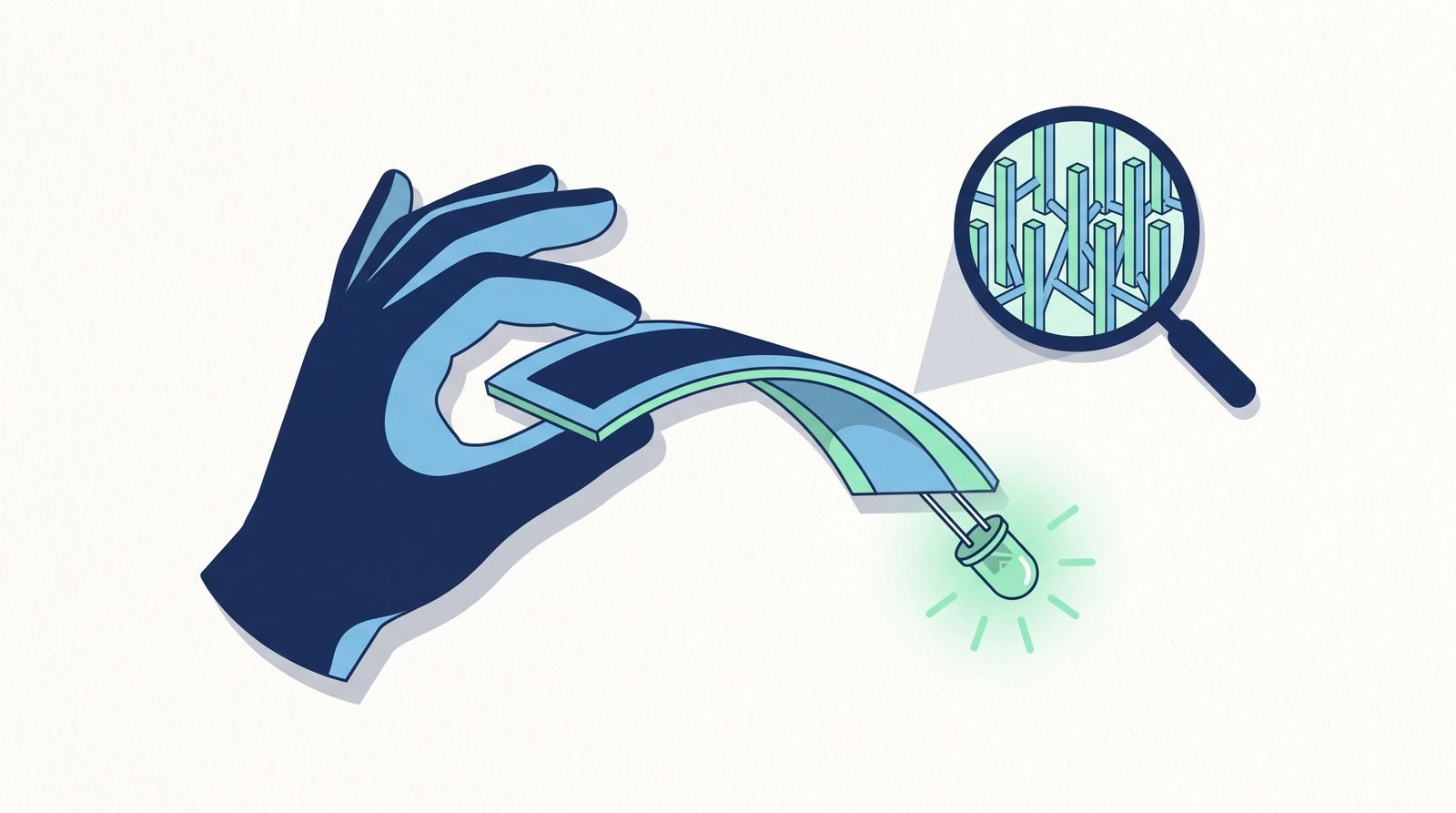
Working in a UC Santa Cruz lab, Khare, from an Indian-American family in California, grew hydrogen-treated titanium-dioxide nanorods coated in a conductive polymer to build a supercapacitor electrode that charges in seconds and survives some 10,000 cycles. It won the Intel Foundation Young Scientist Award at ISEF 2013. Media turned it into "a phone that charges in 20 seconds"; the device powered an LED. Report the ISEF project, not the headline.
IP note: No patent record in her name. Instead, a third party publicly threatened her with infringement on the strength of his own pending application, an episode widely criticised at the time; no suit followed. A pending application confers no right to sue anyone. Knowing that would have saved a teenager some sleep.
38. Dasia Taylor — sutures that change colour when a wound infects (USA, 2019–21, age 15–17)
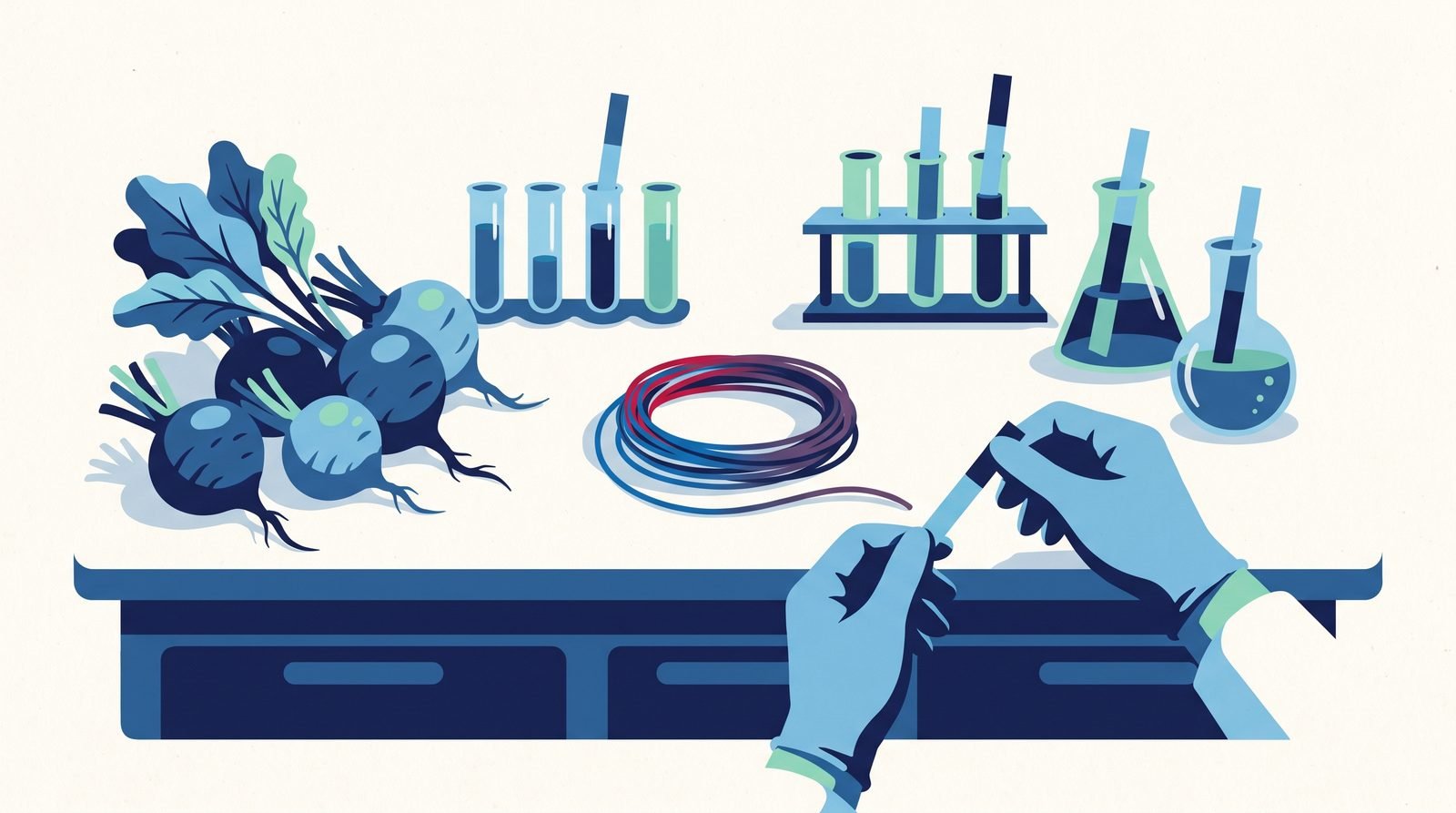
Reading about electronic "smart sutures", Taylor asked what a low-income clinic could actually afford and screened natural pH indicators. Healthy skin sits near pH 5; an infected wound rises toward 9; beetroot pigment changes from bright red to dark purple across exactly that range. A cotton-polyester thread dyed in beet extract signals infection with no electronics, and is easier to read on darker skin than redness. She was a Regeneron Science Talent Search finalist in 2021.
IP note: She filed US provisional 63/173,611 in April 2021 and a full application published as US 2022/0323615 A1, "Solvatochromic indicator for detecting infection". Google Patents lists it as abandoned. Because it was published, the formulation is now prior art against everyone, including her. She founded VariegateHealth to take the sutures to low-income countries; no regulatory clearance had been reported by August 2026.
39. Lalita Prasida Sripada Srisai — a corn-cob water filter (Odisha, India, 2015, age 13)
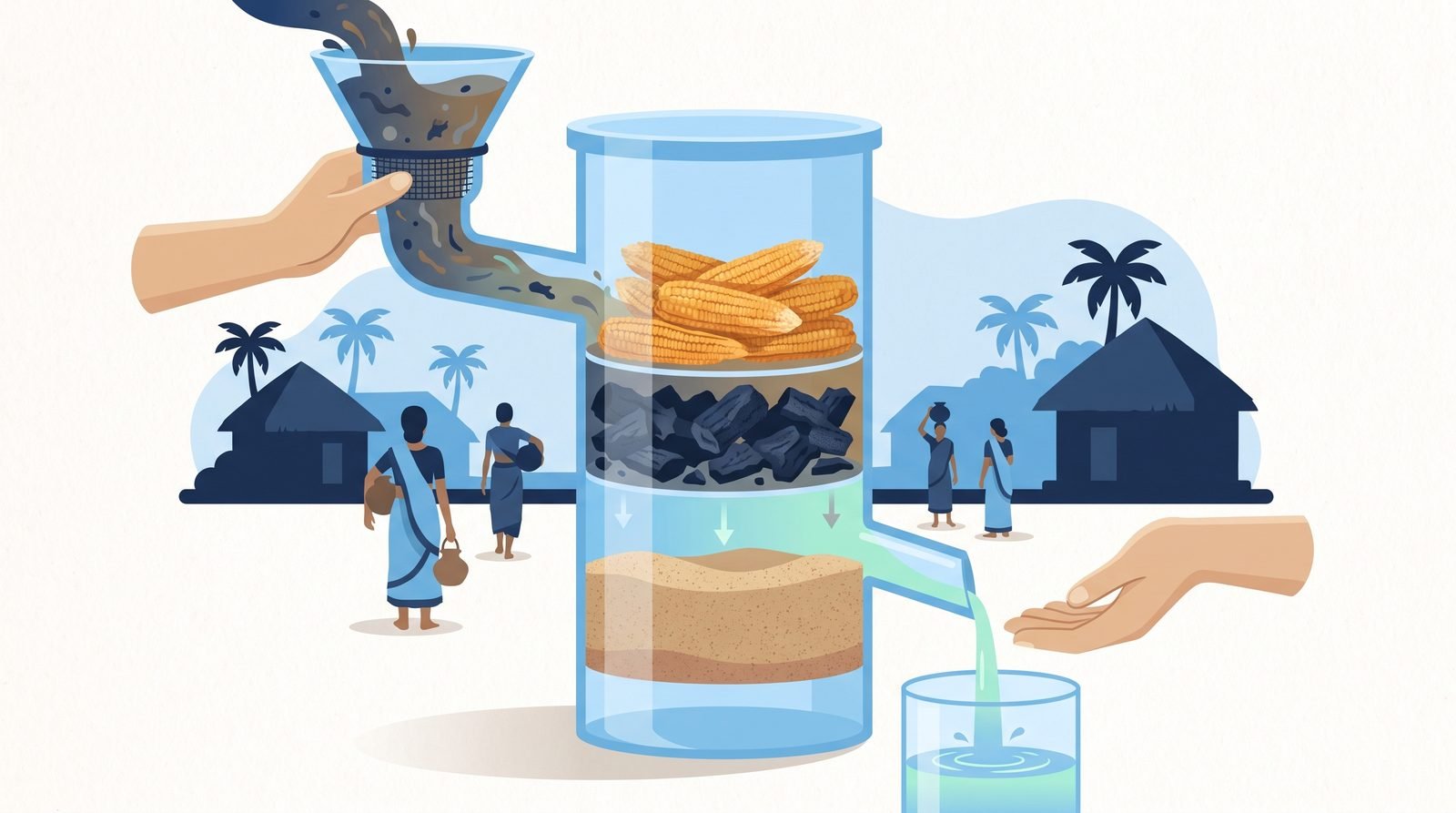
Visiting tribal villages around Koraput, Lalita saw agricultural waste piling up and untreated water in use, and made one problem solve the other. Water passes through stacked layers of long cob pieces, small pieces, powdered cob, cob charcoal and sand. Her project report claimed 70 to 80 per cent removal of suspended solids, dyes, oils and detergents; that is a school-project figure, not a validated result. She won the Google Science Fair Community Impact Award in 2015.
IP note: No public IP record found, and no authoritative update on her or the filter after 2016. A low-cost filter built from waste is precisely the kind of invention that India's grassroots patent route through NIF exists for, and this one seems not to have taken it.
40. Rishab Jain — AI that tracks the pancreas during radiotherapy (USA, 2018, age 13)
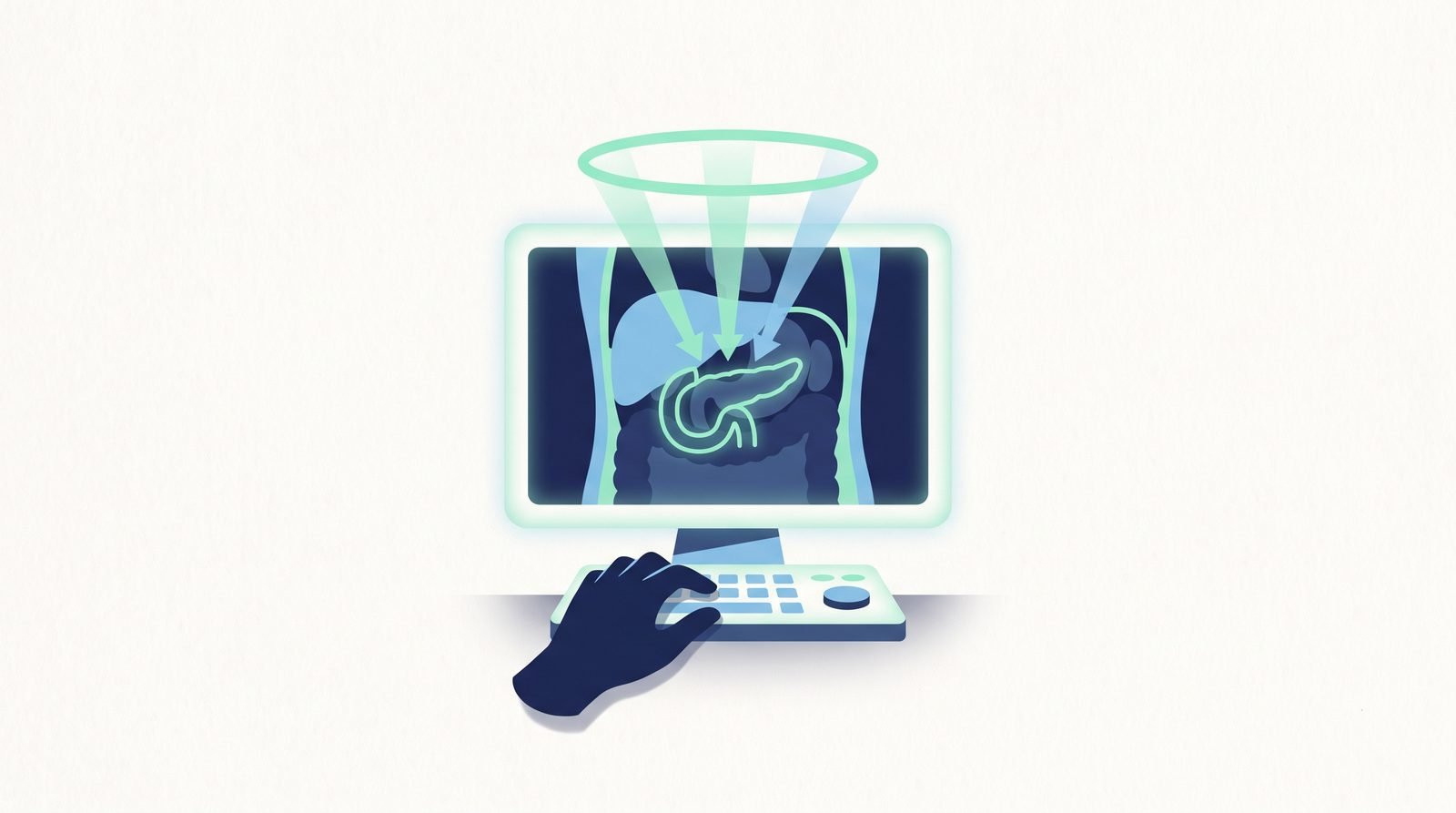
The pancreas shifts between and during scans, which makes it hard to hit a tumour with radiation without hitting healthy tissue. Jain, from an Indian-American family in Oregon, trained a deep-learning model to find the organ in MRI images in real time. He won the 3M Young Scientist Challenge in 2018 and, in 2022, the US$50,000 Regeneron ISEF Young Scientist Award for a separate tool that optimises gene sequences for cheaper drug manufacturing; that second technology was reported to have been licensed to a biotech company.
IP note: No granted patent could be traced under his name; the licence was reported without a patent number. A licence can rest on know-how and copyright in code rather than a patent, which is legitimate, but it means the value depends on secrecy and contract rather than exclusivity.
Tier 4 — Recognised prototypes worth watching (ranks 41–50)
41. Anurudh Ganesan — VAXXWAGON (USA, 2015, age 15)
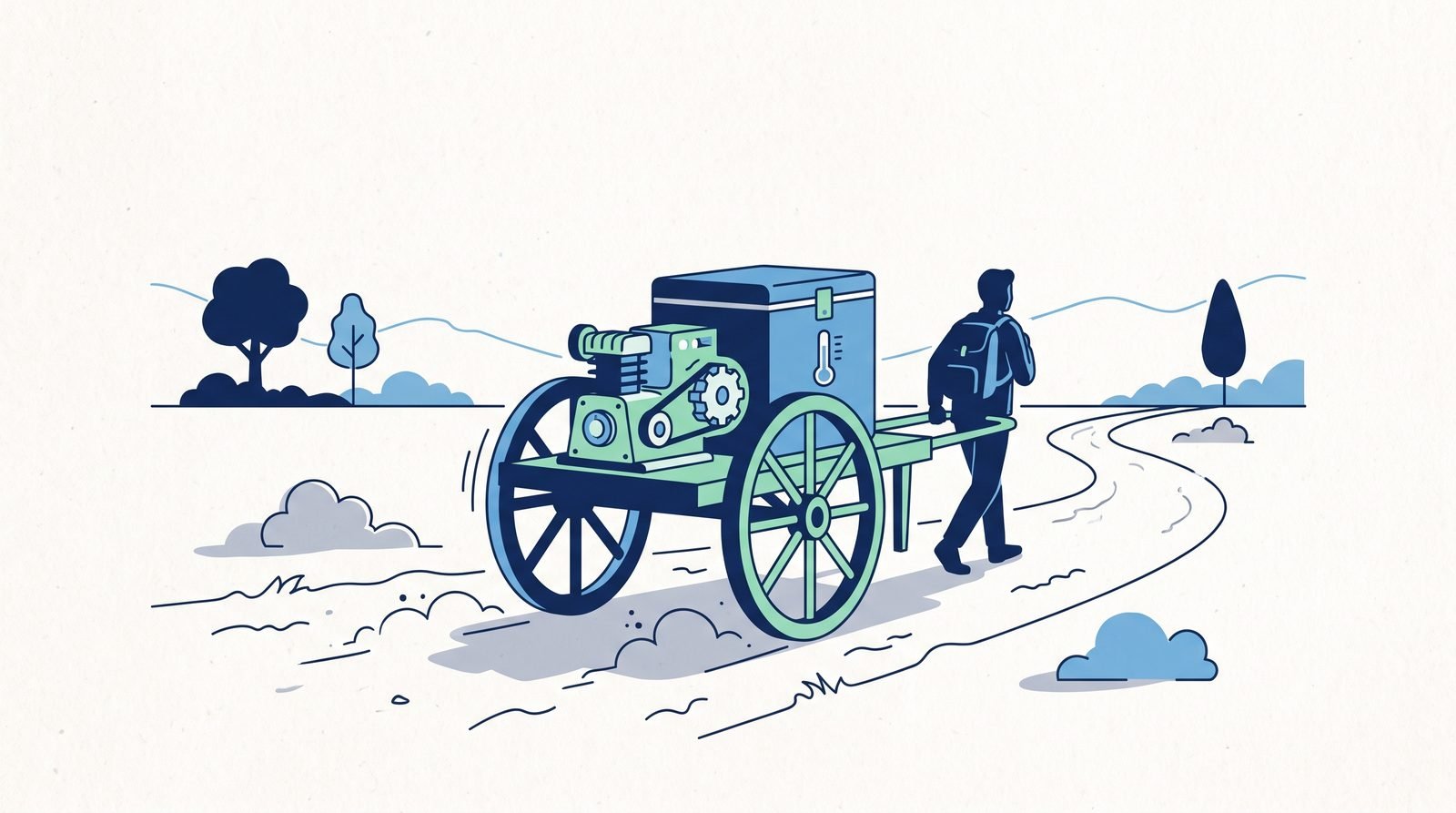
As an infant in southern India, Ganesan was carried about ten miles to a clinic only to find the vaccines spoiled by heat. Fifteen years later the cold-chain gap was unchanged, so he dismantled a refrigerator to learn the cycle and built a cart whose turning wheels drive the compressor, keeping vaccines at 2–8 °C without ice or electricity. He won the LEGO Education Builder Award at the Google Science Fair 2015 and presented at the White House Science Fair.
IP note: "Patent pending" for the latest design, per a 2023 profile; no published application could be found. A provisional that is never published is invisible to the public register, so a claim like this can be true and untraceable at the same time. He studied finance at Wharton and said in 2023 he hoped to sell carts to relief organisations.
42. Maanasa Mendu — HARVEST energy leaves (USA, 2016, age 13)

Evening power cuts at her grandparents' home in India led Mendu to a device that harvests three small energies at once: "leaves" of solar foil and piezoelectric strips on a recycled-bottle trunk flex in wind and rain while the foil catches light. Materials cost about US$5 and it ran a 15-watt LED. She won the 3M Young Scientist Challenge in 2016 and made the Forbes 30 Under 30 energy list the next year as a high-school freshman, widely cited as its youngest honoree.
IP note: No public IP record found. Forbes noted efforts to commercialise in 2017; no product launch or company has been verified. She is at Harvard studying neuroscience and health policy. The arc from national prize to no filing to a different career is the most common one on this list, and it is not a failure. It is a reason to decide early whether an idea is a project or a product.
43. Krtin Nithiyanandam — an early-Alzheimer's probe (UK, 2015, age 15)
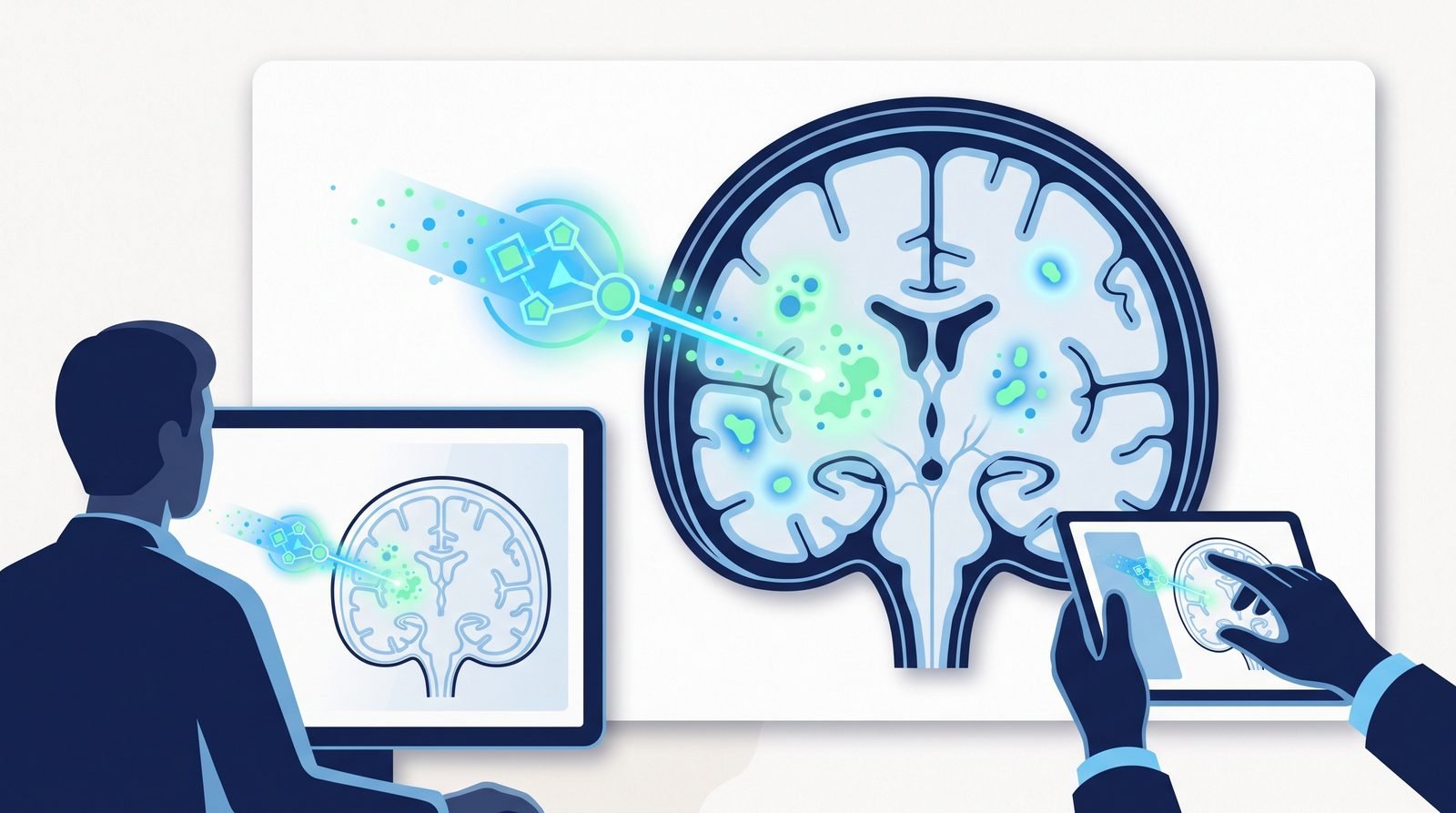
Born in Chennai and raised in Surrey, Nithiyanandam designed an antibody that binds an early Alzheimer's marker, oligomeric amyloid-beta, and to a receptor that helps it cross the blood-brain barrier, tagged with a light-emitting nanoparticle so a scan could flag the disease years before symptoms. It was an in-vitro proof of concept, not a validated diagnostic. He won the Scientific American Innovator Award at the Google Science Fair 2015 and later a Big Bang Fair prize for breast-cancer research.
IP note: No public patent record. Research-stage biology is usually protected through the institution where the work is done, and a school student working with a university lab should ask whose name any filing would carry before the work starts.
44. Arnav Maharshi — FAIR Chance and Active Hand (Maharashtra, India, 2022–25, age 14–17)
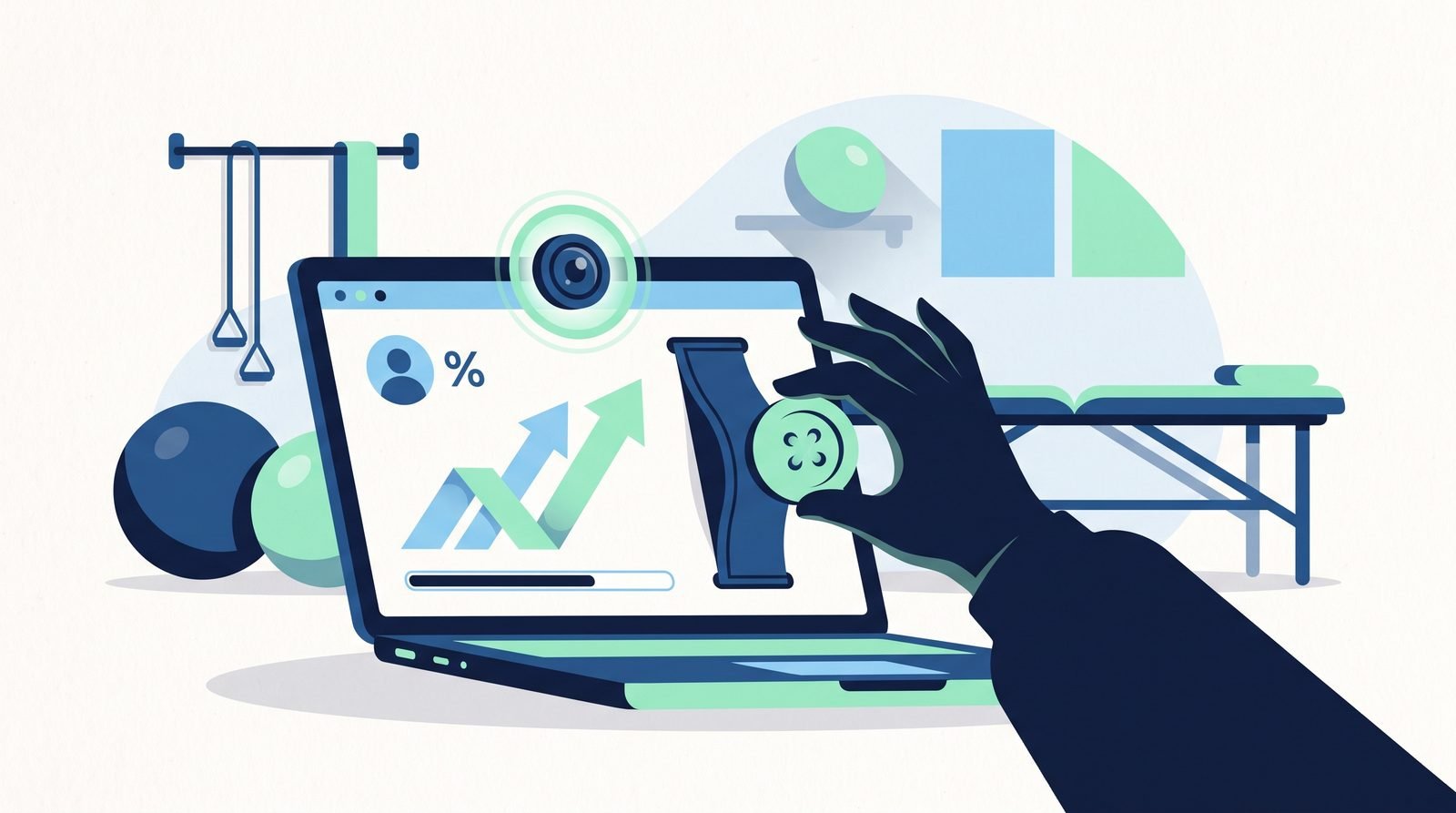
A road accident at 14 left Arnav's dominant right side paralysed, and conventional rehabilitation gave him no measurable feedback. FAIR Chance uses a phone or laptop camera and computer vision to score finger and hand movement during everyday tasks such as buttoning; the Active Hand wristband sits on the stronger hand and vibrates gently to discourage over-reliance on it. Both were in small trials by late 2025. He received the Pradhan Mantri Rashtriya Bal Puraskar in December 2025.
IP note: No public IP record found for either tool. Two named products, a clinical dataset and a national award are the ingredients of a filing; the article kb-13 in this Knowledge Bank explains how a student who is still a minor can be named as inventor while a parent or guardian handles the paperwork.
45. Aditya Pratap Singh Chauhan and Tejas Sharma — MICROPA (Chhattisgarh, India, 2018–23, age 14–17)
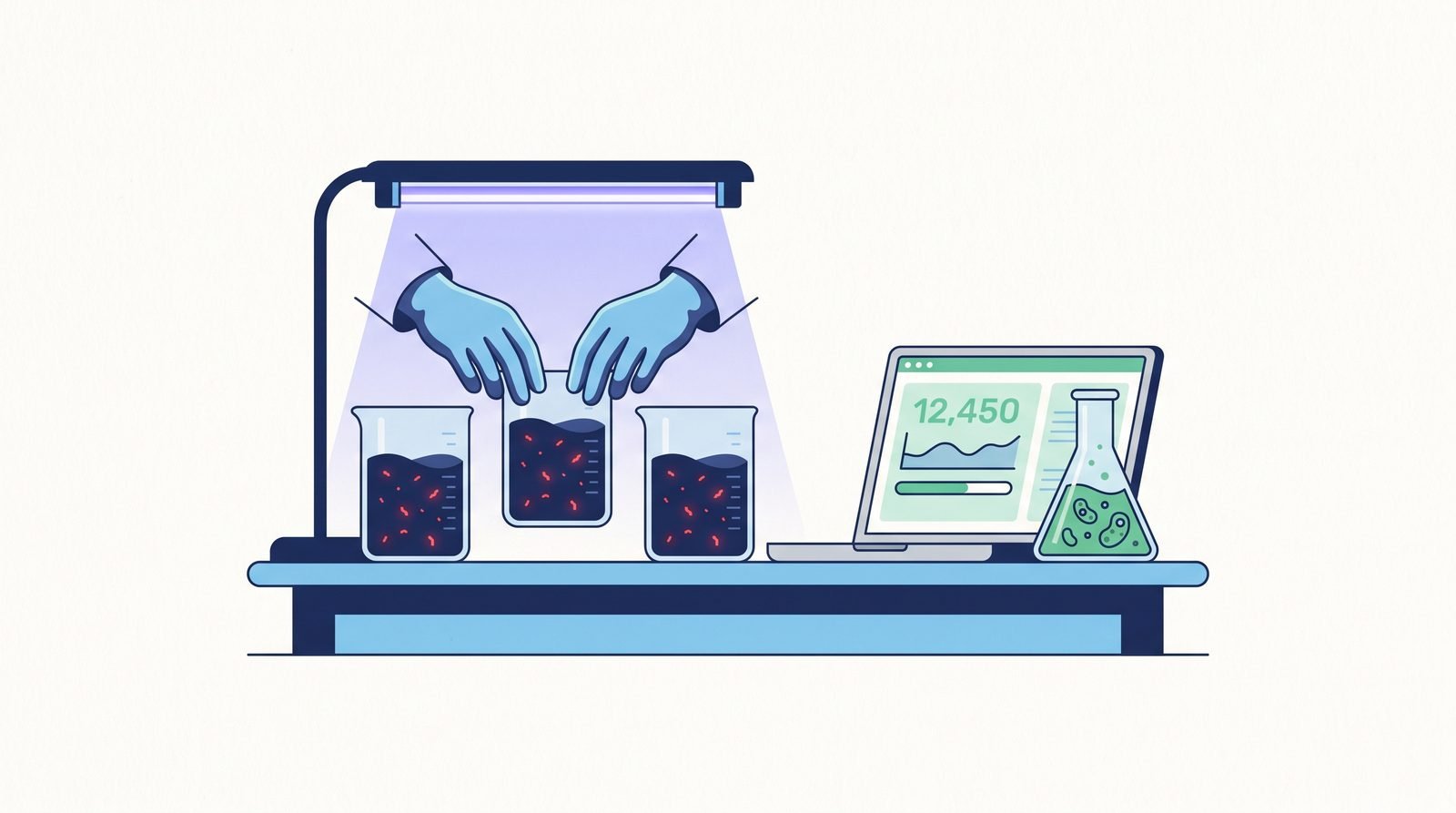
Starting from reports of microplastics in bottled water, the Raipur pair wanted both to see the contamination and to remove it biologically. MICROPA stains particles with Nile Red dye so they fluoresce under UV and counts them with an OpenCV web app; a culture of the microalga Rhodomonas salina then aggregates the particles for capture on a fine membrane, with about 85 per cent reported removal. The project reached Regeneron ISEF 2020, and Aditya received the Pradhan Mantri Rashtriya Bal Puraskar in 2023.
IP note: No public IP record found. The ISEF abstract names both students; the national award named one. Joint inventors should settle on paper who owns what before any filing, because a patent application in India must name every true inventor, and leaving one off can be grounds to challenge the grant later.
46. Anshul Bhatt — PawPath, gait analysis for dogs (Mumbai, India, 2024–25, age 16)
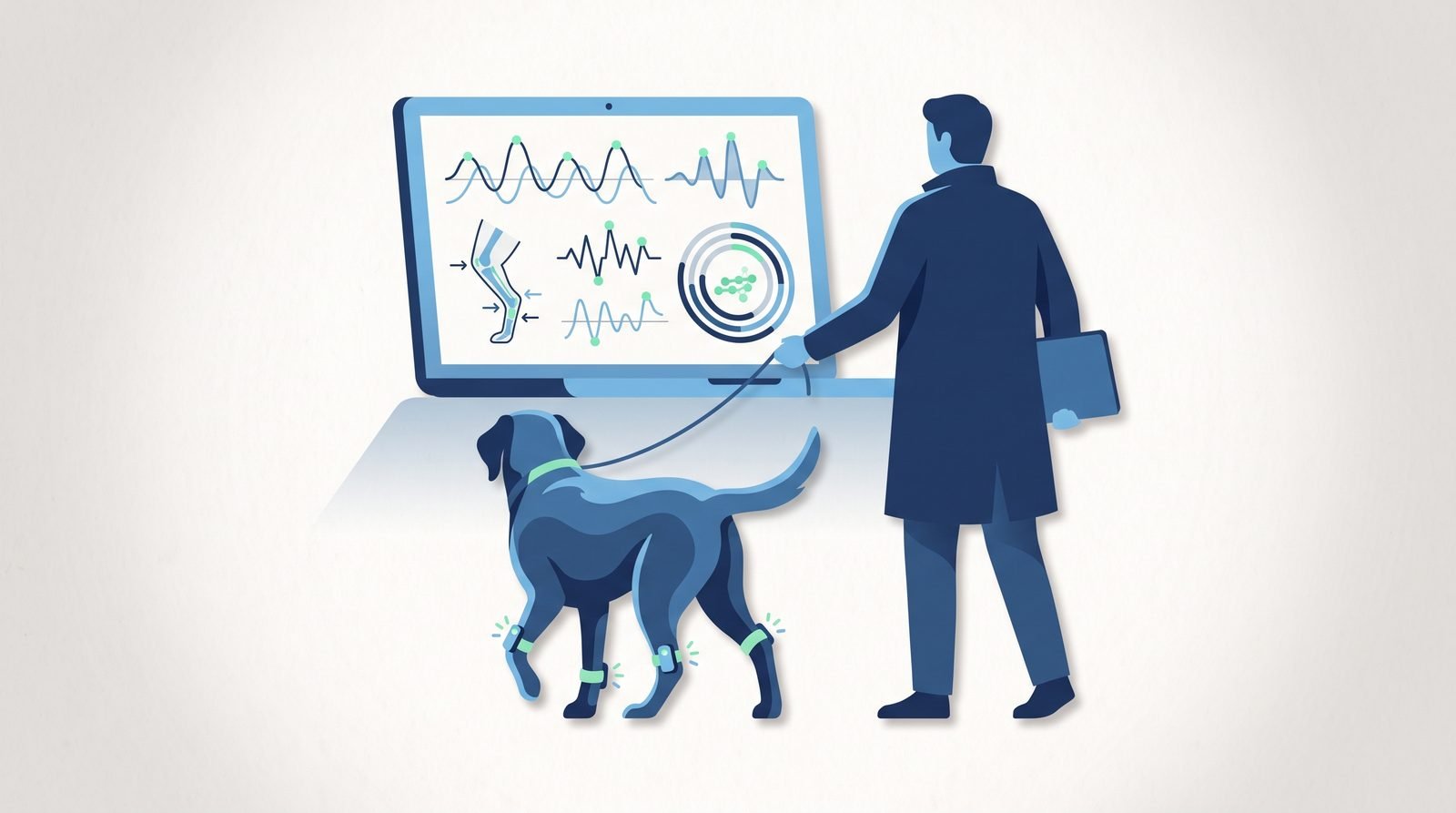
His own dog's arthritis was found too late. Bhatt reasoned that gait changes appear before pain is obvious, strapped four small motion sensors to a dog's legs and trained a neural network on recordings from more than 200 dogs across breeds to flag patterns consistent with arthritis, tendonitis and ligament injury. He won a Second Award in Animal Sciences at Regeneron ISEF 2025 and is continuing the work with veterinarians.
IP note: No public IP record found; he has said the next step is formal research. A dataset of 200 dogs' gait recordings is itself an asset worth protecting by contract and access control, even before any patent question arises.
47. Advay Ramesh — FELT, a lifeline terminal for fishermen (Chennai, India, 2016, age 14)
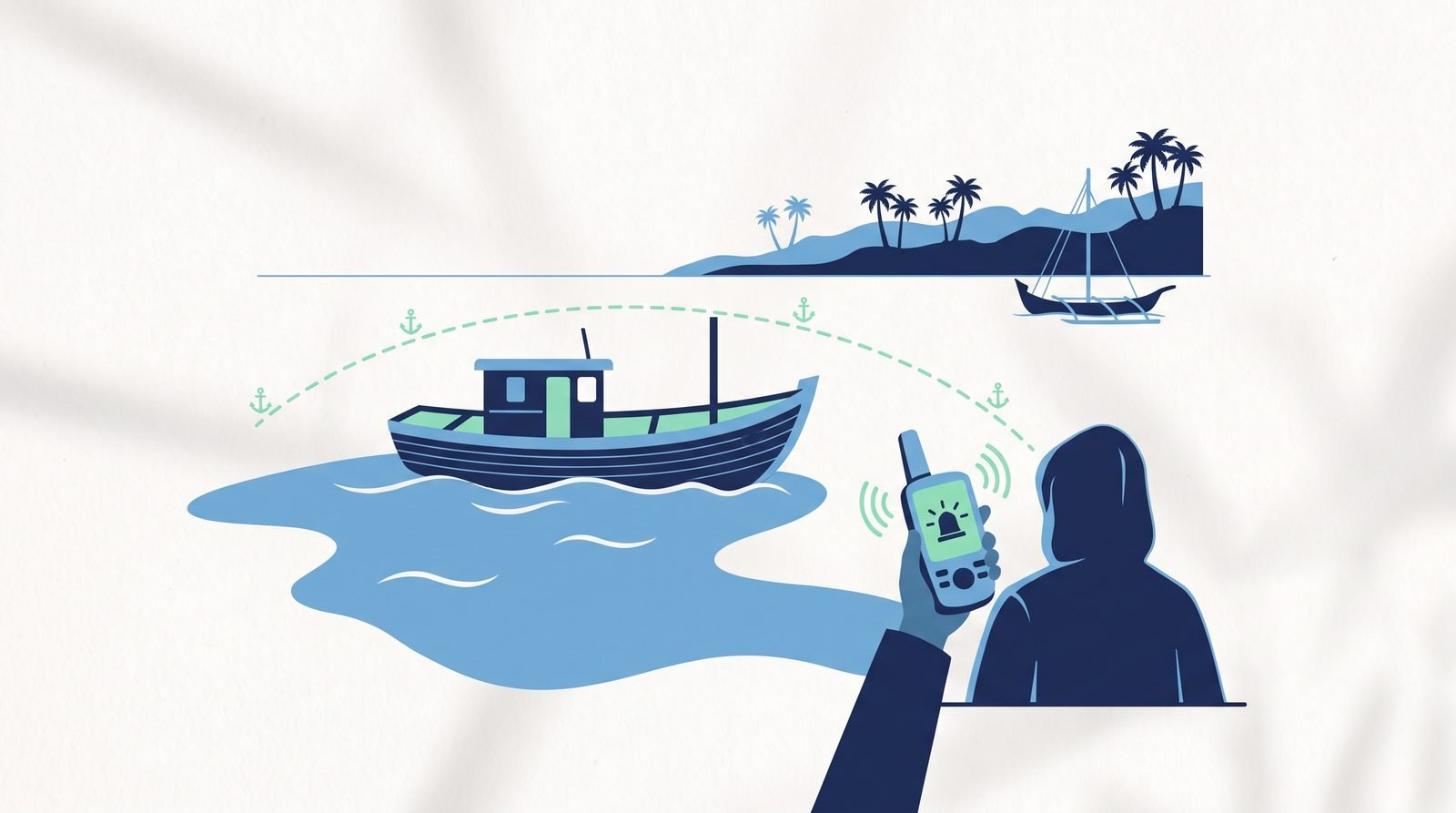
Reading about Tamil Nadu fishermen arrested for unknowingly crossing the maritime boundary with Sri Lanka, Advay built a handheld GPS unit that warns as a boat nears the line, flags storms and logs good catch locations. He wrote the software; his father helped with hardware. It won the Google Science Fair Community Impact Award for Asia in 2016. The device is the FishErmen Lifeline Terminal, FELT, not "FishermanNet" as some lists have it.
IP note: No public IP record found and no authoritative update after 2016. A boundary-alert function on a fishing GPS is the kind of feature that a device maker could adopt tomorrow without asking, precisely because nothing was filed.
48. Anushka Naiknaware — a smart wound dressing (USA, 2016, age 13)
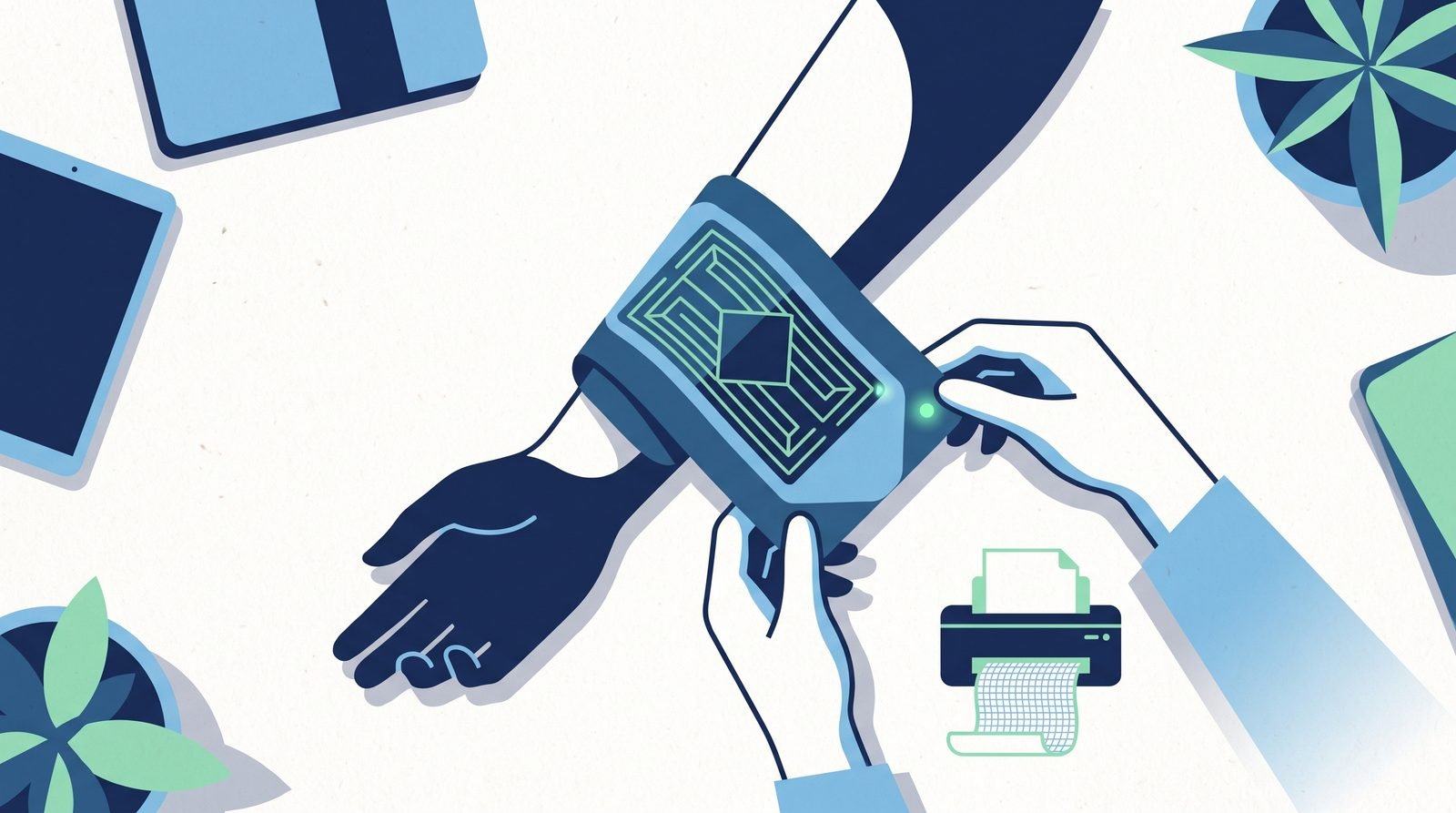
Chronic wounds are more common than many cancers and rarely researched, Naiknaware found. She inkjet-printed a biocompatible sensor of chitosan and carbon nanoparticles onto a dressing to measure moisture and signal when a change is actually needed, since disturbing a chronic wound slows healing. She was the youngest winner at the Google Science Fair 2016 and has a minor planet named after her.
IP note: No public IP record in her name. Be careful with search results: several patents on moisture-sensing dressings exist and belong to other inventors. Same topic is not same patent.
49. Mihir Garimella — FlyBot, a drone that dodges like a fruit fly (USA, 2014, age 14)
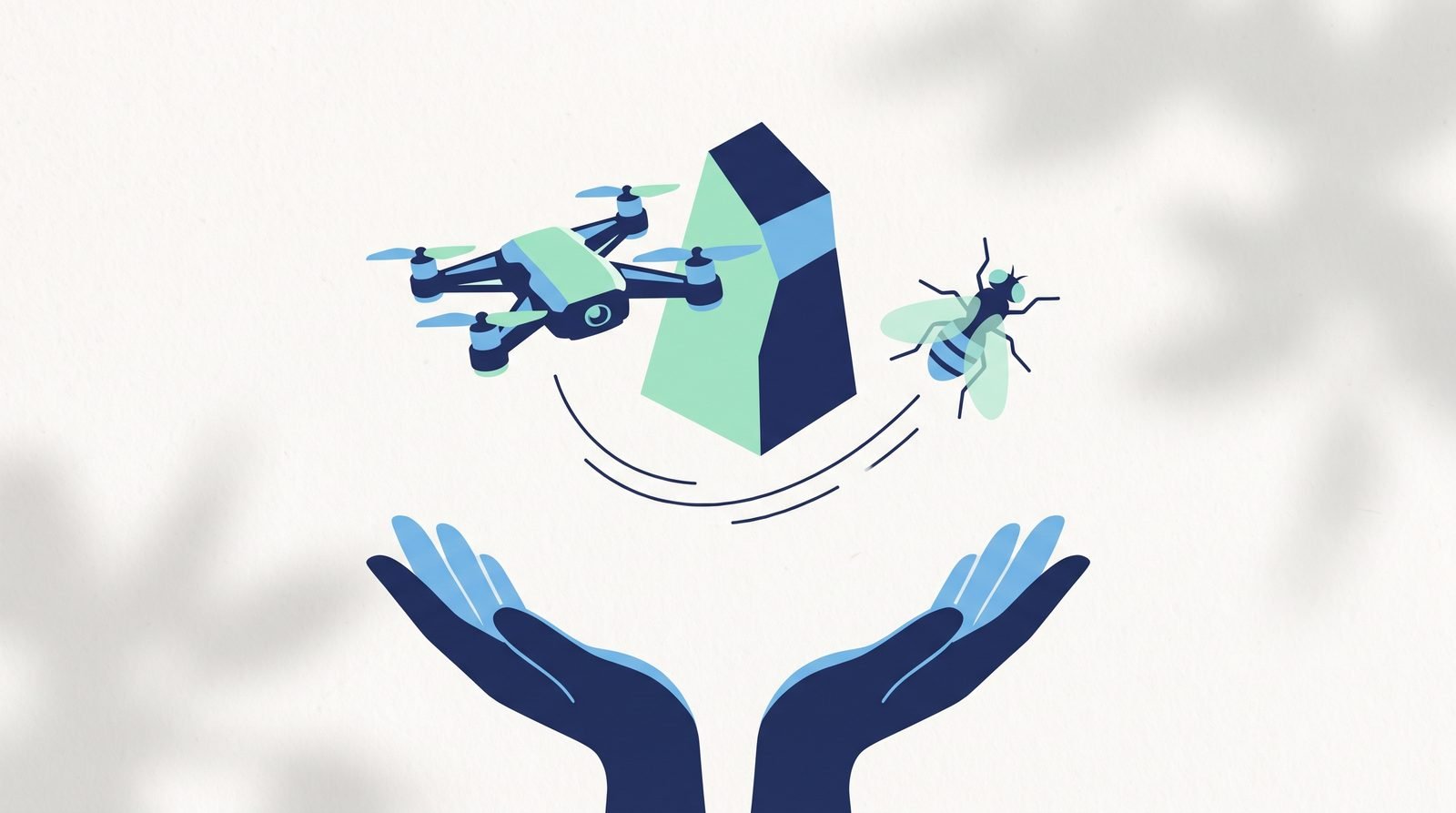
A kitchen full of fruit flies evading swats gave Garimella his model: very low-resolution but very fast vision. His palm-sized drone reacts to a looming obstacle by moving sideways then up, avoiding collisions without heavy computing, for search-and-rescue spaces people cannot enter. He won the 13–14 category and the first Computer Science Award at the Google Science Fair 2014.
IP note: No public IP record found for the drone. He is now co-founder and chief executive of Actively AI, which raised a US$22.5 million round in 2025. The teenage project protected nothing; the adult company will protect plenty. Both choices can be right for their moment.
50. Neil Deshmukh — PlantumAI, offline crop-disease diagnosis (USA, c. 2017–19, age 15–17)

On his family's farm in India, Deshmukh saw crop disease go undiagnosed. PlantumAI lets a farmer photograph a leaf and get an on-device diagnosis and treatment suggestion with no internet, field-tested with plant pathologists at an Indian agricultural university. His VocalEyes app describes scenes aloud for blind users. He won the International BioGENEius Challenge and a Barron Prize in 2019 and was in TIME's Davos 2020 list of young inventors.
IP note: No public IP record; the code was made freely available to non-profits. A deliberate open-access choice, disclosed as such, is a legitimate IP strategy. The failure mode is not choosing; it is drifting into disclosure without deciding.
What these 50 stories teach about protecting a young invention
Set the awards aside and the pattern is stark. Of fifty inventors, fourteen hold or held a granted patent, personally or through a company they founded; Pascal's royal privilege was the seventeenth-century equivalent, and Braille never sought one. Four let a filing die: Jaggi's granted patent lapsed for a maintenance fee, Taylor's application was abandoned after publication, Patterson's provisional was never converted, Andraka's international application ceased. Nine more report a filing that cannot be found on any register. Nissen registered a trademark and lost it to his own success. (Luckey counts through Oculus VR's design patent filed when he was 20; Daryani through Praan's adult-era patents; the teen work itself was unprotected in both cases.)
Five lessons follow, and they apply in India as much as anywhere.
Decide project or product before the prize. Mendu, Nirghin and Naiknaware published everything and moved on, which is fine. Trouble comes when a student publishes, wins, and then wants to file. In India, Section 31 of the Patents Act, 1970 shields certain disclosures for twelve months; a journal paper or a detailed news feature outside those categories can become prior art against your own application.
A provisional is a deadline, not protection. Patterson's US provisional and Manoj's reported Indian provisional both vanished from the record. In India a provisional specification must be followed by a complete specification within twelve months (Section 9), or the application is deemed abandoned.
Renewals are part of the invention. Jaggi's US patent expired at year four with fourteen years unused. Indian renewal fees fall due from the third year (Section 53 and the First Schedule), with a six-month grace period and a restoration route under Section 60 that is discretionary, not automatic. Our guide on patent renewal fees walks through the schedule.
Put the right name on the form. Farnsworth's blackboard sketch won a priority dispute; the MICROPA team's award named one of two inventors. Indian law lets a minor be named as the true and first inventor; contracts signed by a minor are void under Section 11 of the Indian Contract Act, so any assignment or licence must run through a guardian. Our student patent ownership guide covers the mechanics.
Names are assets too. Nissen's "Trampoline" became generic. Banerjee's company was reported to have registered "Braigo" as a trade mark. Pingali's WaterInsights and Shamsher's QuitPuff would each have cost a few thousand rupees to register as trade marks while the names were still theirs.
How MYCrave helps young inventors and their schools
MYCrave Consultancy & Services runs I.N.V.E.N.T. Club, its programme for teaching students and founders to invent and to own what they invent, and has set up more than 70 IP Cells in institutions. For a school or college, an IP Cell gives every science-fair project a standard path: a prior-art search before the project is published, an invention disclosure form that names every contributor, a decision on whether to file, and a calendar that catches the twelve-month provisional deadline and the renewal dates that follow a grant.
For an individual student with a working prototype, the first useful step is a patentability search, not a filing. Half the entries above would have learned something from one: Andraka would have met the nanotube papers from 2005 before the examiner did, and several of the wearable-alert projects would have met the existing patents in their field. If a filing makes sense, MYCrave's Registered Patent Agent drafts and files it in the right names, using the natural-person or educational-institution fee tier, and, where the project came through INSPIRE, IGNITE or an Atal Tinkering Lab, coordinates with the programme so the student ends up with an application number in hand.
Not every idea should be filed. Some should be published, some trademarked, some kept as know-how. The point of asking early is that you get to choose.
Conclusion
The best teenage inventions on this list share nothing in technology and everything in method: a specific person's problem, a constraint taken seriously, and a decision, deliberate or accidental, about ownership. Braille chose openness and changed the world without earning from it. Prabhu filed at fourteen and built a portfolio. Jaggi filed, won, and forgot the fee.
If you or a student you teach has a prototype, decide which of those stories you want to be in before the next science fair. Request an expert assessment from MYCrave to run a patentability search and map the filing options for a student inventor, or to set up an IP Cell that does it for every project in your institution.
Frequently asked questions
Can a teenager apply for a patent in India?
Does winning INSPIRE, IGNITE or an Atal Tinkering Lab award mean my invention is protected?
Which teenage inventors actually hold granted patents?
I presented my project at a school science fair. Have I lost the right to patent it?
Is a patent the right protection for a student app or software?
How long does an Indian patent last, and what does it cost to keep?
Has a student in your school or family built something that works? A patentability search before the next science fair costs less than a lapsed renewal.
Request an expert assessmentAbout this guide
Written by Dhruv Brahmbhatt, Managing Director. Reviewed by Pooja Menon, Registered Patent Agent (Reg. No. 5509). Last reviewed: 31 August 2026. Jurisdiction: India, with international examples.
Method. Every entry was checked against primary or authoritative sources: patent registers (Google Patents, Justia, NIF India's innovation pages), award-body pages (Society for Science/ISEF, 3M Young Scientist Challenge, Earthshot Prize, PIB and the Pradhan Mantri Rashtriya Bal Puraskar record, Google Science Fair archives) and, for context, major press. Ages are given as ranges where sources disagree. "No public IP record found" describes our search on the review date; it is not a statement that no filing exists. Quotations are used only where a source URL could be verified. Where an inventor's claim (a pending patent, an endorsement, a performance figure) could not be confirmed, we say so.
Images. All illustrations in this article are AI-generated depictions of the inventions, not photographs of the inventors. Licensed photographs, where they exist, are listed in the publishing pack with their licences and credit lines.
Primary sources. The Patents Act, 1970 (Sections 3(k), 6, 9, 31, 53, 60) and Patents Rules, 2003 as amended, at ipindia.gov.in; the Indian Contract Act, 1872, Section 11; National Innovation Foundation innovation pages for Remya Jose (ID 312), Shalini Kumari (IDs 672, 779) and Vinisha Umashankar (ID 1114); Google Patents records cited by number in each entry; Society for Science ISEF abstracts; PIB and News on AIR releases for PMRBP 2021, 2023, 2024 and 2025.
Corrections. Write to the address on our contact page with the entry number and the source you believe we have missed. We update the review date when we change the text.
Disclaimer. This guide is general information about intellectual property law and history, not legal advice. Whether a specific invention can be protected depends on facts we do not have. Speak to a Registered Patent Agent before relying on anything here.